
House of God Books in Order
Part ofSamuel Shem Books in OrderSee the House of God books in order by Samuel Shem, with short summaries, series background, and a clear guide to where Roy Basch's story starts.
Last updated:
As an Amazon Associate, we earn from qualifying purchases (at no extra cost to you).
House of God books in publication order
3 books
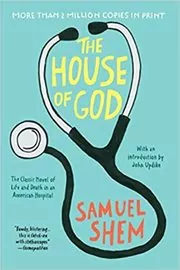
The House of God
by Samuel Shem
1978
Roy Basch starts his internship at a brutal Boston teaching hospital and quickly learns that idealism is no match for sleeplessness, bureaucracy, and death. Guided by the Fat Man's dark survival rules, he tries to stay sane without losing his conscience.
Recommended by
1 person Jordan Peterson recommended this book
Jordan Peterson
Recommended on Jordan Peterson's website.
Jordan Peterson's recommendation of this book
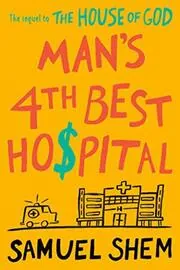
Man's 4th Best Hospital
by Samuel Shem
2019
Years after their internship, Roy Basch and the Fat Man reunite to train doctors more humanely at a declining hospital. Their fight is now against screens, billing systems, and corporate medicine as much as illness itself.

Our Hospital
by Samuel Shem
2023
During the COVID-19 pandemic, Roy Basch returns to his struggling upstate hometown hospital. Exhausted doctors and nurses battle the virus, shortages, and profit-driven management in a story that is angry, humane, and painfully close to real life.
House of God books in chronological order
Series background & context
The House of God books are linked by one big problem: how does a doctor stay decent inside a medical system that keeps teaching the opposite? The series begins with Roy Basch, fresh out of medical school and dropped into a brutal Boston teaching hospital in The House of God. Around him are other frightened interns, impossible hours, dying patients, and the Fat Man, the older resident whose dark rules for survival are funny until you realize how much pain produced them.
What makes the first book last is that it is not just hospital satire. Roy starts out wanting to be useful, careful, and good. The system pushes him toward exhaustion, detachment, and moral shortcuts. That clash, between idealism and the habits people build to survive, is the engine of the whole series.
Then Roy moves from internal medicine to psychiatry in Mount Misery.
The setting changes to a famous mental hospital, but the pressure feels familiar. Roy is older now, yet he is still easy prey for institutions that sound wise and act badly. The book pokes hard at psychiatric schools, drug culture, ego, and authority, while asking a serious question underneath the comedy: what actually helps a suffering person, and what is just performance dressed up as expertise?
The fight changes shape, but it never really goes away.
In Man's 4th Best Hospital, Roy and several veterans from the old days reunite around the Fat Man's new clinic. Now the enemy is not only hierarchy or bad training. It is corporate medicine, electronic records, billing rules, insurance logic, and administrators who turn care into throughput. The novel keeps the rough humor and insider slang, but it also has the weary feeling of people who have been in the system long enough to know exactly how it bends human beings out of shape.
Our Hospital brings the story into the COVID era and raises the stakes again. Roy returns to his economically struggling upstate hometown to help a small hospital survive the pandemic, while nurses, doctors, and staff fight shortages, fear, bureaucracy, and grief. The focus is wider here. This is not only Roy's story anymore, but a story about teams, community, and what happens when public health failure lands on the bodies of working caregivers.
Across all four books, you can expect black comedy, anger, sex, sadness, and a lot of blunt talk about power. But the series is not cynical in a dead-end way. Again and again, Samuel Shem comes back to friendship, kindness, and the stubborn belief that medicine should still be about people. If you read the books in order, you get more than one doctor's career. You get a long, messy argument with American medicine itself.














Edited by
Software engineer whose passion for tracking book recommendations from podcasts inspired the creation of MRB.
Lead investor at 3one4 Capital whose startup expertise and love for books helped shape MRB and its growth.
Comments
Did we miss something? Have feedback?
Help us improve this page by sharing your thoughts