
Samuel Butler Books in Order
Browse Samuel Butler's books in order, with concise summaries, a biography, series background, and straightforward suggestions on where to start reading.
Last updated:
As an Amazon Associate, we earn from qualifying purchases (at no extra cost to you).
Samuel Butler books in publication order
22 books
Erewhon
by Samuel Butler
1872
A traveller crossing remote mountains discovers Erewhon, a prosperous country with laws that treat illness as crime and crime as illness. Butler uses its baffling customs, and its fear of evolving machines, to satirize Victorian certainties.

The Fair Haven
by Samuel Butler
1873
Presented as a memoir and theological defense by a devout writer, this elaborate satire examines Christian miracle claims from within. Its sober, scholarly pose is part of Butler's pointed challenge to religious certainty.
Life and Habit
by Samuel Butler
1878
Butler argues that instinct is inherited habit and that memory reaches far beyond conscious life. This provocative study connects everyday automatic actions with his larger challenge to accepted ideas about heredity and evolution.
Evolution, Old and New
by Samuel Butler
1879
Butler compares older evolutionary thinkers, including Buffon, Lamarck, and Erasmus Darwin, with Charles Darwin's theory. He argues for an evolutionary process shaped by purpose, memory, and organismal effort rather than chance alone.
Unconscious Memory
by Samuel Butler
1880
Continuing Butler's arguments about evolution, this book treats heredity as a form of unconscious memory. He revisits instinct, habit, development, and purpose while defending his disagreement with conventional Darwinian explanation.
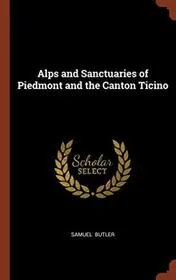
Alps and Sanctuaries of Piedmont and the Canton Ticino
by Samuel Butler
1881
Butler combines travel writing, local history, and close looking at art in northern Italy and the Alps. His journeys through valleys, churches, and sanctuaries become an informal guide shaped by strong personal opinions.
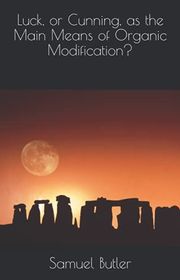
Luck, or Cunning, as the Main Means of Organic Modification?
by Samuel Butler
1887
Butler takes up the question of whether living things change by chance or by something closer to purpose and intelligence. The book extends his combative case for heredity, memory, and design in evolutionary change.

Ex Voto
by Samuel Butler
1896
A lively study of the Sacro Monte at Varallo and the sanctuary at Crea in northern Italy. Butler examines their chapels, painted scenes, and sculptures, especially the surviving work associated with the sculptor Tabachetti.
The Life and Letters of Dr. Samuel Butler, Head-Master of Shrewsbury School
by Samuel Butler
1896
Butler traces the life of his grandfather, the influential headmaster of Shrewsbury School and later Bishop of Lichfield. Letters and family material open onto education, religion, and English social life in the early nineteenth century.
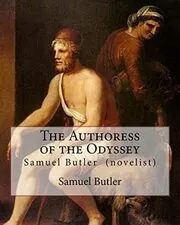
The Authoress of the Odyssey
by Samuel Butler
1897
Butler makes a bold case that *The Odyssey* was written by a young woman in Sicily. He follows clues in its settings, domestic details, and connections to *The Iliad* to build his unconventional theory.
The Iliad of Homer, Rendered into English Prose
by Samuel Butler
1898
Butler retells Homer's epic of the Trojan War in direct English prose. The quarrel between Achilles and Agamemnon drives a story of wounded pride, battlefield loss, divine interference, and the human cost of glory.
Shakespeare's Sonnets Reconsidered
by Samuel Butler
1899
Butler rearranges and annotates Shakespeare's sonnets in an attempt to recover their underlying story. He treats the poems as autobiographical evidence and advances a controversial identification for the mysterious Mr. W. H.
The Odyssey of Homer, Rendered into English Prose
by Samuel Butler
1900
This prose rendering follows Odysseus as he fights to return to Ithaca after Troy. Monsters, temptations, shipwrecks, and rival claimants at home test his patience, resourcefulness, and desire to reclaim his family.
Erewhon Revisited
by Samuel Butler
1901
Twenty years after escaping Erewhon, Higgs returns to find that his departure has become the foundation of a religion. He must confront the priests and public myths built around the supposedly divine Sunchild.
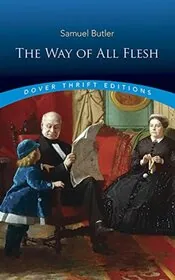
The Way of All Flesh
by Samuel Butler
1903
Ernest Pontifex grows up under the crushing expectations of a controlling Victorian family. As faith, work, money, and personal mistakes reshape his life, he struggles to become independent of the people who formed him.

God the Known and God the Unknown
by Samuel Butler
1909
In this philosophical essay, Butler asks what people can reasonably mean when they speak of God. He connects divinity with life, evolution, consciousness, and purpose while questioning both orthodox theology and easy disbelief.
The Note-Books of Samuel Butler
by Samuel Butler
1912
This posthumous selection gathers Butler's brief observations, jokes, arguments, and odd comparisons. His notes range across religion, art, money, evolution, music, literature, and daily life, revealing a mind always testing an idea.
The Humour of Homer and Other Essays
by Samuel Butler
1913
A varied essay collection on Homer, art, travel, language, and evolution. Butler reads the ancient epics for their comedy and humanity, while other pieces carry his restless skepticism into science and everyday experience.
A First Year in Canterbury Settlement
by Samuel Butler
1914
Butler's early account of his New Zealand years records travel, sheep farming, colonial society, and the demands of life in Canterbury. It offers the real landscapes and practical experiences that later helped shape *Erewhon*.

Further Extracts from the Note-Books of Samuel Butler
by Samuel Butler
1934
A further gathering of Butler's notebook entries, selected after his death. Short reflections on people, language, art, belief, science, and self-deception show the wit and impatience with easy answers found throughout his work.
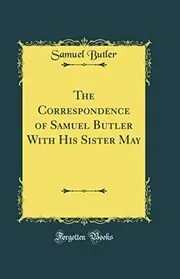
The Correspondence of Samuel Butler with His Sister May
by Samuel Butler
1962
Butler's letters with his sister May reveal a close but complicated family connection. Their exchange sheds light on his work, his parents, money worries, travel, friendships, and the private pressures behind his public independence.
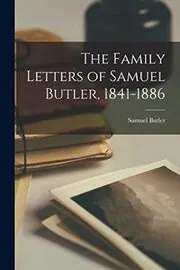
The Family Letters of Samuel Butler, 1841-1886
by Samuel Butler
1962
These family letters follow Butler from childhood through education, religious conflict, emigration, and adult life. They give a more private view of the tensions and loyalties behind the ideas that later appeared in his books.
Where to start with Samuel Butler
For satirical imagined worlds: Erewhon → Erewhon Revisited.
For a family novel: The Way of All Flesh.
For religion and doubt: The Fair Haven → God the Known and God the Unknown.
For Butler's evolutionary ideas: Life and Habit → Evolution, Old and New → Unconscious Memory.
For his take on Homer: The Odyssey of Homer, Rendered into English Prose → The Authoress of the Odyssey.
Samuel Butler sub-series and character series
Samuel Butler collections, short stories, and related book types
Samuel Butler Translations Books
Non-Fiction Books
Standalone Samuel Butler books
Author bio
Samuel Butler was born on December 4, 1835, at Langar Rectory in Nottinghamshire, England. His father, the Reverend Thomas Butler, came from a family of prominent clergymen, and the expected path for Samuel was clear: school, Cambridge, then the Church of England.
He never found that path easy to follow.
Butler attended Shrewsbury School, where his grandfather had once been headmaster, then went on to St John's College, Cambridge. He earned first-class honours in Classics in 1858 and began preparing for ordination. But his doubts about church doctrine, including the meaning and effect of infant baptism, grew too strong for him to take holy orders.
In 1859, he left England for New Zealand. He spent several years in Canterbury, explored the high country, and established the Mesopotamia sheep station. The work was hard and remote, but it gave him financial independence and a stock of experiences that later fed directly into Erewhon. His early account of colonial life, A First Year in Canterbury Settlement, captures both the practical business of sheep farming and the strangeness of starting over far from home.
Back in England in 1864, Butler chose a more unsettled life as a writer, painter, musician, and persistent questioner of received ideas. He lived in London for the rest of his life, made regular trips to Italy, and wrote across an unusually wide range of subjects. He was not interested in leaving comfortable opinions alone.
His breakthrough was Erewhon in 1872, a comic imagined-world novel that turns familiar Victorian assumptions upside down. Its remote country treats illness as wrongdoing, regards crime as a medical problem, and fears the possible future of machines. Readers who enjoy satirical fiction often come to it for those reversals, then find plenty to argue with in its ideas about religion, education, punishment, and social respectability.
Butler kept returning to faith and evolution. The Fair Haven poses as a solemn defense of Christian miracles while quietly exposing the strain in its arguments. In Life and Habit, Evolution, Old and New, and Unconscious Memory, he challenged the idea that evolution was driven only by random variation and selection. He instead explored heredity, habit, memory, purpose, and the older evolutionary thinking of Lamarck and Erasmus Darwin.
His other major novel, The Way of All Flesh, appeared after his death in 1902. It follows Ernest Pontifex through a harsh family upbringing, religious doubt, and adult independence. The book draws heavily on Butler's own battles with parental authority and clerical expectations, but its eye for family pressure remains its real pull.
Classical literature became another late-life obsession. Butler produced readable prose versions of The Iliad and The Odyssey, then put forward unconventional theories about Homeric authorship and geography in books such as The Authoress of the Odyssey. He also wrote on Italian art, Shakespeare's sonnets, travel, music, and whatever else caught his attention.
Butler died in London on June 18, 1902. His books do not offer neat systems or easy agreement. They offer a sharp, funny, skeptical companion for readers willing to see old questions from an unexpected angle.











Edited by
Software engineer whose passion for tracking book recommendations from podcasts inspired the creation of MRB.
Lead investor at 3one4 Capital whose startup expertise and love for books helped shape MRB and its growth.
Comments
Did we miss something? Have feedback?
Help us improve this page by sharing your thoughts