
Richard White Books in Order
Browse Richard White books in order, with short summaries, standout history titles, and tips on where to start with his books on the West and beyond.
Last updated:
As an Amazon Associate, we earn from qualifying purchases (at no extra cost to you).
Richard White books in publication order
11 books
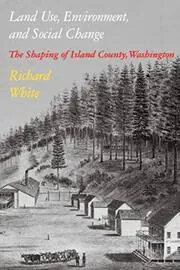
Land Use, Environment, and Social Change
by Richard White
1979
Using Island County, Washington, as a case study, White traces how people remade land and how those environmental changes reshaped society in return. It's an early, clear example of his interest in work, place, and unintended consequences.
The Roots of Dependency
by Richard White
1983
White compares the Choctaws, Pawnees, and Navajos to ask how self-sustaining societies were drawn into dependence. He ties politics, markets, and environmental change together, showing that loss did not come from one simple cause.
It's Your Misfortune and None of My Own
by Richard White
1991
This sweeping history of the American West pushes past frontier legend to focus on land, power, labor, and conflict. White treats the West as a lived region shaped by many peoples, not a simple tale of expansion.
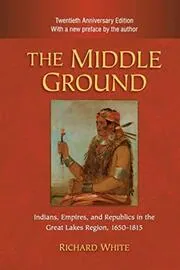
The Middle Ground
by Richard White
1991
In the Great Lakes region between 1650 and 1815, Native peoples and Europeans built a fragile shared world through trade, diplomacy, and improvisation. White shows how that common ground worked, and why it later broke apart.
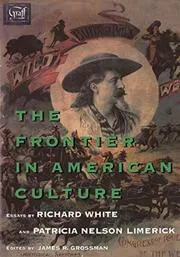
The Frontier in American Culture
by Richard White
1994
Starting with Chicago in 1893, White examines how Frederick Jackson Turner and Buffalo Bill helped create competing frontier myths. The result is a smart, vivid look at how the West became an American idea as much as a place.

The Organic Machine
by Richard White
1995
In this short, idea-rich study, White treats the Columbia River as both natural system and human workplace. He links salmon, dams, labor, and energy to show why the divide between nature and technology has never been very clean.
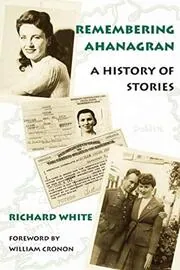
Remembering Ahanagran
by Richard White
1998
White weaves his mother's memories of Ireland and immigration to America with the historian's habit of checking the record. It's a family story, but also a thoughtful book about memory, truth, and how the past gets told.
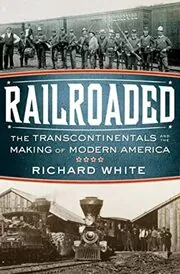
Railroaded
by Richard White
2011
White takes apart the heroic story of the transcontinental railroads and follows the money, politics, and fallout instead. He shows how debt, subsidies, and corruption helped build the modern United States while remaking the West.
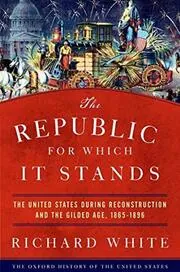
The Republic for Which It Stands
by Richard White
2017
This large-scale history follows the United States from the end of the Civil War to 1896, when hopes for a freer republic ran into inequality, corruption, and division. White ties Reconstruction and the Gilded Age into one uneasy national story.
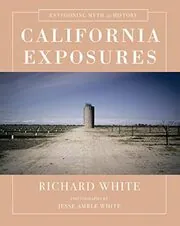
California Exposures
by Richard White
2020
Using California landscapes as entry points, White peels back the myths attached to missions, farmland, water projects, and famous places. The book turns scenery into evidence, showing how power, dispossession, and memory are written onto the land.

Who Killed Jane Stanford?
by Richard White
2022
White reopens the 1905 poisoning of Jane Stanford and follows the suspects, cover-up, and institutional self-protection that followed. Part murder investigation, part Gilded Age history, it shows how wealth and power can bend the official story.
Where to start with Richard White
If you want his best-known Native American history: The Roots of Dependency → The Middle Ground
If you want a big history of the American West: It's Your Misfortune and None of My Own → The Frontier in American Culture
If you're curious about railroads, capitalism, and power: The Organic Machine → Railroaded → The Republic for Which It Stands
If you prefer something more personal or narrative: Remembering Ahanagran → California Exposures → Who Killed Jane Stanford?
Richard White sub-series and character series
Cambridge Studies in North American Indian History books in order
Explore this seriesCambridge Studies in North American Indian History books in chronological order
The Oxford History of the United States books in order
Explore this seriesThe Oxford History of the United States books in chronological order
Richard White collections, short stories, and related book types
Non-Fiction
Author bio
Richard White is an American historian whose books helped change how many readers understand the American West, Native American history, environmental history, and the history of capitalism. He is Margaret Byrne Professor of American History, Emeritus, at Stanford University, a MacArthur Fellow, and a two-time Pulitzer finalist.
His route into the field was less grand than you might expect. As a student at the University of California, Santa Cruz in the 1960s, he later said he more or less backed into majoring in history after adding up his credits and realizing it was the degree that fit. That accidental start turned into a life's work.
Graduate school made the interest stick. White earned his master's and PhD at the University of Washington, and he has credited professor Vernon Carstensen with setting exacting standards and helping him see history as a serious craft. His dissertation on Whidbey Island became Land Use, Environment, and Social Change, an early book that already shows his signature habits: tie people to place, follow work and ecology together, and look for unintended consequences.
He dislikes neat, triumphant stories.
That instinct is all over The Roots of Dependency, which compares the Choctaws, Pawnees, and Navajos and asks how self-sustaining societies were pushed toward dependence. It is there again in The Middle Ground, his best-known book, which argues that Native peoples and Europeans in the Great Lakes region built a shared, unstable world between 1650 and 1815. Readers come for the research, but they stay because White keeps the human choices in view.
White returned again and again to the stories Americans tell about the West. In It's Your Misfortune and None of My Own and The Frontier in American Culture, he pushes past frontier legend and simple victory narratives to show a region shaped by Native nations, settlers, labor, violence, government power, and the environment. His books are broad in scope, but they rarely feel abstract because he keeps asking what ideas looked like on the ground.
He also likes very big subjects.
Railroaded takes on the transcontinental railroads and treats them not as heroic inevitabilities but as risky, debt-heavy, politically entangled projects that helped build modern America. The Republic for Which It Stands, his volume in The Oxford History of the United States, widens the frame to Reconstruction and the Gilded Age, following inequality, migration, corruption, and the changing meaning of home after the Civil War.
His work has also moved in more personal directions. Remembering Ahanagran brings his mother's memories of Ireland and immigration into conversation with the historian's urge to check, test, and question every story. Later, in California Exposures, he teamed up with his son, photographer Jesse Amble White, to read California landscapes against the legends attached to them.
At Stanford, White helped found the Spatial History Project, which used maps, data, and digital tools to ask old historical questions in new ways. He has said that in retirement he wants books that still absorb him but can be finished in a few years, and that helps explain the sharp turn into historical sleuthing in Who Killed Jane Stanford?. It suits him. The same patience with evidence, the same suspicion of official stories, and the same pleasure in following a trail are still there.












Edited by
Software engineer whose passion for tracking book recommendations from podcasts inspired the creation of MRB.
Lead investor at 3one4 Capital whose startup expertise and love for books helped shape MRB and its growth.
Comments
Did we miss something? Have feedback?
Help us improve this page by sharing your thoughts