
Cambridge Studies in North American Indian History Books in Order
Part ofRichard White Books in OrderSee the Cambridge Studies in North American Indian History books by Richard White, with reading order, a short summary, and notes on where to start.
Last updated:
As an Amazon Associate, we earn from qualifying purchases (at no extra cost to you).
Cambridge Studies in North American Indian History books in publication order
1 book
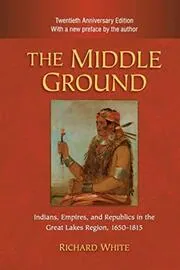
The Middle Ground
by Richard White
1991
In the Great Lakes region between 1650 and 1815, Native peoples and Europeans built a fragile shared world through trade, diplomacy, and improvisation. White shows how that common ground worked, and why it later broke apart.
Cambridge Studies in North American Indian History books in chronological order
Series background & context
Cambridge Studies in North American Indian History is not a single narrative sequence. It is a scholarly series built around a simple correction: Native American history belongs at the center of North American history, not at its margins. The books in the series usually take one region, community, or historical problem and use it to show how Indigenous peoples shaped politics, diplomacy, trade, family life, and the environment.
That shift matters.
Instead of treating Native nations as background to colonial expansion, the series tends to put them in the middle of the action. You can expect books about borderlands, empires, kinship networks, legal change, religious conflict, disease, land use, and survival over long stretches of time. The tone is academic, but the best volumes are readable because the stakes are clear. These are books about people making choices under pressure, and about how those choices changed whole regions.
Richard White's The Middle Ground is one of the clearest examples of what the series does well. Set in the Great Lakes region from 1650 to 1815, it follows Algonquian peoples, French colonists, British officials, traders, soldiers, and later Americans as they try to deal with one another in a world where nobody fully understands the other side. There is no single hero. The real subject is the unstable common ground they build through diplomacy, gift exchange, trade, intermarriage, ritual, and constant translation.
It is not a peaceful story. Violence is always nearby, and misunderstandings never go away. What makes the book so interesting is that White does not reduce the history to conquest on one side or timeless resistance on the other. He shows a world held together by practical bargains, shared habits, and mutual need, then shows how that world frays and breaks when power shifts and accommodation stops working.
If you are coming to this series through White, that is a good sign of what to expect from the line as a whole. These books are usually more interested in depth than speed. They reward slow reading, attention to place, and a willingness to sit with complexity. They are not quick overviews, but they can change how you read the rest of American history. They are especially good for readers who want Indigenous history treated as real history, full of politics, argument, contingency, and change, rather than as a side chapter in someone else's national story.









Edited by
Software engineer whose passion for tracking book recommendations from podcasts inspired the creation of MRB.
Lead investor at 3one4 Capital whose startup expertise and love for books helped shape MRB and its growth.
Comments
Did we miss something? Have feedback?
Help us improve this page by sharing your thoughts