
The Oxford History of the United States Books in Order
Part ofRichard White Books in OrderExplore Richard White's Oxford History of the United States book, with a summary, series background, and quick help on where to start reading.
Last updated:
As an Amazon Associate, we earn from qualifying purchases (at no extra cost to you).
The Oxford History of the United States books in publication order
1 book
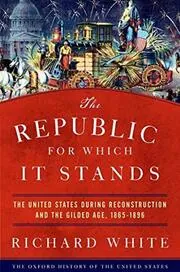
The Republic for Which It Stands
by Richard White
2017
This large-scale history follows the United States from the end of the Civil War to 1896, when hopes for a freer republic ran into inequality, corruption, and division. White ties Reconstruction and the Gilded Age into one uneasy national story.
The Oxford History of the United States books in chronological order
Series background & context
The Oxford History of the United States is a long-running multi-volume history of the nation, with each book taking on a different era. It is not a serial story in the usual sense. Different historians write different volumes. What links them is the scale: each book tries to give one substantial, readable account of a period that can stand on its own while still fitting into a larger national sequence.
These are big books with big ambitions.
Richard White's place in the series is The Republic for Which It Stands, his volume on Reconstruction and the Gilded Age from 1865 to 1896. That period starts with the end of the Civil War and a powerful republican vision of freedom, labor, and citizenship. By the end of White's book, the United States is larger, more industrial, more urban, more unequal, and far more divided than many northerners imagined in 1865. The tension in the book comes from that gap between promise and result.
Because this is national history, the cast is wide. Presidents, congressmen, judges, railroad promoters, workers, farmers, immigrants, freedpeople, Native communities, business interests, women reformers, and city political machines all matter here. White is especially good at showing how the West and the South were not side stages to the national story but central places where ideas about labor, race, property, and citizenship were fought over.
The tone is sweeping but not distant. White cares about systems, subsidies, corruption, migration, and state power, but he also keeps an eye on daily life and on the values people thought they were defending. One of the strongest threads in the book is his attention to the idea of home, not just as a domestic space but as a way Americans measured respectability, independence, and belonging. That gives the book more texture than a simple march through elections and laws.
If you are wondering what to expect from this series, think of it as serious narrative history rather than a textbook. You do not need to read every volume in order to get value from White's. It works as a standalone portrait of a country being remade after the Civil War. But if you do keep going with the wider Oxford series, White's book serves as a strong bridge between the Civil War era and the twentieth century that follows.












Edited by
Software engineer whose passion for tracking book recommendations from podcasts inspired the creation of MRB.
Lead investor at 3one4 Capital whose startup expertise and love for books helped shape MRB and its growth.
Comments
Did we miss something? Have feedback?
Help us improve this page by sharing your thoughts