
Margaret Irwin Books in Order
This page lists Margaret Irwin books in order, with concise summaries, Elizabeth Trilogy details, and helpful guidance on where to start reading.
Last updated:
As an Amazon Associate, we earn from qualifying purchases (at no extra cost to you).
Margaret Irwin books in publication order
19 books
Knock Four Times
by Margaret Irwin
1927
In 1920s London, reckless Dicky tries to break through the social barriers of Kensington and Mayfair. Celia, determined to escape her own enclosed life, finds that romance and ambition can open doors, and create new complications.
Fire Down Below
by Margaret Irwin
1928
A sharp, lightly comic novel of 1920s London, where young people negotiate small flats, shifting friendships, and romantic complications. Irwin turns the city's Bohemian social world into a lively setting for satire and self-discovery.
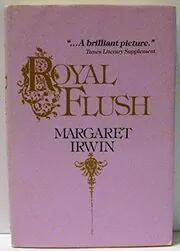
Royal Flush
by Margaret Irwin
1932
Princess Henrietta Anne, known as Minette, grows up in exile after the fall of her father's throne. At the French court, marriage, family loyalty, and diplomacy draw her into dangerous royal intrigues between England and France.
Still She Wished for Company
by Margaret Irwin
1934
A young woman in modern London becomes linked to Juliana Clare, an eighteenth-century girl caught in a strange and troubling past. This eerie time-slip novel blends loneliness, romance, and the unsettling pull of another life.
Madame Fears the Dark
by Margaret Irwin
1935
Seven stories and a play explore the supernatural side of Margaret Irwin's fiction. Evil books, black magic, old memories, and troubled households create a collection where the ordinary world slowly gives way to dread.
The Stranger Prince
by Margaret Irwin
1937
Prince Rupert of the Rhine arrives in England as a brilliant, impulsive royalist commander during the Civil War. Torn between family loyalty, military ambition, and the chaos around Charles I, he becomes a symbol of the Cavaliers' lost cause.
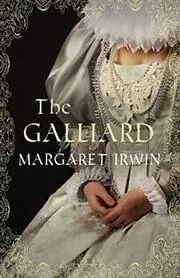
The Gay Galliard
by Margaret Irwin
1941
Mary, Queen of Scots returns to a divided Scotland after her years in France. Amid religious conflict and English pressure, she finds a fierce ally in James Hepburn, Earl of Bothwell, the daring man called the Galliard.
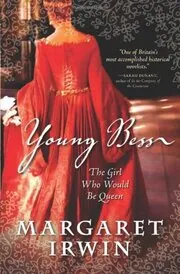
Young Bess
by Margaret Irwin
1944
Princess Elizabeth grows up under Henry VIII's shifting favor, marked by her mother's fate and her own uncertain status. After the king's death, her closeness to Katherine Parr and Thomas Seymour places the spirited young princess in fresh danger.

The Bride
by Margaret Irwin
1947
Princess Louise of Bohemia meets James Graham, Marquis of Montrose, while the royalist cause struggles in exile. Their romance unfolds against a tense background of divided loyalties, scarce money, and the looming violence of the Civil War.
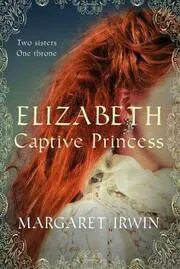
Elizabeth, Captive Princess
by Margaret Irwin
1948
After Edward VI dies, Elizabeth is caught between rival claims to England's crown and her sister Mary's growing suspicion. Court intrigue, rebellion, and imprisonment test the young princess's nerve as she learns how dangerous popularity can be.
The Proud Servant
by Margaret Irwin
1949
James Graham, Marquis of Montrose, pledges himself to Charles I and sets out to raise Scotland for the king. The novel follows his passionate loyalty through political betrayal, military risk, and the personal costs of a doomed cause.
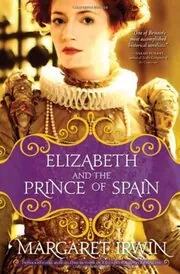
Elizabeth and the Prince of Spain
by Margaret Irwin
1953
Princess Elizabeth faces peril under Queen Mary's rule as Philip of Spain arrives to marry her half-sister. Mary's jealousy and Philip's uneasy interest force Elizabeth to move carefully through a court where every alliance carries a cost.

None So Pretty
by Margaret Irwin
1953
Nan is married off to a drunken country squire and left painfully alone in an unhappy household. In Restoration England, her search for affection brings her into the orbit of Mr. Cork, a troubled Puritan clergyman with secrets of his own.
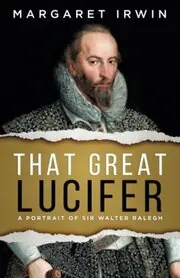
That Great Lucifer
by Margaret Irwin
1960
This nonfiction portrait follows Sir Walter Raleigh through the hazards of Elizabethan favor and the darker years under James I. Soldier, courtier, explorer, and writer, Raleigh emerges as an ambitious man whose enemies never disappear.
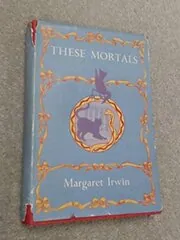
These Mortals
by Margaret Irwin
1975
Melusine, the daughter of the enchanter Aldebaran, leaves her magical home to see the mortal world. In a flawed human court, she encounters love, jealousy, and power, and learns that magic cannot solve every emotional problem.
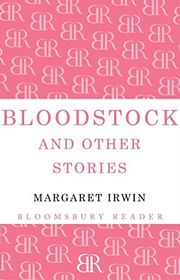
Bloodstock and Other Stories
by Margaret Irwin
1978
This varied story collection moves from Ireland's troubled past to witchcraft, black magic, historical figures, and eighteenth-century comedy. Several tales revisit Irwin's quieter brand of supernatural horror, where imagination becomes a dangerous companion.
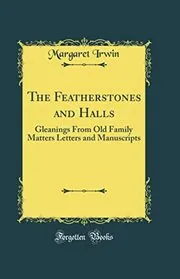
The Featherstones and Halls
by Margaret Irwin
2009
A family-history compilation drawn from old letters and manuscripts connected with the Featherstone and Hall families. The volume traces family relationships, religious life, and social history across several generations through surviving documents.
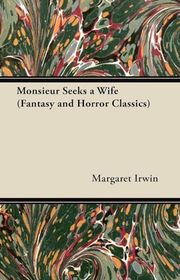
Monsieur Seeks a Wife
by Margaret Irwin
2011
An eighteenth-century French nobleman visits a remote château to choose a bride from three sisters. What begins as a family arrangement becomes an unsettling tale of desire, inheritance, and a presence that seems determined to shape the match.
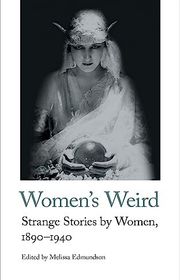
Women's Weird
by Margaret Irwin
2019
An anthology of strange fiction by women writing between 1890 and 1940, spanning ghosts, Gothic unease, fantasy, and horror. Margaret Irwin appears with "The Book," a disturbing tale of a man's growing obsession with a sinister manuscript.
Where to start with Margaret Irwin
For Tudor court drama: Young Bess → Elizabeth, Captive Princess → Elizabeth and the Prince of Spain
For Stuart-era historical fiction: The Proud Servant → The Bride → The Stranger Prince
For fantasy and the uncanny: Still She Wished for Company → These Mortals → Madame Fears the Dark
For nonfiction history: That Great Lucifer
Margaret Irwin sub-series and character series
Margaret Irwin collections, short stories, and related book types
Short Stories/Novellas
Short Story Collections
Non-Fiction
Standalone Margaret Irwin books
Author bio
Margaret Irwin was born in Highgate Hill, London, on March 27, 1889. Her parents died while she was young, and she was brought up in Bristol by her uncle, Sidney Thomas Irwin, a Classics teacher at Clifton College. She attended Clifton High School before studying English at Oxford University.
That early mix of books, history, and formal study stayed with her. She began writing short stories and books in her early twenties, then built a career that moved easily between historical fiction, fantasy, ghost stories, and biography.
She liked the past, but she didn't treat it as a museum.
Irwin married the children's author and illustrator John Robert Monsell in 1929. Monsell designed covers for some of her books, and their work shared an interest in old stories, vivid settings, and the odd things that can happen when people are caught between duty and desire.
Her early novels show how wide her range could be. Still She Wished for Company uses a link between modern London and the eighteenth century to tell an unsettling story of time slipping out of place. These Mortals is a wry adult fairy tale about Melusine, a magician's daughter who leaves her protected home to discover the difficult human business of love, jealousy, and choice.
Then came the Tudors and Stuarts.
Irwin became especially drawn to the high-pressure worlds around English and Scottish royalty. In Royal Flush, she follows Henrietta Anne, known as Minette, through exile, marriage, and court politics in France. The Stranger Prince centers on Prince Rupert of the Rhine during the English Civil War, while The Proud Servant follows the Scottish royalist James Graham, Marquis of Montrose. Her novels often make room for battles and negotiations, but they keep their attention on people trying to survive the demands of power.
Her best-known books are the three novels about Elizabeth I: Young Bess, Elizabeth, Captive Princess, and Elizabeth and the Prince of Spain. The sequence begins with Elizabeth as Henry VIII's watchful young daughter and follows her through the danger of Mary I's reign. A film version of Young Bess arrived in 1953, with Jean Simmons playing the future queen.
Irwin also wrote supernatural fiction with a quiet, creeping kind of menace. Stories such as "The Book" and "The Earlier Service" turn ordinary rooms, old papers, and family arrangements into sources of dread. Her collection Madame Fears the Dark shows that she could make the uncanny feel close at hand without losing her dry humor.
Late in her career, she wrote That Great Lucifer, a nonfiction portrait of Sir Walter Raleigh. It reflects the same interests found in her novels: ambition, danger, court favor, and the gap between a public legend and a complicated person. Margaret Irwin died in London on December 11, 1967, leaving behind books that range from Tudor palaces to haunted houses and magical kingdoms.




Edited by
Software engineer whose passion for tracking book recommendations from podcasts inspired the creation of MRB.
Lead investor at 3one4 Capital whose startup expertise and love for books helped shape MRB and its growth.
Comments
Did we miss something? Have feedback?
Help us improve this page by sharing your thoughts