
Katie Kitamura Books in Order
Browse Katie Kitamura books in order, with short summaries, reading guidance, background on her fiction and nonfiction, and a simple guide to where to start.
Last updated:
As an Amazon Associate, we earn from qualifying purchases (at no extra cost to you).
Katie Kitamura books in publication order
7 books
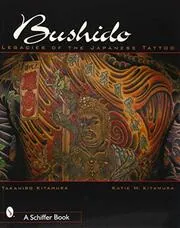
Bushido
by Katie Kitamura
2000
Co-written with tattoo artist Takahiro Kitamura, this illustrated study explores the history, symbolism, and discipline of traditional Japanese tattooing. It pairs cultural context with vivid images and an insider view of a guarded artistic world.
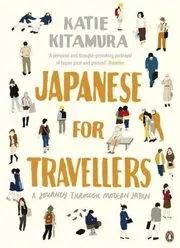
Japanese for Travellers
by Katie Kitamura
2007
In this nonfiction debut, Kitamura travels across Japan and writes about family, memory, and modern identity. Part travelogue, part personal inquiry, it asks what it means to feel both connected to a country and estranged from it.

The Longshot
by Katie Kitamura
2009
Former MMA champion Cal heads toward a dangerous rematch with the unbeatable Rivera, pushed on by his longtime coach Riley. Over three tense days, doubt, loyalty, and physical risk close in as both men wonder what this last shot will cost.
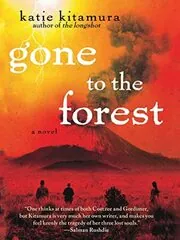
Gone to the Forest
by Katie Kitamura
2012
On a struggling farm in an unnamed colonial country, Tom and his father live in a brittle peace after the death of Tom's mother. When Carine arrives and civil war nears, family tensions turn dangerous.
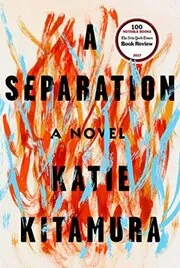
A Separation
by Katie Kitamura
2017
A woman quietly separated from her husband travels to remote Greece after he disappears. What begins as a search becomes a cool, unsettling look at marriage, secrecy, and how little we may understand the people closest to us.
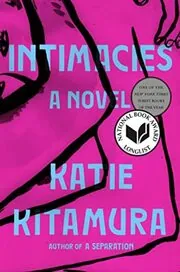
Intimacies
by Katie Kitamura
2021
An interpreter arrives in The Hague hoping for a clean start, then finds herself pulled into an affair, a violent incident, and a war-crimes case. The novel turns questions of language, power, and desire into slow-burning suspense.

Audition
by Katie Kitamura
2025
An accomplished actress meets a young man over lunch in Manhattan, and their connection quickly turns unsettling. As two competing versions of the story unfold, the novel probes performance, family, and the unstable roles people play.
Where to start with Katie Kitamura
If you want the best entry point: A Separation → Intimacies → Audition
If you want her early fiction first: The Longshot → Gone to the Forest
If you're curious about her nonfiction side: Japanese for Travellers → Bushido
Katie Kitamura collections, short stories, and related book types
Non-Fiction
Standalone Katie Kitamura books
Author bio
Katie Kitamura was born in Sacramento in 1979 and raised in Davis, California, in a Japanese American family. Japan was never an abstract idea for her, it was family, memory, language, and a place she kept returning to. That push and pull between closeness and distance would later become one of the steady pressures in her work.
She is very good at writing people who are near one another and still hard to know.
Kitamura studied at Princeton, then moved to England and completed a PhD in American literature through the London Consortium. Academic life gave her a deep reading life, but it did not box her in. She moved between scholarship, criticism, and fiction, and that mix still shows in how alert her books are to art, power, and interpretation.
Before many readers knew her as a novelist, she was writing journalism and criticism for publications including The New York Times, The Guardian, Wired, and Frieze. Her first book, Japanese for Travellers, is a nonfiction journey through modern Japan. It follows her across the country as she thinks about family, history, and the odd feeling of trying to understand a place that is yours and not quite yours at the same time.
Her early novels came next. The Longshot drops into the world of mixed martial arts and tracks a fighter and his coach as they head toward a comeback match. Gone to the Forest shifts to an unnamed colonial country on the edge of civil war, where family strain and political violence close in together. Both books were finalists for the Young Lions Fiction Award, and both show what Kitamura can do in a short space: build pressure, watch people closely, and leave room for silence.
Then A Separation brought her to a much wider readership.
A Separation looks, at first, like a missing-person story, but the real subject is a marriage and how little certainty love can give us. In later conversations about craft, Kitamura has said that fiction truly opened up for her when she began writing in the first person. That shift matters. From A Separation onward, her narrators often sound calm, exact, and intelligent, even as they circle doubt, self-protection, and the limits of what anyone can know.
Intimacies follows an interpreter in The Hague who is pulled between private desire and public violence, while Audition turns to an actress in Manhattan and the roles people play inside family life. Across these books, Kitamura returns to a few lasting interests: outsiders entering charged spaces, women reading the signals around them, the instability of language, and the small performances that make up everyday life. She has said that many of her novels begin with someone arriving in a place and trying to decode it, which is a good way to describe the experience of reading her too.
Now based in Brooklyn, Kitamura teaches creative writing at New York University. Along the way she has received honors that include the Rome Prize, the Berlin Prize, a Cullman Center Fellowship, and a Guggenheim Fellowship. Her books have been translated widely, and her reputation has grown without her changing the basic shape of her work: slim, tense novels that trust the reader to notice what is not being said.
They are quiet on the surface and busy underneath.











Edited by
Software engineer whose passion for tracking book recommendations from podcasts inspired the creation of MRB.
Lead investor at 3one4 Capital whose startup expertise and love for books helped shape MRB and its growth.
Comments
Did we miss something? Have feedback?
Help us improve this page by sharing your thoughts