
John Dos Passos Books in Order
Explore John Dos Passos books in order, with brief summaries, major trilogies, and where-to-start tips for his novels, travel writing, essays, and history.
Last updated:
As an Amazon Associate, we earn from qualifying purchases (at no extra cost to you).
John Dos Passos books in publication order
52 books
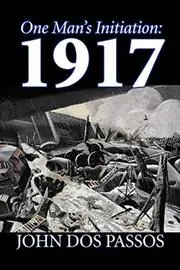
One Man's Initiation: 1917
by John Dos Passos
1920
Drawing on his own ambulance service, Dos Passos follows a young American through wartime France. The book mixes shock, exhaustion, and awakening, then turns them into a fierce early antiwar novel.

Three Soldiers
by John Dos Passos
1921
Three very different privates move through boredom, terror, discipline, and rebellion in World War I. Dos Passos strips away patriotic romance and shows the army as a machine that grinds down ordinary men.
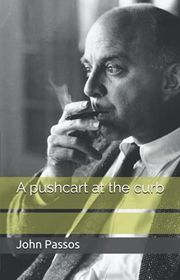
A Pushcart At the Club
by John Dos Passos
1922
This early poetry collection shows Dos Passos thinking like a painter as much as a writer. Spain, city streets, memory, and travel come through in quick, image-heavy pieces full of movement and color.
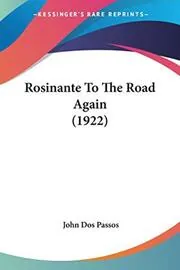
Rosinante To The Road Again
by John Dos Passos
1922
Part walking tour, part love letter to Spain, this book follows two travelers from Madrid toward Toledo and beyond. Art, landscape, custom, and history matter as much as the journey itself.
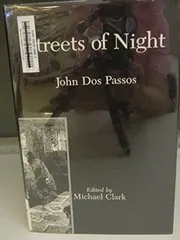
Streets of Night
by John Dos Passos
1923
Set around Boston and Harvard, this early novel follows young people pulled by art, ambition, sex, and self-invention. It is more intimate than his panoramic books, but already full of pressure and dissatisfaction.
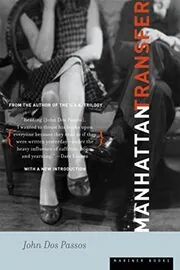
Manhattan Transfer
by John Dos Passos
1925
A crowded New York becomes the real main character in this modernist novel. Clerks, performers, strivers, and drifters surge through a city that promises everything and gives very little away.
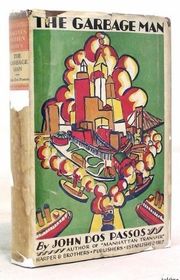
The Garbage Man
by John Dos Passos
1926
This experimental play turns the 1920s into a grim parade of noise, machinery, and spiritual drift. Tom and Jane try to live inside the frenzy while Death, disguised as the Garbage Man, waits nearby.

Facing The Chair
by John Dos Passos
1927
Written in the heat of the Sacco and Vanzetti case, this pamphlet argues that two immigrant workers were condemned by prejudice as much as evidence. It is brief, angry, and openly partisan.
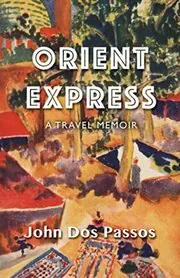
Orient Express
by John Dos Passos
1927
Dos Passos turns a long eastern journey into a book of vivid impressions rather than conventional plot. The Balkans, the Caucasus, the Middle East, and North Africa appear through color, movement, and close observation.
Airways, Inc.
by John Dos Passos
1928
Set in an industrial world of labor conflict and raw power, this play follows an organizer who is framed for murder and sent to his death. Dos Passos keeps the politics blunt and the stakes brutally high.
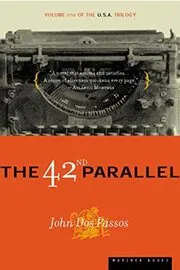
The 42nd Parallel
by John Dos Passos
1930
The opening book of U.S.A. introduces workers, dreamers, operators, and drifters in early 20th-century America. Its collage of narrative, headlines, songs, and life sketches makes the nation feel noisy and alive.
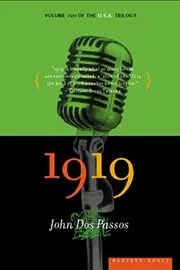
1919
by John Dos Passos
1932
The middle volume of U.S.A. widens the lens to World War I, the home front, and the social turmoil that follows. Public history and private lives crash together in one of Dos Passos's most powerful books.

Harlan Miners Speak: Report on Terrorism in the Kentucky Coal Fields
by John Dos Passos
1932
This documentary report on the Kentucky coal fields gathers testimony about labor violence, poverty, and repression. Anderson was part of the investigating committee, and the book keeps the miners' own voices at the center.
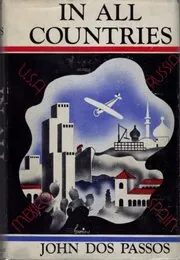
In All Countries.
by John Dos Passos
1934
These travel pieces move between Russia, Mexico, Spain, and the United States. Dos Passos writes as a restless observer, alert to politics, street life, and the strange feeling of being both inside and outside every place.
Three Plays
by John Dos Passos
1934
This volume gathers The Garbage Man, Airways, Inc., and Fortune Heights. Together they show Dos Passos testing stage forms that mix social anger, working-class politics, and experimental theatrical energy.
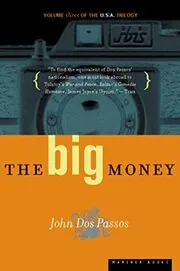
The Big Money
by John Dos Passos
1936
The final book of U.S.A. follows ambitious Americans through boom years, publicity culture, labor conflict, and collapse. Money talks loudly here, but so do exhaustion, loneliness, and wasted hope.
Journeys Between Wars
by John Dos Passos
1938
This collection revisits Dos Passos's travels through Europe, Mexico, the Soviet world, and Spain between the two world wars. It brings together wandering, witnessing, and political unease in one volume.
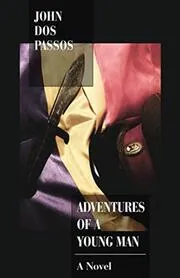
Adventures of a Young Man
by John Dos Passos
1939
Glenn Spotswood wants justice and meaning, so he drifts toward the Communist Party and then the Spanish Civil War. His idealism collides with dogma, hypocrisy, and the brutal facts of politics.

The Bitter Drink
by John Dos Passos
1939
In this brief life of Thorstein Veblen, Dos Passos studies the economist's sharp mind and outsider streak. It is less a full scholarly biography than a compact portrait of a difficult American critic.
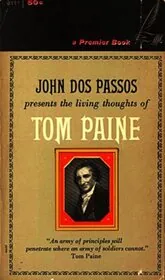
The Living Thoughts of Tom Paine
by John Dos Passos
1940
Dos Passos edits and introduces this selection from Tom Paine, keeping the revolutionary writer urgent and readable. The result is part anthology, part civic argument about liberty and plain speech.
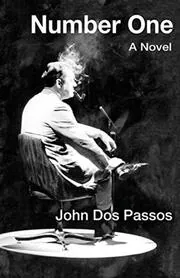
Number One
by John Dos Passos
1943
Tyler Spotswood helps a loud, ruthless Southern politician climb to the Senate, then finds himself trapped inside the machine he helped build. It is a sharp study of demagoguery, loyalty, and political rot.
State of the Nation
by John Dos Passos
1944
Drawn from wartime travels across the United States, this book moves through Washington, farms, factories, and shipyards. Dos Passos tries to take the country's measure in the middle of World War II.

First Encounter
by John Dos Passos
1945
This is the later reissue of One Man's Initiation: 1917, Dos Passos's first war novel. Through a young American near the French front, it turns firsthand experience into a blunt indictment of war.
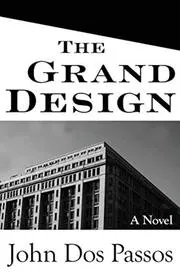
The Grand Design
by John Dos Passos
1949
Set against the expanding federal bureaucracy of the Depression and World War II years, this novel attacks political theater and administrative power. Its real subject is what happens when public ideals harden into systems.
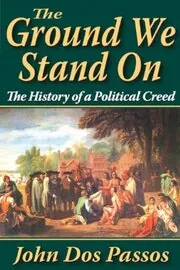
The Ground We Stand On
by John Dos Passos
1949
Dos Passos returns to Franklin, Jefferson, Samuel Adams, and other early figures to ask where American democratic habits came from. It is history written as an argument about freedom, continuity, and civic inheritance.
The Prospect Before Us
by John Dos Passos
1950
Reporting from South America, Dos Passos looks at fragile democracies, political pressure, and the daily texture of life across the region. It is travel writing, but it is also a meditation on the future of the Americas.
Chosen Country
by John Dos Passos
1952
This late, partly autobiographical novel turns personal loyalties into a meditation on country, memory, and belief. Dos Passos uses domestic and national tensions to ask what it means to choose a place and stand by it.
Most Likely To Succeed
by John Dos Passos
1954
A gifted writer moves from the theater toward film and public success, only to find ambition tangled up with ideology and compromise. Dos Passos uses show business to ask what success finally costs.
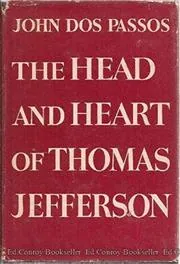
The Head and Heart of Thomas Jefferson
by John Dos Passos
1954
More intimate than a standard political biography, this book looks at Jefferson's mind, temperament, and contradictions. Dos Passos wants the statesman to feel like a human being, not a marble bust.

The Theme is Freedom
by John Dos Passos
1956
Part essay collection and part political autobiography, this book looks back over three turbulent decades of public life. Dos Passos reconsiders old causes while keeping his focus on individual liberty.
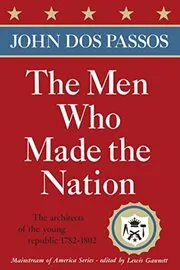
The Men Who Made the Nation
by John Dos Passos
1957
Dos Passos turns to Washington, Adams, Hamilton, and Madison to tell the story of the young republic. It is political history driven by personality, conflict, and the rough work of nation building.
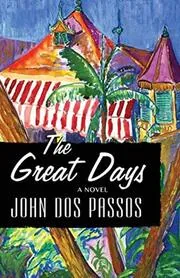
The Great Days
by John Dos Passos
1958
Roland Lancaster's affair with the younger Elsa unfolds in Cuba during World War II. Around the love story, Dos Passos weighs America's new global power and the uneasy peace that follows it.
Prospects of a Golden Age
by John Dos Passos
1959
In a linked set of biographical essays, Dos Passos looks back to the people and ideas that shaped early American culture. It is history written through character rather than dates alone.
Promise of U.S.A.
by John Dos Passos
1960
This compact volume gathers Dos Passos's thumbnail biographies from U.S.A. Public figures flash past in quick, vivid sketches that build an alternate history of modern America.

Midcentury
by John Dos Passos
1961
Using a wide cast and a collage-like structure, Dos Passos returns to the modern America he mapped in U.S.A. Labor bosses, executives, politicians, and strivers move through a hard, skeptical portrait of postwar power.
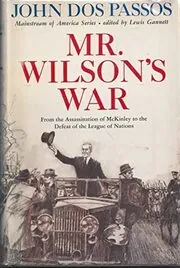
Mr. Wilson's War
by John Dos Passos
1962
This history follows the United States from McKinley's assassination to the defeat of the League of Nations. Wilson stands at the center, but Dos Passos keeps the wider machinery of power in view.
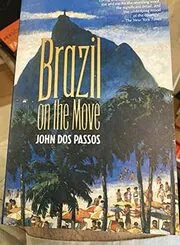
Brazil on the Move
by John Dos Passos
1963
Traveling through a rapidly changing Brazil, Dos Passos reports on politics, development, landscape, and everyday encounters. The book balances excitement about national growth with questions about what modernity costs.
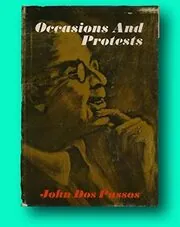
Occasions and Protests
by John Dos Passos
1964
This essay collection gathers decades of Dos Passos's political and cultural writing. Again and again, he returns to the clash between individual freedom and the systems that try to manage it.
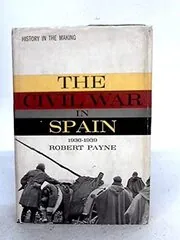
The Civil War in Spain
by John Dos Passos
1964
A short, pointed account of the Spanish Civil War from a writer who knew Spain well and saw the conflict up close. Personal disappointment and political disillusionment run through every page.
Thomas Jefferson, the Making of a President
by John Dos Passos
1964
Dos Passos retells Jefferson's rise in clear, accessible terms, with a sharp eye for character and public life. It works as both a concise biography and an introduction to the early republic.
The Best Times
by John Dos Passos
1966
Dos Passos looks back on his father, Harvard, World War I, travel, and the literary world that formed him. The memoir is plainspoken, observant, and often most revealing in passing moments.
The Shackles of Power
by John Dos Passos
1966
This historical study continues Dos Passos's long argument with political power in the early American republic. He follows the tension between liberty, leadership, and central authority across the Jeffersonian era.

Tour of Duty
by John Dos Passos
1967
A collection of war reporting from the Pacific and postwar Europe. Dos Passos watches soldiers, cities, and occupied societies at close range, with equal attention to logistics, damage, and human strain.
The Portugal Story
by John Dos Passos
1969
Part history and part family return, this book follows Portugal from its early rise to its years as a world power. Dos Passos writes with a personal stake, shaped by his own Portuguese and Madeiran roots.
Century's Ebb
by John Dos Passos
1970
Published after his death and left incomplete, this late chronicle turns personal memory and public history into one last portrait of America. It feels restless, reflective, and unfinished by both design and circumstance.
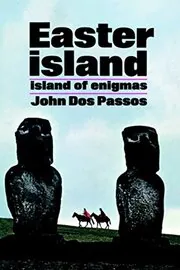
Easter Island
by John Dos Passos
1970
In his final travel book, Dos Passos journeys to Easter Island and probes the mystery of the moai. History, archaeology, and a lifelong taste for far-off places meet in a compact, curious narrative.
The Fourteenth Chronicle
by John Dos Passos
1973
This posthumous collection of letters and diary entries opens up Dos Passos's private side. It follows his travels, friendships, doubts, and working life in his own unguarded voice.
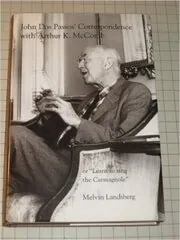
Correspondence with Arthur K. McComb
by John Dos Passos
1980
These letters between Dos Passos and Arthur K. McComb catch him in formation. Friendship, travel, art, and the daily labor of becoming a writer all sit close to the surface.
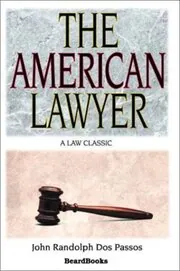
The American Lawyer
by John Dos Passos
1986
This nonfiction study examines the American legal profession, from courtroom practice to public reputation. It asks what lawyers do, how the system works, and how justice can drift away from ordinary people.
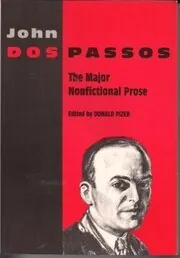
The Major Nonfictional Prose
by John Dos Passos
1988
A selected volume of reportage, essays, interviews, and reflective prose from across Dos Passos's career. It tracks his restless engagement with war, labor, art, American politics, and the writer's job.

Afterglow and Other Undergraduate Writings
by John Dos Passos
1990
This collection brings together Dos Passos's Harvard-era fiction, essays, and sketches. It shows the young writer trying out themes, voices, and visual detail that would matter for the rest of his career.
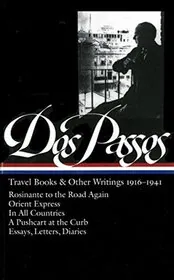
Travel Books and Other Writings, 1916-1941
by John Dos Passos
2003
A big gathering of Dos Passos's travel books, essays, letters, and diaries from his early and middle years. Spain, the Middle East, Mexico, and literary life all come into view as his style and politics take shape.
Where to start with John Dos Passos
If you want his biggest achievement: The 42nd Parallel → 1919 → The Big Money
If you want antiwar Dos Passos first: One Man's Initiation: 1917 → Three Soldiers
If you want New York modernism: Manhattan Transfer
If you want the later political trilogy: Adventures of a Young Man → Number One → The Grand Design
John Dos Passos sub-series and character series
District of Columbia books in order
Explore this seriesDistrict of Columbia books in chronological order
John Dos Passos collections, short stories, and related book types
Non-Fiction
Plays
Collections
Standalone John Dos Passos books
Author bio
John Dos Passos was born in Chicago on January 14, 1896, the son of lawyer John Randolph Dos Passos and Lucy Addison Sprigg Madison. Because his parents were not yet married and his mother preferred long stays in Europe, his childhood was unsettled and unusually mobile. He spent time in Virginia, traveled widely abroad, and was sent to school at Choate in Connecticut under the name John Roderigo Madison.
He grew up a little off-center, and that outsider feeling never really left him.
At Harvard, where he studied from 1912 to 1916, he became friends with e.e. cummings and kept widening his interests in art, literature, and politics. After graduation he went to Spain to study art and architecture, then volunteered as an ambulance driver in World War I in France and Italy. Later he served in the Army Medical Corps and studied briefly at the Sorbonne after the armistice. War did not make him grand or patriotic on the page. It made him angry, observant, and deeply suspicious of large systems.
That experience drove him toward fiction. One Man's Initiation: 1917 and Three Soldiers turn wartime confusion, boredom, fear, and cruelty into blunt antiwar novels. Then Manhattan Transfer opened his work outward, using a crowded New York to show how modern city life could be thrilling, impersonal, and exhausting all at once.
His biggest book-length achievement is the U.S.A. trilogy, The 42nd Parallel, 1919, and The Big Money. Those novels mix ordinary storytelling with headlines, song scraps, biography, and autobiographical fragments. Readers still come to them for their scale, but also for their texture. He could make politics feel personal, and make private ambition sound like a national language.
He liked big subjects, but he kept bringing them back to ordinary lives.
Travel mattered just as much to him as politics. Spain especially stayed with him, in books like Rosinante to the Road Again and later in the travel-rich Journeys Between Wars. Over time his political views changed sharply. His early sympathy for socialism and labor radicalism gave way to deep disillusionment, especially after the Spanish Civil War and the killing of his friend Jose Robles. That change runs through the later District of Columbia trilogy, especially Adventures of a Young Man, Number One, and The Grand Design.
He was also a painter, and he designed cover art for some of his own books. During World War II he worked as a journalist and war correspondent in the Pacific and in occupied Europe. In later years he turned more often to history and biography, writing books such as The Head and Heart of Thomas Jefferson, The Men Who Made the Nation, and Mr. Wilson's War. Even when he was writing history, he kept his eye on motive, pressure, and the ways public language hides private interests.
His personal life was marked by both companionship and loss. He married Katharine Smith in 1929, and her death in a 1947 car accident, which also cost him the sight in one eye, was a devastating blow. He remarried in 1949, to Elizabeth Holdridge, and they had a daughter, Lucy. Much of his later life was spent at Spence's Point in Virginia, where he kept writing, reading, painting, and thinking about the American past.
He died in Baltimore on September 28, 1970. What remains is a body of work that ranges far beyond the few titles people usually know. Dos Passos could write about a trench, a newsroom, a shipyard, a campaign office, or a country road with the same alert eye. He was always after the same thing in the end: how power works, how people speak, and how a person might still hang on to freedom inside history.







Edited by
Software engineer whose passion for tracking book recommendations from podcasts inspired the creation of MRB.
Lead investor at 3one4 Capital whose startup expertise and love for books helped shape MRB and its growth.
Comments
Did we miss something? Have feedback?
Help us improve this page by sharing your thoughts