
The U.S.A. Trilogy Books in Order
Part ofJohn Dos Passos Books in OrderBrowse the U.S.A. Trilogy by John Dos Passos in order, with quick summaries, reading guidance, and background on this sweeping three-book American epic.
Last updated:
As an Amazon Associate, we earn from qualifying purchases (at no extra cost to you).
The U.S.A. Trilogy books in publication order
3 books

The 42nd Parallel
by John Dos Passos
1930
The opening book of U.S.A. introduces workers, dreamers, operators, and drifters in early 20th-century America. Its collage of narrative, headlines, songs, and life sketches makes the nation feel noisy and alive.

1919
by John Dos Passos
1932
The middle volume of U.S.A. widens the lens to World War I, the home front, and the social turmoil that follows. Public history and private lives crash together in one of Dos Passos's most powerful books.
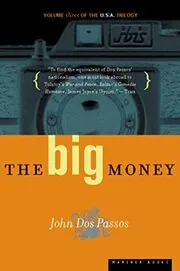
The Big Money
by John Dos Passos
1936
The final book of U.S.A. follows ambitious Americans through boom years, publicity culture, labor conflict, and collapse. Money talks loudly here, but so do exhaustion, loneliness, and wasted hope.
The U.S.A. Trilogy books in chronological order
Series background & context
John Dos Passos's U.S.A. trilogy, The 42nd Parallel, 1919, and The Big Money, is one of those rare series that tries to do more than tell one story. It tries to catch a whole country in motion. The books follow the United States from the early 1900s through World War I and into the boom years and crash that follow. Factories, strikes, newspapers, boardrooms, city streets, campaigns, and cheap rooms all belong to the picture.
There is not a single hero. Instead, Dos Passos moves through a wide cast of workers, dreamers, operators, artists, secretaries, mechanics, salesmen, and wanderers. Some, like Mac, Mary French, J. Ward Moorehouse, Eleanor Stoddard, and Charley Anderson, reappear across the three books and give the trilogy its human thread. They fall in and out of jobs, causes, love affairs, and ambitions. What links them is not shared destiny so much as shared exposure to the pressure of modern America.
The formal design is a big part of the experience. Alongside the ordinary narrative chapters, Dos Passos inserts Newsreels made from headlines and song fragments, short biographies of public figures, and the Camera Eye sections, which are more personal and impressionistic. On paper that can sound difficult. In practice it makes the books feel fast, noisy, and alive. You are not just told about the period. You hear its slogans, its sales talk, its marching tunes, and its static.
It's busy on purpose.
The trilogy cares about work, money, class, and the promises America makes to people who are trying to build a life. Dos Passos is especially alert to the distance between public optimism and private wear. A character can be full of energy in one chapter and spiritually cornered in the next. A business success can look hollow. A political movement can begin in hope and end in exhaustion. World War I and its aftermath deepen that feeling. By 1919, the country seems louder, harsher, and more confused. By The Big Money, the chase for status and profit has become almost a language of its own.
Setting matters everywhere. New York, Chicago, Mexico, Paris, Washington, and smaller working towns all enter the frame, but the real setting is a nation learning to live with mass media, industrial scale, and modern publicity. Dos Passos was one of the sharpest American writers on what that change felt like from the ground. He can show the glamour of speed and the ugliness behind it in the same breath.
You can read each book on its own, but the trilogy is strongest when taken as a whole. The reward is not a neat finish or one final answer about America. It is the sense of having watched a country talk itself into being modern, rich, restless, and divided. If you want fiction that thinks on a national scale without losing sight of ordinary people, U.S.A. is where to start.














Edited by
Software engineer whose passion for tracking book recommendations from podcasts inspired the creation of MRB.
Lead investor at 3one4 Capital whose startup expertise and love for books helped shape MRB and its growth.
Comments
Did we miss something? Have feedback?
Help us improve this page by sharing your thoughts