
HG Wells Books in Order
Explore H. G. Wells's books in order, with short summaries of his science fiction, social novels, and nonfiction to help you choose where to start reading.
Last updated: 12 new books added
As an Amazon Associate, we earn from qualifying purchases (at no extra cost to you).
HG Wells books in publication order
107 books

The Time Machine
by HG Wells
1895
A Victorian inventor travels far into the future and encounters the gentle Eloi and the underground Morlocks. What first seems a peaceful world conceals a disturbing relationship, forcing him to question humanity's progress and his own safety.
Recommended by
2 people Sahil Lavingia recommended this book
Sahil Lavingia
Sahil Lavingia recommended this book on Notion.
Sahil Lavingia's recommendation of this book 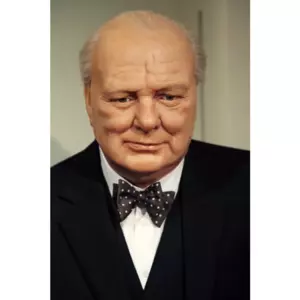 Winston Churchill recommended this book
Winston Churchill
"A wonderful book." - Winston Churchill
Winston Churchill's recommendation of this book

The Wonderful Visit
by HG Wells
1895
A country vicar accidentally shoots a strange winged visitor and takes him home to recover. The angel's bewilderment at ordinary English life exposes the prejudices and conventions that make his hosts increasingly suspicious of him.

The Island of Dr. Moreau
by HG Wells
1896
Shipwreck survivor Edward Prendick reaches an island where Dr. Moreau conducts cruel experiments on animals. As Prendick discovers the origins of the island's strange inhabitants, he fears what the doctor's work means for his own survival.

The Stolen Bacillus and Other Incidents
by HG Wells
1896
Scientific curiosity and everyday ambitions turn dangerous in these short stories. A stolen specimen threatens London with disease, while an unknown creature stalks a remote observatory, bringing unexpected terrors into familiar and seemingly orderly lives.

The Wheels of Chance
by HG Wells
1896
Shop assistant Mr. Hoopdriver takes a cycling holiday to escape his dull working life. Meeting a young woman seeking freedom draws him into an adventure that tests his confidence, social pretensions, and ideas about romance.

Certain Personal Matters
by HG Wells
1897
Wells gathers short essays that view everyday life through the eyes of a modest young writer. Domestic irritations, books, education, and scientific ideas become subjects for humor and social observation, often with a pointed twist.

The Invisible Man
by HG Wells
1897
Scientist Griffin discovers how to make himself invisible but finds that the achievement isolates him from ordinary life. His increasingly violent efforts to exploit his power turn a scientific breakthrough into a threat to everyone around him.

The Plattner Story and Others
by HG Wells
1897
A schoolteacher’s chemical experiment sends him into a strange dimension in the title story. Seventeen tales bring together scientific speculation, uncanny encounters, and domestic troubles, revealing how quickly ordinary lives can become bewildering or dangerous.
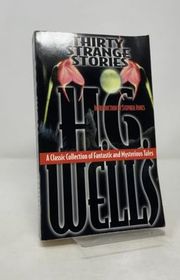
Thirty Strange Stories
by HG Wells
1897
Thirty tales explore the unsettling possibilities hidden within science, domestic life, and society. Strange discoveries and unexpected encounters disturb familiar routines, mixing fantasy and horror with questions about human behavior and the limits of understanding.

The Man Who Could Work Miracles
by HG Wells
1898
George Fotheringay insists miracles are impossible, then discovers that his commands can change reality. As he experiments with his unexpected power and seeks a clergyman's guidance, apparently helpful wishes reveal how little he understands their consequences.

The War of the Worlds
by HG Wells
1898
Martian machines land in England and overwhelm human defenses with heat rays and poison gas. A narrator struggles through the devastation to find safety and his wife, confronting an invasion that strips humanity of its usual confidence.

Love and Mr. Lewisham
by HG Wells
1899
Young teacher Mr. Lewisham dreams of a brilliant future, but falling for Ethel changes his plans. Reunited in London, they face the competing demands of love, ambition, and earning a living amid her family's dishonest spiritualist business.
Tales of Space and Time
by HG Wells
1899
Five tales range from a mysterious crystal revealing another world to a threatened Earth and humanity’s distant past and future. Scientific speculation and sudden extraordinary powers expose the ambitions, dangers, and uncertainties shaping human lives.

When the Sleeper Wakes / The Sleeper Awakes
by HG Wells
1899
Graham awakens after more than two centuries to find himself enormously wealthy in a transformed London. Others have used his fortune to control society, drawing him into a struggle over power and the lives of ordinary people.

Anticipations
by HG Wells
1901
Wells considers how new transport and scientific developments might reshape the twentieth century. His predictions range across cities, work, warfare, and government, connecting technological change with his hopes and assumptions about the future of society.

The First Men in the Moon
by HG Wells
1901
Inventor Cavor develops a substance that blocks gravity and travels to the Moon with businessman Bedford. Discovering an underground lunar civilization turns their expedition into a dangerous encounter between very different societies and motives.

The Discovery of the Future
by HG Wells
1902
In this lecture, Wells asks whether the future can be studied rather than simply awaited. He contrasts minds focused on the past with those looking ahead, arguing that scientific reasoning can reveal patterns in humanity's development.

The Sea Lady
by HG Wells
1902
A mermaid calling herself Doris Waters enters respectable English seaside society and becomes interested in Harry Chatteris. Her attraction challenges his engagement and political ambitions, setting alluring possibilities against the expectations governing his life.

Mankind in the Making
by HG Wells
1903
Wells examines the forces that turn children into citizens, from family life to schooling and public institutions. He proposes social and educational reforms intended to shape a better future, measuring existing arrangements against their effects on human development.

The Food of the Gods and How It Came to Earth
by HG Wells
1904
Scientists create a substance that makes living things grow to enormous size. As it spreads from an experimental farm to animals and children, the discovery unsettles society and creates conflict between ordinary people and a new generation of giants.

A Modern Utopia
by HG Wells
1905
Two travelers explore an imagined counterpart of Earth organized as a unified world state. Their encounters with its institutions and their own doubles become a discussion of freedom, social order, and the difficulties of building a better society.

Kipps
by HG Wells
1905
Shop assistant Arthur Kipps inherits a fortune and suddenly gains access to a world he doesn't understand. Trying to become a gentleman pulls him between social ambition, romantic expectations, and the simpler life that once seemed beyond reach.

In the Days of the Comet
by HG Wells
1906
Unemployed Willie Leadford is consumed by jealousy when Nettie leaves him for a wealthier man. As a comet approaches Earth, his personal anger unfolds against social unrest and the prospect of a profound change in human life.

The Future in America
by HG Wells
1906
Drawing on a visit to the United States, Wells considers the country's energy, wealth, and prospects. His travel observations examine labor, immigration, racial prejudice, and politics, asking how American society might manage the pressures of rapid growth.
Twelve Stories and a Dream
by HG Wells
1906
Inventors, shoppers, travelers, and ordinary townspeople encounter strange powers and impossible events. These thirteen tales combine scientific experiments, supernatural visitors, and unsettling dreams, exploring the desires and fears that emerge when everyday reality breaks down.

This Misery of Boots
by HG Wells
1907
Wells uses the discomfort of poor footwear to examine poverty and unequal access to basic necessities. This short socialist argument asks why preventable suffering persists and calls for collective control of the resources needed to meet human needs.

First and Last Things
by HG Wells
1908
Wells sets out his beliefs about knowledge, conduct, and humanity's place in the world. Moving from philosophy to personal relationships, he considers how uncertain convictions can still guide an individual toward a meaningful and socially responsible life.

New Worlds for Old
by HG Wells
1908
Wells explains his understanding of socialism and answers objections to collective ownership. He examines property, inequality, family life, and social reform, arguing that society can organize its resources around public needs rather than private advantage.

The War in the Air
by HG Wells
1908
Bert Smallways accidentally finds himself aboard a German air fleet preparing to attack America. An ordinary Englishman's misadventure becomes a struggle to survive as aerial warfare spreads and the structures of civilization begin to collapse.

Ann Veronica
by HG Wells
1909
Biology student Ann Veronica leaves her father's restrictive home to pursue an independent life in London. Money troubles, unwanted attention, political activism, and love complicate her attempt to decide for herself how a woman should live.

The Country of the Blind and Other Stories
by HG Wells
1909
Ordinary people confront extraordinary discoveries, creatures, and machines in these early short stories. Wells explores the promise and destructive potential of scientific progress, using fantastic situations and humor to question human confidence in a rapidly changing world.

Tono-Bungay
by HG Wells
1909
George Ponderevo helps his uncle build a fortune selling a dubious patent medicine. As their business expands into wealth and social influence, George's scientific ambitions collide with the deception and instability supporting the enterprise.

The History of Mr Polly
by HG Wells
1910
Alfred Polly is miserable with his shop, marriage, and life in a small English town. His attempts to escape a future of disappointment lead to drastic choices and unexpected adventures in this comic story of reinvention.

Floor Games
by HG Wells
1911
Wells describes imaginative indoor games built from toy figures, blocks, boards, and railway equipment. Drawing on play with his sons, he explains how children can create islands, cities, and engineering projects across an ordinary floor.

The New Machiavelli
by HG Wells
1911
Politician Richard Remington wants to reshape England and rises through its public life. An affair with a young woman threatens his marriage and career, forcing him to confront the conflict between political ideals and private desire.

The Sleeper Awakes
by HG Wells
1911
After sleeping for centuries, Graham wakes in a future London where accumulated wealth has made him a figure of immense power. Discovering how that power has been exercised brings him into conflict with rulers and a restless population.

Marriage
by HG Wells
1912
Physicist Trafford and Marjorie Pope marry despite her family's objections. Scientific work, commercial success, and social expectations place growing pressure on their relationship, leading them to seek a new understanding of their life together.

Little Wars
by HG Wells
1913
Wells presents rules for battles fought with toy soldiers and miniature artillery. Instructions for movement, firing, and combat sit alongside accounts of play, turning homemade battlefields into a game of tactics while reflecting on actual war.

The Passionate Friends
by HG Wells
1913
Stephen Stratton recounts his life and his lasting attachment to Lady Mary, who marries a wealthy financier. Their continuing connection brings love into conflict with marriage, jealousy, and his developing hopes for a more cooperative world.

An Englishman Looks at the World
by HG Wells
1914
These essays explore changes in English and American life through subjects ranging from aviation and transport to politics, books, and education. Wells connects everyday debates with larger questions about science, social organization, and humanity's future.

The Wife of Sir Isaac Harman
by HG Wells
1914
Ellen Harman lives in comfort but feels trapped by her domineering husband. Friendship with novelist George Brumley and growing concern for other women strengthen her desire for independence, bringing her into conflict with Sir Isaac's possessiveness.

The World Set Free
by HG Wells
1914
The discovery of atomic energy promises new possibilities, then gives nations weapons capable of lasting devastation. Wells imagines a catastrophic war and asks how humanity might rebuild its political order when old arrangements can no longer keep it safe.

Bealby
by HG Wells
1915
Thirteen-year-old Bealby rebels against service in a grand country house and runs away after disrupting an important party. His week of freedom brings unexpected companions and comic complications as adults try to deal with the trouble he leaves behind.

Boon
by HG Wells
1915
Reginald Bliss tries to assemble a book from the fragments left by the late writer George Boon. Their literary conversations and imagined works become a satire of authors, intellectual fashions, and the notion of a collective human mind.

Boon, the Mind of the Race
by HG Wells
1915
Presented as the literary remains of George Boon, this satire mixes fragmentary stories, conversations, and drawings. His friend's editorial efforts expose the pretensions of the literary world while questioning grand theories about humanity's shared consciousness.

The Research Magnificent
by HG Wells
1915
Wealthy William Benham sets out to discover how to live nobly and overcome human limitations. His demanding ideals bring him into conflict with family, friends, and marriage as travels abroad extend his search for a meaningful life.

Elements of Reconstruction
by HG Wells
1916
These wartime essays propose reorganizing Britain after the First World War through scientific thinking and coordinated public action. Wells examines industry, agriculture, labor, education, and imperial government as connected parts of the task of national reconstruction.

Mr. Britling Sees It Through
by HG Wells
1916
Writer Mr. Britling enjoys family life and lively conversation in an Essex village until the First World War disrupts his comfortable assumptions. His son's military service and a German visitor's departure force personal questions about patriotism, humanity, and faith.
What is Coming?
by HG Wells
1916
Writing during the First World War, Wells considers how the conflict may transform everyday life, class relations, and international affairs. These essays connect forecasts of social change with the possibility of building a world order capable of preventing further wars.

God the Invisible King
by HG Wells
1917
Wells sets out a personal understanding of religious faith outside established Christian doctrine and organized churches. His account connects devotion to God with human responsibility, treating spiritual commitment as a force for confronting suffering and improving the world.

The Soul of a Bishop
by HG Wells
1917
Bishop Edward Scrope's insomnia and religious doubts unsettle his respectable position in wartime England. Encounters with an American widow and an extraordinary spiritual experience deepen his conflict between the church's official doctrines and his search for authentic faith.
War and the Future / Italy, France and Britain at War
by HG Wells
1917
Visits to Italy, France, and Britain during the First World War provide the basis for Wells's observations of armies and societies under pressure. He examines modern warfare and considers how the conflict might reshape humanity's political future.
In The Fourth Year
by HG Wells
1918
These wartime essays examine the conditions needed for lasting peace after the First World War. Wells argues for a League of Nations with meaningful authority, exploring international cooperation, democratic representation, and the limits of existing political institutions.

Joan and Peter
by HG Wells
1918
Peter Stublands and his young relative Joan become the focus of competing ideas about upbringing and schooling. Their development through late Victorian and Edwardian England exposes educational failures and social assumptions as the First World War approaches.
The Outline of History
by HG Wells
1919
Wells traces human history within the larger story of Earth's formation and the development of life. Moving through civilizations and empires toward the First World War, this broad survey seeks a shared understanding of humanity's past.

The Undying Fire
by HG Wells
1919
Schoolmaster Job Huss faces disasters at his school, financial ruin, family grief, and serious illness. As governors question his leadership, arguments over education and human purpose turn his suffering into a modern reconsideration of the biblical story of Job.

Russia in the Shadows
by HG Wells
1920
Wells recounts a visit to Russia after the revolution, observing poverty, disruption, and the difficulties facing the new government. Conversations with Maxim Gorky and Lenin inform his assessment of Bolshevism and Russia's prospects amid severe social breakdown.

The Salvaging of Civiization
by HG Wells
1921
Wells argues that civilization's survival after the First World War requires a common political purpose beyond national rivalries. These essays connect the creation of a world state with education, historical understanding, and a broader sense of responsibility to humanity.

A Short History of the World
by HG Wells
1922
This compact history follows the development of Earth, life, and human societies through the early twentieth century. Wells brings science, religion, cultures, and empires into a continuous account of the forces shaping the human world.

The Secret Places of the Heart
by HG Wells
1922
Sir Richmond Hardy travels through western England with Dr. Martineau in search of relief from inner conflict. Their discussions of love, marriage, ambition, and the human past turn the journey into an inquiry into his divided emotional life.

Reporting on the Washington conference after the First World War, Wells examines disarmament and the prospects for international peace. His essays consider national interests, the failures of the postwar settlement, and the obstacles to genuine cooperation between governments.

Men Like Gods
by HG Wells
1923
Disillusioned journalist Mr. Barnstaple sets out on holiday, only to be transported with other motorists into a parallel world. Its advanced society fascinates him, while fellow visitors respond to its unfamiliar freedoms with suspicion and ambitions of conquest.
The Dream
by HG Wells
1924
In a distant utopian future, biologist Sarnac recounts a dream encompassing the life of Englishman Harry Mortimer Smith. Harry's experiences of family, work, love, and war expose the social confusion of the Victorian and Edwardian world.

A Modern Utopia and Other Discussions
by HG Wells
1925
Centered on Wells's imagined modern utopia, this volume considers how a society organized for social equality might function. Its discussions explore the relationship between ideal institutions, individual lives, and the continuing possibility of human development and change.

Christina Alberta's Father
by HG Wells
1925
Widowed Albert Edward Preemby becomes convinced that he is the ancient king Sargon, returned to restore order. His daughter Christina Alberta seeks an independent life while his strange conviction brings them into conflict with society's treatment of mental illness.

The World of William Clissold
by HG Wells
1926
William Clissold recounts his upbringing and changing beliefs while examining the institutions that shape modern life. Personal experience becomes a framework for discussions of religion, money, history, and the possibility of organizing a better society beyond national boundaries.

Meanwhile the Picture of a Lady
by HG Wells
1927
At an Italian villa, wealthy Cynthia and Philip Rylands entertain guests whose conversations range from personal affairs to humanity's future. A visiting writer's theories about a coming better age intersect with the couple's troubled marriage and unsettled contemporary world.

The Complete Short Stories of H.G. Wells
by HG Wells
1927
Ordinary people encounter strange creatures, inventions, and unsettling possibilities in Wells’s short fiction. These stories combine scientific curiosity with humor and an awareness that discoveries promising progress can also threaten humanity.

Mr. Blettsworthy on Rampole Island
by HG Wells
1928
Betrayed in business and love, Arnold Blettsworthy embarks on a voyage to recover his confidence. Shipwreck brings him among cannibals on Rampole Island, where his unfamiliar ideas and growing entanglements challenge the assumptions of his sheltered English upbringing.

The Open Conspiracy
by HG Wells
1928
Wells proposes an openly organized movement to replace national rivalries with a unified world commonwealth. Drawing on scientific progress, the manifesto examines how people across professions might work together for peace, social welfare, and freedom for creative activity.

The King Who Was a King
by HG Wells
1929
Combining reflections on cinema with a film scenario, Wells explores how moving pictures might communicate ideas about world peace. The central story raises the question of whether killing one person can be justified to avert a greater war.

The Science of Life
by HG Wells
1929
H. G. Wells, Julian Huxley, and G. P. Wells present a broad introduction to biological knowledge. Topics range from living bodies and evolution to heredity, animal behavior, human thought, and the relationship between biology and humanity's future.

Autocracy of Mr. Parham
by HG Wells
1930
An Oxford intellectual attends a seance and dreams himself into supreme political power. Mr. Parham's ambitions and inadequate judgment expose the dangers of reactionary leadership as his imagined authority draws Britain toward a disastrous conflict with the United States.

Bulpington of Blup
by HG Wells
1930
Theodore Bulpington invents a romantic, heroic version of himself that increasingly governs his thoughts and actions. As ordinary relationships and the First World War test his self-image, the gap between imagined greatness and actual conduct grows wider.

The Open Conspiracy and Other Writings
by HG Wells
1933
This volume presents Wells's proposal for an open movement toward a politically, socially, and economically unified world. Scientific advances provide the foundation for his argument that coordinated human effort could overcome national divisions and establish a more peaceful society.

The Shape of Things to Come
by HG Wells
1933
Written as a history of the future, this account follows a prolonged economic crisis into devastating war and plague. Pilots and technicians preserve remnants of modern technology, raising difficult questions about reconstruction, political authority, and the creation of a new civilization.

Experiment in Autobiography
by HG Wells
1934
Wells reflects on his origins, education, teaching, and development as a writer, combining personal narrative with philosophical and political discussion. His changing understanding of society gives the account a continuing concern with humanity's prospects and a future world civilization.

H.G. Wells in Love
by HG Wells
1934
This personal supplement to Wells's autobiography recounts intimate relationships omitted from his public account of life. Reflections on love, marriage, and sexual experience offer another view of the connections between his private history and his literary career.

The Croquet Player
by HG Wells
1936
A leisurely croquet player meets a troubled doctor while staying in Normandy and listens to his disturbing account of English marshland. Tales of cruelty and ancestral fear interrupt the narrator's sheltered routine, drawing him toward unsettling questions about civilization.

Brynhild
by HG Wells
1937
Sensitive novelist Rowland Palace secretly hires a publicist to improve his reputation while growing distant from his wife, Brynhild. Her friendship with a successful younger writer draws marital tensions into a literary world driven by jealousy, publicity, and concealed identities.

Star Begotten
by HG Wells
1937
Popular historian Joseph Davis becomes troubled by the possibility that Martians are altering humanity's genetic inheritance. Discussions with other men deepen his suspicions that changes in his family and society may signal an influence reaching Earth from another planet.

The Camford Visitation
by HG Wells
1937
An unexplained utopian voice subjects the University of Camford and its intellectual habits to searching criticism. Its interventions question education's place in society and challenge an academic world whose established assumptions leave it ill prepared for an approaching war.

Apropos of Dolores
by HG Wells
1938
Englishman Stephen Wilbeck, living in France, recounts his difficult relationship with his wife, Dolores. Her jealousy and possessiveness provoke reflections on marriage and personal freedom as his account examines the conflict between two incompatible temperaments and expectations.

The Brothers
by HG Wells
1938
In a country divided by civil war, Bolaris celebrates the capture of enemy leader Ratzel until he sees their remarkable resemblance. Suspecting that they may be brothers, he must investigate their connection without betraying his political loyalties.
World Brain
by HG Wells
1938
These essays and addresses propose a permanent world encyclopedia that would make reliable knowledge available across national boundaries. Wells explores how shared information and improved education could help people understand their interconnected world and contribute to lasting peace.

The Fate of Homo Sapiens / The Fate of Man
by HG Wells
1939
Wells examines humanity's immediate prospects through biology, history, religion, and competing political systems. His assessment of democracy, totalitarianism, national interests, and collective learning asks whether existing social forces can meet the challenges confronting the survival of the species.

The Holy Terror
by HG Wells
1939
Aggressive from childhood, Rudolf Whitlow develops political ambitions that attract influential supporters and committed collaborators. Following his rise toward a movement for world government, the novel examines the relationship between visionary reform, authoritarian power, and the fears behind ruthless leadership.

The New World Order
by HG Wells
1939
Wells considers how lasting peace might replace international rivalry during the Second World War. He argues for a scientifically organized world government, linking the protection of human rights to broader changes in economic and political life.

All Aboard for Ararat
by HG Wells
1940
God asks a modern Noah to build another ark, prompting questions about humanity's responsibility for its own future. Noah is willing to undertake the task, but insists that people take charge while God travels as a passenger.

Babes in the Darkling Wood
by HG Wells
1940
Stella's promising life at Cambridge and Gemini's admiration draw the pair toward a psychotherapist's innovative ideas. When tragedy enters their lives, they discover the limits of intellectual explanations and must confront suffering that theory cannot easily resolve.

You Can't Be Too Careful
by HG Wells
1941
The life of Edward Albert Tewler supplies Wells with a portrait of an ordinary Englishman's habits and assumptions. Following him from childhood into adulthood, the novel examines how caution, convention, and social expectations shape individual choices.

The Conquest of Time
by HG Wells
1942
Writing during the Second World War, Wells examines beliefs and institutions that have brought humanity toward destruction. He argues that inherited prejudices and intolerant religion must give way to a new social morality suited to a changing universe.

Crux Ansata
by HG Wells
1943
Wells presents a polemical attack on the Roman Catholic Church, focusing on its political influence and wartime conduct. His criticism of Pope Pius XII connects religious authority with the wider struggle against fascism during the Second World War.

Mind at the End of Its Tether
by HG Wells
1945
In this late essay, Wells questions whether human intelligence can continue to understand a world whose conditions appear fundamentally altered. Reflecting on survival and evolutionary change, he revisits the assumptions behind his earlier confidence in humanity's future.

The Wealth of Mr. Waddy
by HG Wells
1969
This unfinished early version of Kipps gives Mr. Waddy a much larger role in Wells's planned social comedy. Completed chapters and outlines reveal how questions of money, inheritance, and class developed before the later novel took shape.

Early Writings in Science and Science Fiction
by HG Wells
1975
Early stories, speculative essays, and the first serialized version of The Time Machine reveal Wells developing his scientific imagination. The collection follows his interest in evolution, discovery, and the possibilities and consequences of future change.

Interviews and Recollections
by HG Wells
1981
John R. Hammond gathers interviews with Wells and recollections by people who knew him, including Geoffrey West, Berta Ruck, and Margaret Cole. These accounts explore his personality, conversation, and daily life through the impressions of his contemporaries.

Experiment in Autobiography, Vol. 2
by HG Wells
1984
Wells continues his autobiographical inquiry by examining the experiences and ideas behind his literary career and social philosophy. Personal recollection blends with reflections on science, education, politics, and the intellectual influences that shaped his ambitions for civilization.
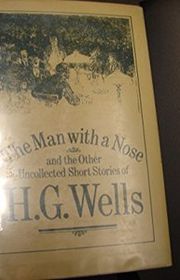
The Man with a Nose
by HG Wells
1984
These previously uncollected stories follow people whose ordinary lives take unexpected turns, from a bicycle ride to an elixir promising success. A newspaper from the future and a surprising treasure add stranger possibilities to everyday concerns.

The Correspondence of H. G. Wells, Volume 2
by HG Wells
1997
Wells’s letters from 1904 to 1918 trace his personal relationships and public life through correspondence with friends, family, and professional contacts. Gathered from numerous archives, they reveal concerns and exchanges beyond the published fiction.
Standalone HG Wells books







Edited by
Software engineer whose passion for tracking book recommendations from podcasts inspired the creation of MRB.
Lead investor at 3one4 Capital whose startup expertise and love for books helped shape MRB and its growth.
Comments
Did we miss something? Have feedback?
Help us improve this page by sharing your thoughts