
HG Wells Books in Order
Explore H. G. Wells's books in order, with short summaries of his science fiction, social novels, and nonfiction to help you choose where to start reading.
Last updated:
As an Amazon Associate, we earn from qualifying purchases (at no extra cost to you).
HG Wells books in publication order
123 books

The Correspondence of H. G. Wells, Volume 3
by HG Wells
1997
Wells’s letters from 1919 to 1934 trace his personal relationships and public life through correspondence with friends, family, and professional contacts. Gathered from numerous archives, they reveal concerns and exchanges beyond the published fiction.

The Correspondence of H. G. Wells, Volume 4
by HG Wells
1997
Wells’s letters from 1934 to 1946 trace his personal relationships and public life through correspondence with friends, family, and professional contacts. Gathered from numerous archives, they reveal concerns and exchanges beyond the published fiction.

A Volume of Journalism
by HG Wells
1999
This collection brings together Wells's essays and articles originally written for newspapers and magazines. Addressing politics, science, and social questions, it shows how his journalism engaged with the debates and changing conditions of the early twentieth century.

The Conquest of Time and The Happy Turning
by HG Wells
2002
Two late works bring together Wells's reflections on time and his escape into dreams amid wartime destruction. Philosophical questions about existence sit alongside imagined encounters with supernatural beings in a world freed from ordinary earthly constraints.

Little Wars and Floor Games
by HG Wells
2006
Wells explains games played with miniature armies and improvised landscapes on the floor, combining practical rules with accounts of imaginative play. The paired works explore how simple toys can support both strategic contests and shared creative adventures.
A Modern Utopia
by HG Wells
Two travelers encounter an imagined world organized according to a different set of social institutions. Moving between narrative and discussion, Wells considers government, work, property, individual freedom, and the tensions involved in designing a society intended to keep changing.

A Short History of the World
by HG Wells
Wells presents a concise narrative extending from life and human origins to the civilizations and conflicts of his own era. The survey connects religion, politics, technology, and social change within an early twentieth-century attempt to tell a shared human story.

Ann Veronica
by HG Wells
Ann Veronica challenges her father’s expectations and leaves home in pursuit of greater independence. Education, work, political activity, and personal relationships test what freedom can mean for a young woman negotiating the social and financial limits around her.

Anticipations Of the Reaction of Mechanical and Scientific Progress upon Human life and Thought
by HG Wells
Wells speculates about how scientific and mechanical advances could reshape human life in the twentieth century. His forecasts consider transport, warfare, social organization, and personal relationships, examining the possibilities and pressures created by rapidly changing technology.
Experiment in Autobiography
by HG Wells
Wells recounts his childhood, education, financial struggles, relationships with work, and development as a writer and public thinker. The autobiography moves from personal memories into reflections on society, knowledge, and the purposes he believed his life and writing could serve.

In the Days of the Comet
by HG Wells
A discontented young man recalls life in a divided industrial society as a comet approaches Earth. Personal anger, romantic expectations, and public tensions form the setting for a speculative story about the possibility of altered perception and social change.
Kipps
by HG Wells
Arthur Kipps moves from schooling and apprenticeship into unexpected wealth. His efforts to fit a new social position complicate relationships and ambitions, allowing Wells to examine class, confidence, and the distance between learning manners and finding a satisfying life.
Men Like Gods
by HG Wells
A group of people from contemporary England are transported into a parallel world whose society has developed along different lines. Their encounters with its inhabitants expose conflicting ideas about freedom, knowledge, authority, and the habits they have brought with them.

Mr. Blettsworthy on Rampole Island
by HG Wells
Arnold Blettsworthy’s disillusionment with his familiar world leads into a strange island narrative. Wells combines adventure conventions with uncertainty and social criticism, using the unfamiliar setting to question the distinction between civilized behavior and the violence concealed within modern society.

The Country of the Blind
by HG Wells
A mountaineer reaches a community where blindness has shaped daily life over generations. Expecting his sight to give him an advantage, he encounters a society organized around different assumptions, creating a conflict over knowledge, belonging, and the meaning of ability.

The Food of the Gods
by HG Wells
Scientists Bensington and Redwood create a substance that accelerates growth, then test it on farm animals and human children. When their experiments escape control, giant creatures and children challenge a society unprepared for the changes they bring.

The History of Mr. Polly
by HG Wells
Alfred Polly struggles with an unhappy marriage, an unsuccessful shop, and the limitations of his expectations. The novel follows his attempts to change a life that feels trapped, combining social observation, comedy, and questions about what makes ordinary existence bearable.

The New Machiavelli
by HG Wells
Richard Remington looks back on his development as a political thinker and public figure. His commitments to reform become entangled with dissatisfaction in marriage and a new relationship, bringing intellectual ambition into conflict with private choices and social expectations.

The Shape of Things to Come
by HG Wells
Presented as a history written from the future, the book imagines global conflict, social breakdown, and attempts to reconstruct civilization. Wells uses the speculative chronicle to consider world government, scientific authority, education, and the institutions he believed progress required.

The Time Machine
by HG Wells
A Victorian inventor travels into Earth's distant future, finding a world whose inhabitants seem to have escaped human struggle. His investigation of their divided society turns the journey into a question about civilization's direction.

The War in the Air
by HG Wells
A young Englishman becomes caught up in an international conflict shaped by new aerial technology. Through his encounters with military power and civilian vulnerability, Wells imagines how expanded mobility and destructive capacity might change warfare and the stability of societies.
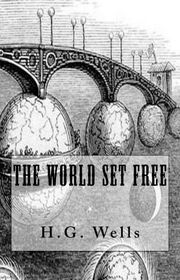
The World Set Free
by HG Wells
Wells imagines a world transformed by the discovery of a powerful new energy source and its use in warfare. The speculative history considers technological destruction and political reconstruction, asking what forms of organization might emerge when existing institutions become inadequate.

Tono-Bungay
by HG Wells
George Ponderevo helps his uncle market Tono-Bungay, a patent medicine whose success depends on promotion rather than genuine value. Their growing business draws him into wealth, class aspiration, and shifting relationships, connecting personal ambition with a wider commercial culture.