
23 Best HG Wells Books
The best H.G. Wells books, ranked by how many expert sources recommend each one, with notes for readers choosing fiction, social satire, and nonfiction.
Our take
H. G. Wells wrote scientific adventures, social comedies, political arguments, history, and autobiography. His best-known speculative novels turn an unusual invention or encounter into a question about power, class, or humanity’s future. The realistic novels examine similar pressures through shops, marriages, education, and ambition. Later works often give more space to arguments about how society might be reorganized.
The Time Machine is a compact starting point, while The War of the Worlds offers an invasion narrative with a wider sense of catastrophe. The Island of Dr. Moreau is more disturbing, especially in its cruelty to animals. For everyday social life, try Kipps or The History of Mr. Polly, then the broader commercial satire of Tono-Bungay. A Modern Utopia and The Shape of Things to Come suit readers interested in political imagination, with dated assumptions that need scrutiny. Experiment in Autobiography offers Wells’s own perspective on his life. Start with the kind of story you enjoy, then explore the arguments and social concerns behind it.
23 books · 12 sources · Last updated
As an Amazon Associate, we earn from qualifying purchases (at no extra cost to you).
Reading HG Wells in order? See all HG Wells books in order
How to choose from this list
Skip to the full rankingIf you're new to Wells: The Time Machine → The War of the Worlds
If you want unsettling scientific fiction: The Island of Dr. Moreau → The Invisible Man
If you want social comedy and satire: Kipps → The History of Mr. Polly → Tono-Bungay
If you want utopian experiments: A Modern Utopia → Men Like Gods
If you want speculative histories: The World Set Free → The Shape of Things to Come
If you want the author's own life story: Experiment in Autobiography
The 23 books, ranked
Ranked by how many expert sources name each book. Ties go to the book more people recommend.

The Time Machine
For readers who want a short introduction to Wells’s speculative ideas and social criticism. The compact journey invites several interpretations, but the lightly developed characters and Victorian scientific assumptions make it more an intellectual adventure than an intimate novel.
What it's about
A Victorian inventor travels far into the future and encounters the gentle Eloi and the underground Morlocks. What first seems a peaceful world conceals a disturbing relationship, forcing him to question humanity's progress and his own safety.
Also recommended by
2 people Sahil Lavingia recommended this book
Sahil Lavingia
Sahil Lavingia recommended this book on Notion.
Sahil Lavingia's recommendation of this book  Winston Churchill recommended this book
Winston Churchill
"A wonderful book." - Winston Churchill
Winston Churchill's recommendation of this book

The War of the Worlds
For readers who want an invasion narrative that unsettles human confidence and imperial power. Its local viewpoint makes catastrophe immediate, but the period technology and observational narrator offer a different pace from modern character-driven disaster fiction.
What it's about
Martian machines land in England and overwhelm human defenses with heat rays and poison gas. A narrator struggles through the devastation to find safety and his wife, confronting an invasion that strips humanity of its usual confidence.

The Island of Dr. Moreau
For readers drawn to disturbing questions about experimentation, authority, and the boundary between human and animal. The isolated setting sustains unease, but cruelty to animals and the period’s racial and evolutionary assumptions require a critical, prepared reading.
What it's about
Shipwreck survivor Edward Prendick reaches an island where Dr. Moreau conducts cruel experiments on animals. As Prendick discovers the origins of the island's strange inhabitants, he fears what the doctor's work means for his own survival.

The Invisible Man
For readers who like scientific speculation becoming a study of power and isolation. The small-town setting gives the premise everyday friction, but the central figure’s cruelty and increasing violence make it darker than a playful fantasy of invisibility.
What it's about
Scientist Griffin discovers how to make himself invisible but finds that the achievement isolates him from ordinary life. His increasingly violent efforts to exploit his power turn a scientific breakthrough into a threat to everyone around him.

The First Men in the Moon
For readers who want exploratory adventure mixed with contrasting attitudes toward science and profit. The lunar society gives the journey a satirical edge, but the invented science is a storytelling premise rather than a realistic account of spaceflight.
What it's about
Inventor Cavor develops a substance that blocks gravity and travels to the Moon with businessman Bedford. Discovering an underground lunar civilization turns their expedition into a dangerous encounter between very different societies and motives.

The Sleeper Awakes
For readers interested in wealth, mass society, and political control within an imagined future. The disoriented outsider offers an entry into the system, but the argument and adventure can outweigh close character development; it revises an earlier novel.
What it's about
After sleeping for centuries, Graham wakes in a future London where accumulated wealth has made him a figure of immense power. Discovering how that power has been exercised brings him into conflict with rulers and a restless population.

Anticipations Of the Reaction of Mechanical and Scientific Progress upon Human life and Thought
For readers interested in how Wells imagined technology reshaping society. The direct forecasts reveal his political thinking beyond fiction, but eugenic and racial hierarchies are integral to its historical outlook and need explicit critical context.
What it's about
Wells speculates about how scientific and mechanical advances could reshape human life in the twentieth century. His forecasts consider transport, warfare, social organization, and personal relationships, examining the possibilities and pressures created by rapidly changing technology.

The History of Mr. Polly
For readers who want a comic social novel rather than a scientific premise. Its attention to a man’s dissatisfaction makes the setting approachable, but the period class assumptions and shifts between farce and distress give the comedy a sharp edge.
What it's about
Alfred Polly struggles with an unhappy marriage, an unsuccessful shop, and the limitations of his expectations. The novel follows his attempts to change a life that feels trapped, combining social observation, comedy, and questions about what makes ordinary existence bearable.

The Shape of Things to Come
For readers who want Wells’s political imagination on a large historical scale. The future-history form makes social systems central, but its authoritarian solutions and lengthy argument leave little room for the character-led momentum of his shorter fiction.
What it's about
Presented as a history written from the future, the book imagines global conflict, social breakdown, and attempts to reconstruct civilization. Wells uses the speculative chronicle to consider world government, scientific authority, education, and the institutions he believed progress required.
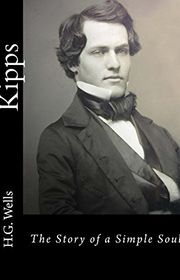
Kipps
For readers who want a sympathetic comedy of class and social aspiration. The everyday embarrassments give Wells’s criticism a personal scale, but the manners, courtship expectations, and social divisions belong to a particular period of English life.
What it's about
Arthur Kipps moves from schooling and apprenticeship into unexpected wealth. His efforts to fit a new social position complicate relationships and ambitions, allowing Wells to examine class, confidence, and the distance between learning manners and finding a satisfying life.

The Food of the Gods
For readers who want speculative growth used to challenge a society’s resistance to change. The comic and political scale goes beyond a single inventor, but the episodic structure and overt argument can feel less focused than the early scientific romances.
What it's about
Scientists Bensington and Redwood create a substance that accelerates growth, then test it on farm animals and human children. When their experiments escape control, giant creatures and children challenge a society unprepared for the changes they bring.
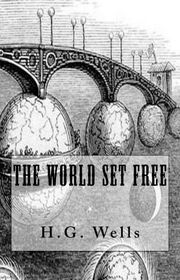
The World Set Free
For readers curious about speculative technology linked with arguments for world political change. Its imagined atomic weapons give the history an unusual premise, but the fictional science and proposed solutions should be read within their early twentieth-century context.
What it's about
Wells imagines a world transformed by the discovery of a powerful new energy source and its use in warfare. The speculative history considers technological destruction and political reconstruction, asking what forms of organization might emerge when existing institutions become inadequate.
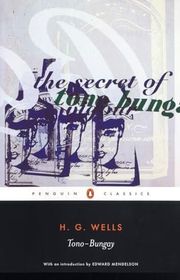
Tono-Bungay
For readers interested in advertising, ambition, and the instability of commercial success. The invented patent medicine gives the satire a clear center, but the sprawling personal history and changing settings make it less compact than Wells’s scientific romances.
What it's about
George Ponderevo helps his uncle market Tono-Bungay, a patent medicine whose success depends on promotion rather than genuine value. Their growing business draws him into wealth, class aspiration, and shifting relationships, connecting personal ambition with a wider commercial culture.

A Short History of the World
For readers interested in Wells’s ambition to explain history to a broad public. The sweeping narrative shows another side of his writing, but its early twentieth-century scholarship and cultural assumptions make it a historical document rather than a current survey.
What it's about
Wells presents a concise narrative extending from life and human origins to the civilizations and conflicts of his own era. The survey connects religion, politics, technology, and social change within an early twentieth-century attempt to tell a shared human story.

In the Days of the Comet
For readers who want personal dissatisfaction connected with a speculative change in society. The mixture of intimate conflict and utopian argument gives it range, but the transformation is an imaginative device rather than a persuasive scientific mechanism.
What it's about
A discontented young man recalls life in a divided industrial society as a comet approaches Earth. Personal anger, romantic expectations, and public tensions form the setting for a speculative story about the possibility of altered perception and social change.
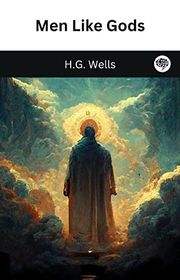
Men Like Gods
For readers who enjoy utopian fiction built around encounters between competing social assumptions. The visitors’ reactions give the ideal society something to push against, but extended explanation and period ideas about progress can outweigh narrative urgency.
What it's about
A group of people from contemporary England are transported into a parallel world whose society has developed along different lines. Their encounters with its inhabitants expose conflicting ideas about freedom, knowledge, authority, and the habits they have brought with them.
A Modern Utopia
For readers who want to follow Wells through a sustained experiment in social organization. The combination of travel and discussion makes abstract institutions visible, but its elite governance and social-engineering assumptions require critical engagement rather than simple admiration.
What it's about
Two travelers encounter an imagined world organized according to a different set of social institutions. Moving between narrative and discussion, Wells considers government, work, property, individual freedom, and the tensions involved in designing a society intended to keep changing.
Ann Veronica
For readers interested in women’s independence, education, and relationships in early twentieth-century fiction. The social questions distinguish it from Wells’s scientific adventures, but its treatment of liberation remains shaped by the author’s own assumptions about gender and desire.
What it's about
Ann Veronica challenges her father’s expectations and leaves home in pursuit of greater independence. Education, work, political activity, and personal relationships test what freedom can mean for a young woman negotiating the social and financial limits around her.
Experiment in Autobiography
For readers who want Wells’s account of the experiences and ideas behind his writing. The broad reflection connects personal history with intellectual development, but it is lengthy and self-interpreting, so it works best alongside a more independent biographical perspective.
What it's about
Wells recounts his childhood, education, financial struggles, relationships with work, and development as a writer and public thinker. The autobiography moves from personal memories into reflections on society, knowledge, and the purposes he believed his life and writing could serve.

Mr. Blettsworthy on Rampole Island
For readers willing to explore a later, less straightforward Wells novel. The island narrative becomes a vehicle for psychological and social satire, but the shifting frame and dated colonial imagery make it a demanding choice after the more familiar adventures.
What it's about
Arnold Blettsworthy’s disillusionment with his familiar world leads into a strange island narrative. Wells combines adventure conventions with uncertainty and social criticism, using the unfamiliar setting to question the distinction between civilized behavior and the violence concealed within modern society.

The New Machiavelli
For readers who want political ambition examined alongside private desire. The reflective voice gives public ideals a personal history, but the long discussions and self-justifying narrator can make it more argumentative than dramatically balanced.
What it's about
Richard Remington looks back on his development as a political thinker and public figure. His commitments to reform become entangled with dissatisfaction in marriage and a new relationship, bringing intellectual ambition into conflict with private choices and social expectations.

The War in the Air
For readers interested in early speculation about aviation and modern warfare. An ordinary man’s viewpoint gives the large conflict a grounded entry, but the machinery, national stereotypes, and political assumptions need reading as products of their period.
What it's about
A young Englishman becomes caught up in an international conflict shaped by new aerial technology. Through his encounters with military power and civilian vulnerability, Wells imagines how expanded mobility and destructive capacity might change warfare and the stability of societies.

The Country of the Blind
For readers who want a tale that challenges assumptions about perception and superiority. The contained setting gives the central idea force, but its portrayal of blindness and social difference invites critical reading rather than treating the allegory as realistic description.
What it's about
A mountaineer reaches a community where blindness has shaped daily life over generations. Expecting his sight to give him an advantage, he encounters a society organized around different assumptions, creating a conflict over knowledge, belonging, and the meaning of ability.
Sources
- 1
12 of the best H.G. Wells books
penguin.com.au
- 2
Best H.G. Wells (18 books)
goodreads.com
- 3
The Best H G Wells Books
fivebooks.com
- 4
H.G. Wells’ Best Books
bookanalysis.com
- 5
Best HG Wells Books you Must Read
voices.shortpedia.com
- 6
The Best H. G. Wells Novels
interestingliterature.com
- 7
Top 10 Novels from HG Wells
digitalbook.io
- 8
H G Wells
fantasticfiction.com
- 9
H.G. Wells Books in Order: A Complete Reading Guide
thehappybookstack.com
- 10
My Well's reading and some thoughts
reddit.com
- 11
H.G Wells
reddit.com
- 12
The Best H.G. Wells Novels: An introduction guide to the Sci-Fi Visionary author
landoffiction.com





Edited by
Software engineer whose passion for tracking book recommendations from podcasts inspired the creation of MRB.
Lead investor at 3one4 Capital whose startup expertise and love for books helped shape MRB and its growth.
Comments
Spotted a missing book, a wrong order or a mistake? Tell us and we'll fix this page.
We're a reading guide, not the author or publisher, so we can't send books or pass on messages.