
Heinrich Boll Books in Order
This page gathers Heinrich Boll books in order, with short summaries and simple where-to-start help for his war novels, stories, essays, and memoirs.
Last updated:
As an Amazon Associate, we earn from qualifying purchases (at no extra cost to you).
Heinrich Boll books in publication order
29 books
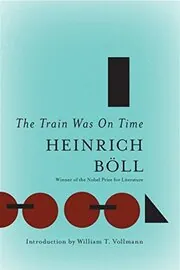
The Train Was On Time
by Heinrich Boll
1949
Andreas, a young German soldier, rides a troop train toward Poland and the Eastern Front with a terrible sense of what awaits him. Fatalistic and tender, the novel finds one last flash of intimacy in a world built for death.
And Where Were You, Adam?
by Heinrich Boll
1951
Told in linked episodes near the end of World War II, this novel follows Feinhals and other soldiers through a collapsing front. Böll strips war of heroism and leaves only fear, chance, and waste.
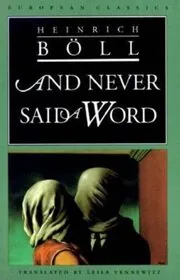
And Never Said a Word
by Heinrich Boll
1953
Fred and Käte Bogner live apart because poverty, crowding, and shame have worn their marriage thin. Over a day and a half, Böll shows how love, exhaustion, faith, and resentment can coexist in the same room.
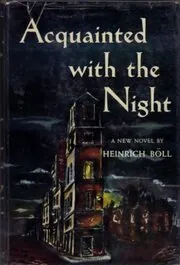
Acquainted With the Night
by Heinrich Boll
1954
This earlier English title of And Never Said a Word follows Fred and Käte Bogner, a married couple worn down by poverty. Their borrowed hours together reveal how love can survive even when daily life keeps crushing it.
Tomorrow and Yesterday
by Heinrich Boll
1954
Two boys grow up in postwar Germany without the fathers who should have anchored their lives. Around them, mothers, lovers, and would-be guardians struggle to build something steady out of loss and uncertainty.
The Bread of Those Early Years
by Heinrich Boll
1955
In one March day in 1949, young repairman Walter Fendrich meets a woman who makes him see his life differently. Hunger, loneliness, and the scramble for security give this short postwar novel its ache.

Irish Journal
by Heinrich Boll
1957
Part travel book, part personal notebook, Irish Journal turns Böll's stays in Ireland into sharp, affectionate sketches. He writes about landscapes, poverty, faith, and everyday conversation with humor, tenderness, and a stranger's clear eye.
Missing Persons and Other Essays
by Heinrich Boll
1957
This essay collection gathers Böll on literature, politics, war, religion, and public life across more than two decades. The pieces are thoughtful, argumentative, and often intensely humane, offering a clear path into the mind behind the novels.
Billiards at Half-Past Nine
by Heinrich Boll
1959
Over the course of one day, the story traces three generations of the Faehmel family through memory and conversation. Personal wounds and national history collide in a precise, layered novel about Germany before and after Nazism.

Pray for the Dawn
by Heinrich Boll
1959
This edition of Böll's early war novel follows Andreas, a young soldier traveling by train toward the Eastern Front under a dark premonition. A brief meeting with Olina gives the book its fragile, human center.
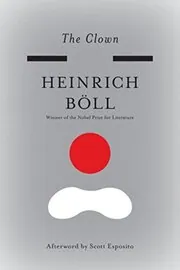
The Clown
by Heinrich Boll
1963
Hans Schnier, a professional clown in Bonn, is broke, hurt, and reeling after Marie leaves him. Through his bitterly funny memories and phone calls, Böll dissects postwar respectability, religion, and family hypocrisy.
Absent without Leave
by Heinrich Boll
1964
This volume gathers war-haunted prose about military life, private loyalty, and the desperate wish to stay human. Böll moves between memory and fiction to show how family feeling can outlast uniform, orders, and ideology.
Eighteen Stories
by Heinrich Boll
1966
These eighteen stories distill Böll's gift for compression. Soldiers, clerks, children, and outsiders move through damaged postwar landscapes, and small exchanges carry the weight of guilt, hunger, satire, and sudden kindness.
End of a Mission
by Heinrich Boll
1966
When a father and son burn an army jeep, their case heads to court. What follows is funny, stubborn, and quietly subversive as Böll uses a small-town trial to question authority, obedience, and common sense.
Adam and the Train
by Heinrich Boll
1970
This volume pairs two of Böll's bleakest war novels. One follows a soldier riding east toward what feels like certain death, the other tracks men trapped in the collapsing final months of the war.
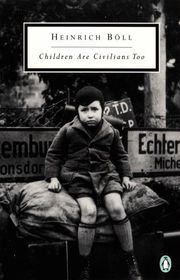
Children Are Civilians Too
by Heinrich Boll
1970
An early collection of stories about war and its aftermath, this book keeps its focus on ordinary people caught in the blast radius. Böll writes about children, soldiers, and civilians with anger, pity, and unsentimental clarity.
Group Portrait with Lady
by Heinrich Boll
1971
Built from interviews and fragments, this novel pieces together the life of Leni Pfeiffer in Cologne across war and postwar years. Her private story becomes a wide, sly portrait of German society.
The Lost Honor of Katharina Blum
by Heinrich Boll
1974
After one brief relationship with a wanted man, Katharina Blum finds herself hunted by police and shredded by the tabloid press. Böll tells her story with cool precision, showing how public cruelty can turn into violence.

Land of Israel
by Heinrich Boll
1978
This large-format book offers a visual portrait of Israel, pairing Böll's reflections with vivid color photographs. It moves from holy sites to markets and streets, showing a country shaped by history, faith, and daily life.
The Safety Net
by Heinrich Boll
1979
Fritz Tolm is surrounded by guards, bugged rooms, and constant fear after becoming a powerful public figure. Böll turns that security bubble into a tense, many-voiced portrait of money, terrorism, and mistrust in late West Germany.
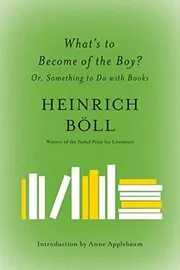
What's to Become of the Boy?
by Heinrich Boll
1981
In this brisk memoir, Böll looks back on his school years in Cologne from 1933 to 1937. He captures teachers, classmates, and family life as Nazism seeps into ordinary days.
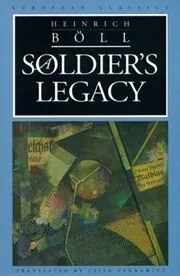
A Soldier's Legacy
by Heinrich Boll
1982
On the Normandy coast in 1943, a weary German soldier befriends an officer who dares to stand up for his men. Their bond carries into the Russian campaign, where fear, corruption, and war close in.
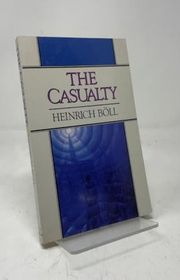
The Casualty
by Heinrich Boll
1983
These early stories, written in the shadow of World War II, move between the front and the wreckage left behind. Böll shows wounded soldiers and battered civilians without heroics, only hunger, fear, and raw endurance.
Doktor Murkes Gesammeltes Schweigen and Other Stories
by Heinrich Boll
1984
These stories mix satire with postwar unease. In the title piece, a radio editor collects the silences cut from pompous recordings, and the rest of the volume keeps pricking at vanity, bureaucracy, and public language.
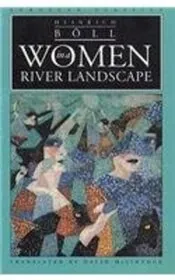
Women in a River Landscape
by Heinrich Boll
1985
Böll's final novel unfolds in dialogues and soliloquies around Bonn's political class. As scandals, loyalties, and private grief surface, the women on the edges of power become the book's sharpest moral observers.
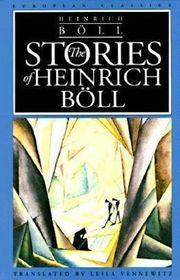
The Stories of Heinrich Böll
by Heinrich Boll
1986
This big collection brings together sixty-three stories and novellas from across Böll's career. It is the best single place to see his range, from war stories and satire to tender, cutting portraits of everyday life.
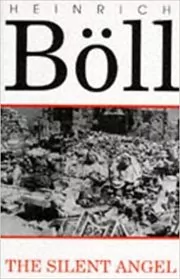
The Silent Angel
by Heinrich Boll
1992
Set in ruined Cologne at the end of the war, this posthumously published novel follows a returning soldier trying to deliver a dead man's will. Amid rubble and hunger, Böll finds a tentative love story and a moral reckoning.
Recommended by
1 person Christopher Hitchens recommended this book
Christopher Hitchens
"Unflinchingly discusses the ruins and the corpses." - Christopher Hitchens
Christopher Hitchens's recommendation of this book
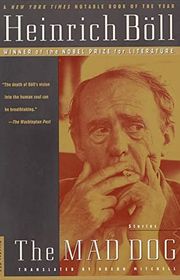
The Mad Dog
by Heinrich Boll
1995
Written early but published later, these stories show Böll working through war, faith, violence, and moral injury. They are rougher than the major novels, but the anger and compassion are already unmistakably his.

The Collected Stories of Heinrich Böll
by Heinrich Boll
2011
This definitive volume gathers all of Böll's shorter fiction published in English. Across war stories, satires, and intimate sketches, it shows how consistently he wrote about damage, conscience, and the stubborn dignity of ordinary people.
Where to start with Heinrich Boll
If you want a classic starting point: The Clown → Billiards at Half-Past Nine → The Lost Honor of Katharina Blum
If you want war and its aftermath: The Train Was On Time → And Where Were You, Adam? → The Bread of Those Early Years
If you want a bigger social panorama: Group Portrait with Lady → The Safety Net → Women in a River Landscape
If you want memoir and nonfiction: What's to Become of the Boy? → Irish Journal → Missing Persons and Other Essays
Heinrich Boll collections, short stories, and related book types
Short Story Collections
Non-Fiction
Standalone Heinrich Boll books
Author bio
Heinrich Böll was born in Cologne on December 21, 1917, the sixth child of Viktor Böll, a cabinet-maker and wood sculptor, and Maria Hermanns. He grew up in a Catholic family that was pacifist by instinct and wary of loud political certainty, which mattered a great deal in Germany in the 1920s and 1930s. Cologne stayed at the center of his imagination for the rest of his life.
Books came early.
After finishing school in 1937, Böll worked for a time as an apprentice bookseller. He had already begun writing as a teenager, and his later memoir What's to Become of the Boy? looks back at those school years in Cologne during the first years of Nazi rule, from 1933 to 1937. That book helps explain something basic about him. He paid close attention to ordinary routines, but he never treated politics as something separate from daily life.
War changed everything. Conscripted into the German army, he served on several fronts, was wounded four times, contracted typhoid, and ended the war in an American prisoner-of-war camp. In 1942 he married Annemarie Cech, who became his closest collaborator as well as his wife. Together they later translated a large body of English-language writing into German.
When he came back to Cologne after the war, he worked first in his family's workshop and then briefly in the city statistical office. Neither job held him for long. By the age of thirty he had taken the riskier path and become a full-time writer, and in 1949 he published The Train Was on Time, his first novel. Around the same period he became associated with Group 47, the circle of writers trying to rebuild German literature after the war.
What followed was one of the key bodies of postwar German fiction. In And Never Said a Word, he writes about marriage, poverty, and the humiliations of cramped postwar life without turning his characters into symbols. Billiards at Half-Past Nine widens the frame to three generations and the long shadow of German history. The Clown gives readers one of his sharpest outsiders, Hans Schnier, who looks at religion, money, and respectability with wounded, bitter humor. Later books like Group Portrait with Lady and The Lost Honor of Katharina Blum keep asking what happens when institutions, newspapers, and respectable society close in on a person.
He never lost his suspicion of power.
Again and again, Böll returned to soldiers, widows, clerks, children, drifters, and stubborn misfits, people pushed aside by the state, the church, the press, or the market. He could be very funny, but the humor is usually rough-edged Cologne humor, the kind that knows how close comedy sits to grief. Even when the books get openly political, they stay close to kitchens, train compartments, rented rooms, offices, and city streets.
Ireland mattered to him too. He spent long stretches there, especially on Achill Island, and turned those experiences into Irish Journal, one of his best-loved books. He also wrote essays and speeches, spoke out on questions of war and civil liberties, and became a prominent defender of writers and dissidents.
By the time he received the Georg Büchner Prize in 1967 and the Nobel Prize in Literature in 1972, Böll had become a major public voice as well as a novelist. Yet the scale of his work is still very human. He is often at his best when he shows how history lands on a single household, a single body, or a single bad decision. He died on July 16, 1985, in Langenbroich, near Cologne. The books remain, still plainspoken, still angry, and still deeply alert to the cost of living through a damaged century.





Edited by
Software engineer whose passion for tracking book recommendations from podcasts inspired the creation of MRB.
Lead investor at 3one4 Capital whose startup expertise and love for books helped shape MRB and its growth.
Comments
Did we miss something? Have feedback?
Help us improve this page by sharing your thoughts