
Bernd Heinrich Books in Order
Explore Bernd Heinrich books in order, with brief summaries, favorite themes, and clear guidance on where to start with his nature writing and memoirs.
Last updated:
As an Amazon Associate, we earn from qualifying purchases (at no extra cost to you).
Bernd Heinrich books in publication order
23 books
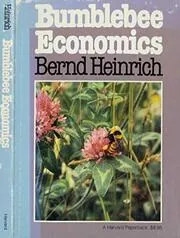
Bumblebee Economics
by Bernd Heinrich
1979
Heinrich uses bumblebees to explore energy, foraging, colony life, and the costs of staying warm enough to work. It is both a close study of one insect group and a clear introduction to ecological thinking.

Insect Thermoregulation
by Bernd Heinrich
1981
This early scientific book lays out how insects warm up, cool down, and keep flying in difficult conditions. It is a foundational look at the physiology behind behavior, especially for readers interested in entomology.
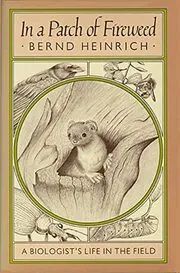
In a Patch of Fireweed
by Bernd Heinrich
1984
Part autobiography and part field notebook, this book follows Heinrich from a hard childhood into the pleasures of scientific discovery. Along the way he studies insects, experiments in the wild, and shows how curiosity actually works.
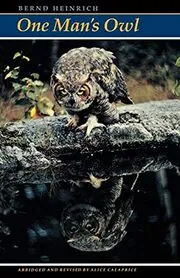
One Man's Owl
by Bernd Heinrich
1987
After rescuing a young great horned owl, Heinrich raises it near his Maine cabin and watches it grow wild. The book is part diary, part natural history, and a close look at how a predator learns to live.
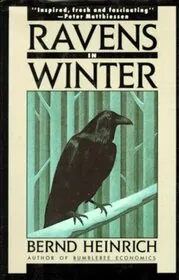
Ravens in Winter
by Bernd Heinrich
1989
What begins as curiosity about ravens at winter carcasses becomes a detective story about food sharing and social behavior. Heinrich's fieldwork in the Maine woods turns one odd question into a major insight.
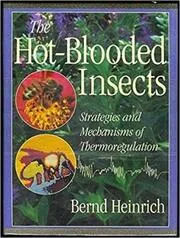
The Hot Blooded Insects
by Bernd Heinrich
1993
A broad, richly detailed study of how insects manage heat and cold, from bees and butterflies to beetles and moths. Heinrich links physiology to behavior and evolution, showing why temperature shapes nearly every contest in insect life.

A Year in the Maine Woods
by Bernd Heinrich
1994
Heinrich spends a year in his hand-built cabin in western Maine, living simply and watching the world outside his door. Daily chores, field notes, and a pet raven turn the memoir into a close study of place.

The Thermal Warriors
by Bernd Heinrich
1996
This shorter book distills Heinrich's work on insect thermoregulation into vivid examples and big-picture ideas. He shows how insects shiver, bask, cool off, and survive in a world where temperature decides everything.

The Trees in My Forest
by Bernd Heinrich
1997
Heinrich treats a patch of Maine woodland like a living biography. By following individual trees, forest succession, and the animals around them, he shows how a forest grows, competes, and changes over time.
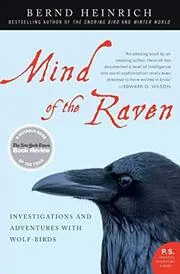
Mind of the Raven
by Bernd Heinrich
1999
To understand how ravens think, Heinrich studies them in the wild and at close quarters. The book follows his experiments, travels, and years of observation to build a vivid picture of one remarkably intelligent bird.
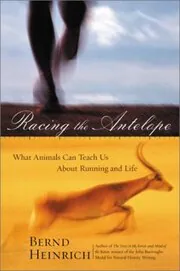
Racing the Antelope
by Bernd Heinrich
2001
In the original version of Why We Run, Heinrich connects animal endurance, human evolution, and his own running life. It is both a training-era memoir and a scientific argument about why distance running matters.
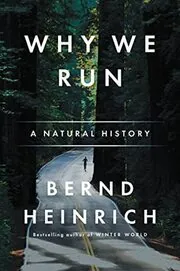
Why We Run
by Bernd Heinrich
2002
Blending physiology, evolution, and memoir, Heinrich asks why humans are built to run long distances at all. His own ultramarathon experience gives the science a lived-in edge and keeps the book moving.
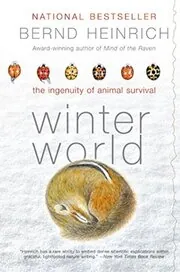
Winter World
by Bernd Heinrich
2003
Heinrich uses the northern winter as a field guide to survival. Bears, insects, frogs, birds, and other animals reveal the practical tricks that let life keep going through cold, darkness, and hunger.
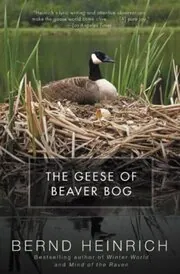
The Geese of Beaver Bog
by Bernd Heinrich
2004
After becoming the foster parent of a gosling named Peep, Heinrich starts watching the Canada geese at a nearby bog with new intensity. The result is a lively account of nesting, pair bonds, jealousy, and family life.
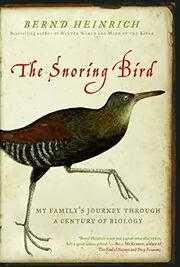
The Snoring Bird
by Bernd Heinrich
2007
This family memoir centers on Heinrich's father, Gerd, a driven naturalist whose life stretched across war, exile, and scientific obsession. It is also Heinrich's story, about inheritance, fieldwork, and the making of a biologist.
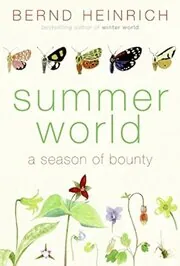
Summer World
by Bernd Heinrich
2009
Summer can look easy from a distance, but Heinrich shows how busy and risky it really is. He follows insects, birds, plants, and mammals through the season of growth, breeding, and brief abundance.
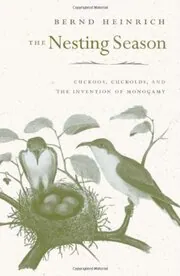
The Nesting Season
by Bernd Heinrich
2010
Heinrich explores how birds court, mate, build nests, guard eggs, and raise young. Drawing on field observation and evolutionary biology, he explains monogamy, cheating, and parental care without losing sight of the birds themselves.
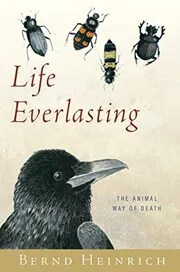
Life Everlasting
by Bernd Heinrich
2012
Prompted by questions about burial and decay, Heinrich studies what happens after death in the natural world. Scavengers, beetles, microbes, and winter cold become part of a clear-eyed, surprisingly life-affirming look at renewal.
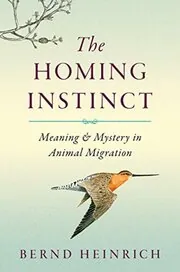
The Homing Instinct
by Bernd Heinrich
2014
Why do animals return to one exact place across huge distances? Heinrich follows that question through birds, fish, insects, and more, explaining migration and navigation with a mix of science, wonder, and personal reflection.
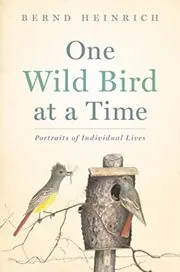
One Wild Bird at a Time
by Bernd Heinrich
2016
Heinrich watches the individual birds around his home closely enough to turn each one into a character. These short pieces mix memoir and field biology, showing how much can be learned from ordinary birds when you slow down.
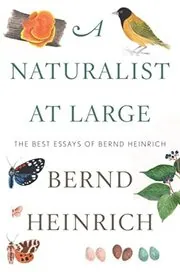
A Naturalist at Large
by Bernd Heinrich
2018
This collection gathers Heinrich's essays on birds, insects, forests, and life in the Maine woods. It is a wide-ranging sampler of the questions, field notes, and small revelations that run through his work.
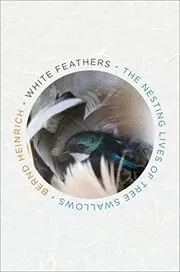
White Feathers
by Bernd Heinrich
2020
A simple puzzle, why tree swallows line their nests with white feathers, leads Heinrich into years of close observation. The book opens into a richer story about conflict, signaling, and family life in the nesting season.
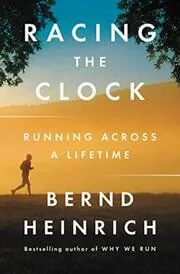
Racing the Clock
by Bernd Heinrich
2021
Heinrich looks back on a lifetime of running, using his own races and aging body to explore endurance, metabolism, and time. It is part memoir, part science, and full of hard-earned questions about how we grow older.
Where to start with Bernd Heinrich
If you want his seasonal nature writing: Winter World → Summer World → A Naturalist at Large
If you're most interested in birds and animal behavior: Mind of the Raven → Ravens in Winter → One Wild Bird at a Time
If you like science mixed with running: Why We Run → Racing the Clock
If you want memoir and place: A Year in the Maine Woods → The Trees in My Forest → The Snoring Bird
Bernd Heinrich collections, short stories, and related book types
Non-Fiction
Author bio
Bernd Heinrich was born on April 19, 1940, in Bad Polzin, then in Germany, now Połczyn-Zdrój in Poland. His father, Gerd Heinrich, was an entomologist and ornithologist, so bugs, birds, field notebooks, and long walks were part of family life from the start. War turned that life upside down, and some of Heinrich's deepest early memories came from years spent in a forest in northern Germany before his family moved to Wilton, Maine, in 1950.
That early mix of upheaval and close attention to the living world never really left him.
In Maine, he kept doing what he had already learned to do, watch carefully. He studied zoology at the University of Maine, earning both his B.A. and M.S. there, then went on to UCLA for a Ph.D. in zoology, completed in 1970. After time at UCLA and the University of California, Berkeley, he joined the University of Vermont, where he later became a professor of biology and is now professor emeritus.
His research first made its name in insect physiology. He studied how insects handle heat and cold, how bumblebees warm up for flight, and how body temperature shapes behavior in the wild. Those questions led to books like Bumblebee Economics, Insect Thermoregulation, The Hot Blooded Insects, and The Thermal Warriors, books that turned what could have been a narrow subject into something vivid and surprisingly readable.
He also ran.
Not casually, either. Heinrich became a top ultramarathoner in the 1980s and set American records at 100 kilometers, 100 miles, and in the 24-hour run. That part of his life fed directly into Racing the Antelope, later reissued as Why We Run, and much later into Racing the Clock, where he wrote about endurance, aging, and the strange ways a scientist can use his own body as a field site.
For many readers, though, the most memorable Heinrich books are the ones closest to the cabin door. In One Man's Owl, Ravens in Winter, and Mind of the Raven, he follows birds not as symbols or mascots but as individuals, full of habits, feints, grudges, and surprises. Winter World, Summer World, The Trees in My Forest, and One Wild Bird at a Time do something similar with seasons and place, showing how much drama is packed into a patch of woods if you stay still long enough.
That's his real gift.
He writes like a working biologist who never lost the curiosity of a kid in the woods. Many of his books began with a stubborn question, why ravens share food, how tree swallows use white feathers, what draws animals back home, what death does in an ecosystem. The Geese of Beaver Bog, The Homing Instinct, White Feathers, and Life Everlasting all grow from that habit of asking one plain question and refusing to stop too soon.
Heinrich has picked up plenty of honors along the way, including the John Burroughs Medal for Mind of the Raven and the PEN New England Award for Life Everlasting. He still lives much of his life in Maine, in the woods that have shaped so much of his work. Read him for the science, sure, but also for the feeling that careful attention is its own kind of adventure.













Edited by
Software engineer whose passion for tracking book recommendations from podcasts inspired the creation of MRB.
Lead investor at 3one4 Capital whose startup expertise and love for books helped shape MRB and its growth.
Comments
Did we miss something? Have feedback?
Help us improve this page by sharing your thoughts