
Future History/Heinlein Timeline Books in Order
Part ofRobert A Heinlein Books in OrderTrack the Future History/Heinlein Timeline by Robert A Heinlein with a clear chronological reading order, story lists, short summaries, and notes on how each book slots into his broader imagined future.
Last updated:
As an Amazon Associate, we earn from qualifying purchases (at no extra cost to you).
Future History/Heinlein Timeline books in publication order
11 books

Misfit
by Robert A Heinlein
1939
A mathematically gifted misfit, Andrew Jackson "Slipstick" Libby, joins a space construction crew tasked with moving an asteroid into a new orbit. When disaster looms, his ability to calculate under pressure may be the only thing that saves the mission.

Blowups Happen
by Robert A Heinlein
1940
Engineers at an experimental nuclear plant know that one mistake could devastate half a continent. As pressure builds on the stressed supervisor, the story digs into the psychology, bureaucratic blind spots, and quiet heroism involved in managing technology that can never be allowed to fail.

Let There Be Light
by Robert A Heinlein
1940
Two idealistic scientists invent ultra‑efficient sunpower screens that could give everyone cheap, clean energy—if entrenched power companies don’t crush them first. The story mixes gadgeteering with a populist streak as the inventors try to outmaneuver a ruthless monopoly.
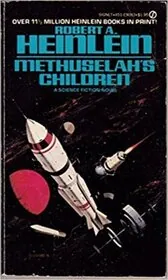
Methuselah's Children
by Robert A Heinlein
1941
The secretive Howard Families have bred for long life, but when their centuries‑long lifespans are exposed, a frightened public turns on them. Led by wily Lazarus Long, they flee Earth in search of a world where they can live free.

We Also Walk Dogs
by Robert A Heinlein
1941
General Services is a company that will take on almost any job, from walking pets to solving problems for world governments. When they’re hired to host an interplanetary conference on high‑gravity Earth, clever negotiation proves more important than inventing antigravity.

The Long Watch
by Robert A Heinlein
1949
On a lunar base that controls Earth’s nuclear arsenal, a young bomb officer discovers a coup in progress and has to decide whether to cooperate or resist. His quiet, solitary stand becomes one of Heinlein’s most moving portraits of personal courage.
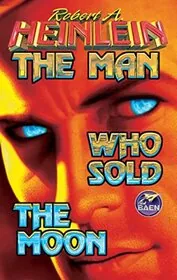
The Man Who Sold the Moon
by Robert A Heinlein
1950
Stories about hard‑driving entrepreneur D. D. Harriman and other pioneers determined to open space for profit and adventure. Deals, engineering challenges, and stubborn idealism combine as they gamble everything to put the first rockets on the Moon.
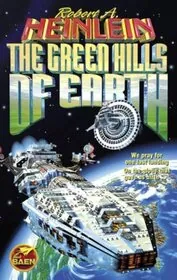
The Green Hills of Earth
by Robert A Heinlein
1951
A collection of short stories centered on the balladeer Rhysling and other working spacers, sketching cargo runs, moon bases, and far‑flung colonies. Together they give a lyrical, rough‑edged portrait of everyday life in Heinlein's spacefaring future.
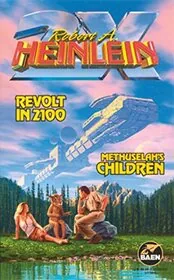
Revolt in 2100
by Robert A Heinlein
1953
A linked set of tales set in Heinlein's Future History, beginning with a coup against a fundamentalist American theocracy and its aftermath. These stories mix political rebellion, exile, and reluctant heroism as ordinary people push back against absolute power.
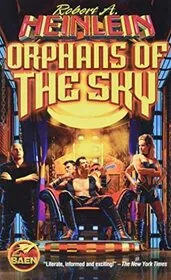
Orphans of the Sky
by Robert A Heinlein
1963
On a vast generation ship whose crew has forgotten it is a ship, young Hugh Hoyland discovers the terrifying truth about his closed world. His struggle to understand and act reshapes both his own beliefs and his society's future.
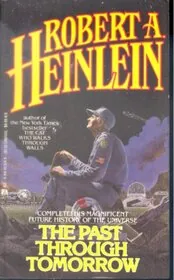
The Past Through Tomorrow
by Robert A Heinlein
1967
An omnibus of Heinlein's core Future History stories, tracing humanity from near‑future labor unrest and spaceflight through the rise of a theocracy and the long lives of the Howard Families. Ideal for readers who want his imagined timeline in one volume.
Future History/Heinlein Timeline books in chronological order
Series background & context
This series entry is less a separate set of stories than a way of looking at Heinlein’s work: as a single, charted timeline. For years he kept a hand‑drawn “Future History” diagram showing where each tale fell in the rise and fall of his imagined human civilization.
The Future History/Heinlein Timeline grouping pulls those pieces together and lines them up in story‑internal order rather than by publication date. It starts with early twentieth‑century tales like Life‑Line and Let There Be Light, runs through the industrial unrest of The Roads Must Roll, and moves outward to lunar development, asteroid colonies, and beyond.
Midway along the line you hit the era of the Prophet: the slow ascent of Nehemiah Scudder, the tightening of a religious dictatorship, and the eventual rebellion chronicled in If This Goes On— and other stories collected in Revolt in 2100. Later still, Methuselah's Children and related works push the same timeline into interstellar flight.
Because Heinlein reused characters and background elements across decades, it can be hard for new readers to tell what “counts” as part of the Future History and what belongs to other sequences such as the World As Myth multiverse or the stand‑alone juvenile adventures. Scholars disagree on the exact borders, and Heinlein himself changed his mind more than once.
Rather than chasing a single “correct” answer, this timeline treats the stories as a bundle of closely related futures. It highlights the works that most clearly build on one another, notes grey‑area titles that brush against the sequence, and flags places where publication order and internal chronology diverge.
If you like to watch a fictional history unfold step by step—from first cheap solar cells and private rockets through dictatorship, diaspora, and the long view of Lazarus Long—this is the map you want at your elbow while you read.






Edited by
Software engineer whose passion for tracking book recommendations from podcasts inspired the creation of MRB.
Lead investor at 3one4 Capital whose startup expertise and love for books helped shape MRB and its growth.
Comments
Did we miss something? Have feedback?
Help us improve this page by sharing your thoughts