
Robert A Heinlein Books in Order
Explore Robert A Heinlein's books in order, with Future History and World As Myth timelines, story summaries, series overviews, author background, and guidance on the best novels to read first.
Last updated: 1 new book added
As an Amazon Associate, we earn from qualifying purchases (at no extra cost to you).
Robert A Heinlein books in publication order
71 books

Life Line
by Robert A Heinlein
1939
Professor Pinero builds a machine that can predict anyone’s exact moment of death, then shocks the world by demonstrating it. Lawsuits, moral outrage, and insurance panic follow in this sharp early tale about science colliding with human denial.

Misfit
by Robert A Heinlein
1939
A mathematically gifted misfit, Andrew Jackson "Slipstick" Libby, joins a space construction crew tasked with moving an asteroid into a new orbit. When disaster looms, his ability to calculate under pressure may be the only thing that saves the mission.

Blowups Happen
by Robert A Heinlein
1940
Engineers at an experimental nuclear plant know that one mistake could devastate half a continent. As pressure builds on the stressed supervisor, the story digs into the psychology, bureaucratic blind spots, and quiet heroism involved in managing technology that can never be allowed to fail.

Let There Be Light
by Robert A Heinlein
1940
Two idealistic scientists invent ultra‑efficient sunpower screens that could give everyone cheap, clean energy—if entrenched power companies don’t crush them first. The story mixes gadgeteering with a populist streak as the inventors try to outmaneuver a ruthless monopoly.
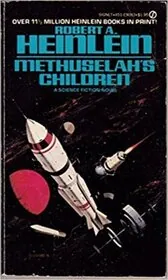
Methuselah's Children
by Robert A Heinlein
1941
The secretive Howard Families have bred for long life, but when their centuries‑long lifespans are exposed, a frightened public turns on them. Led by wily Lazarus Long, they flee Earth in search of a world where they can live free.
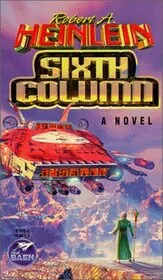
Sixth Column / The Day After Tomorrow
by Robert A Heinlein
1941
In a conquered America ruled by a ruthless PanAsian empire, a handful of scientists hide in a secret mountain base with a strange new super‑weapon. Their desperate guerrilla campaign raises thorny questions about nationalism, racism, and what liberation might cost.

Universe
by Robert A Heinlein
1941
Raised on a giant starship whose inhabitants believe their metal corridors are the whole universe, a young man stumbles onto forbidden truths about his world’s origin and purpose. His quest to spread that knowledge meets fear, superstition, and violent resistance.

We Also Walk Dogs
by Robert A Heinlein
1941
General Services is a company that will take on almost any job, from walking pets to solving problems for world governments. When they’re hired to host an interplanetary conference on high‑gravity Earth, clever negotiation proves more important than inventing antigravity.
Rocket Ship Galileo
by Robert A Heinlein
1947
Three teenage rocketry buffs and an eccentric scientist refit a surplus rocket for a clandestine trip to the Moon. What they find there—including a hidden enemy base—forces them to grow up fast and decide what kind of citizens they want to be.
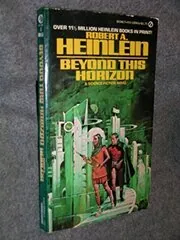
Beyond This Horizon
by Robert A Heinlein
1948
In a future where genetic engineering and gentlemanly duels are everyday life, a complacent aristocrat stumbles into a secret movement planning to remake society. The novel blends social speculation, gunfights, and thought experiments about what "improvement" really means.

Ordeal in Space
by Robert A Heinlein
1948
After a near‑fatal accident, a veteran spaceman develops crippling agoraphobia that makes even standing on a balcony unbearable. Sent planetside to recover, he confronts his fear in a quiet, emotionally charged incident involving a trapped kitten and an open drop.
Space Cadet
by Robert A Heinlein
1948
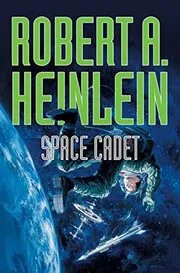
Matt Dodson joins the Solar Patrol, an elite force charged with keeping the peace across the planets. Harsh training, first assignments, and a crisis on Venus teach him that real service is less about glory than about judgment and restraint.
Red Planet
by Robert A Heinlein
1949
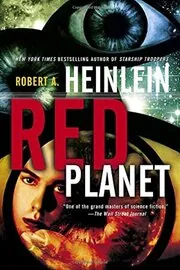
Jim Marlow and his Martian "pet" Willis uncover a plot that threatens Mars's colonists. Their trek across the planet and contact with ancient Martian culture turn a schoolboy adventure into a story about colonial policy, loyalty, and first contact.

The Long Watch
by Robert A Heinlein
1949
On a lunar base that controls Earth’s nuclear arsenal, a young bomb officer discovers a coup in progress and has to decide whether to cooperate or resist. His quiet, solitary stand becomes one of Heinlein’s most moving portraits of personal courage.

Destination Moon
by Robert A Heinlein
1950
Created from Heinlein’s work on the early spaceflight film, this story follows the first piloted mission to the Moon, from political wrangling and engineering headaches to the dangers of lunar landing. It captures both the romance and the hard realities of going off‑planet.
Farmer in the Sky / Satellite Scout
by Robert A Heinlein
1950
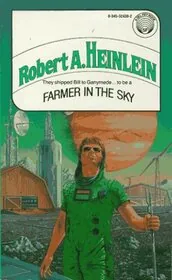
Earth is overcrowded, so teenager Bill Lermer emigrates with his family to Ganymede to carve a farm out of raw rock and thin air. Between terraforming hazards and personal loss, he learns what it really costs to build a new world.
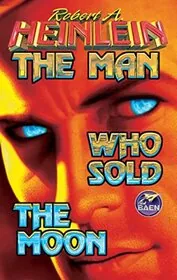
The Man Who Sold the Moon
by Robert A Heinlein
1950
Stories about hard‑driving entrepreneur D. D. Harriman and other pioneers determined to open space for profit and adventure. Deals, engineering challenges, and stubborn idealism combine as they gamble everything to put the first rockets on the Moon.

Waldo & Magic, Inc.
by Robert A Heinlein
1950
Two long stories share this volume. In Waldo, a reclusive mechanical genius uses remote manipulators and stranger forces to solve a global power crisis. In Magic, Inc., honest tradesmen fight back when sorcerous racketeers try to monopolize everyday spells.
Between Planets / Planets in Combat
by Robert A Heinlein
1951
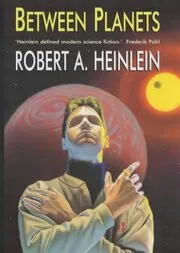
Don Harvey, a boy with ties to both Earth and Venus, is caught in an interplanetary war. Carrying a mysterious ring and shifting allegiances, he has to decide where his loyalty lies and how one person can matter in a sprawling conflict.
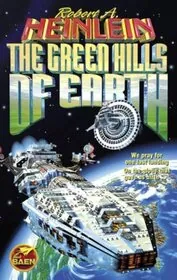
The Green Hills of Earth
by Robert A Heinlein
1951
A collection of short stories centered on the balladeer Rhysling and other working spacers, sketching cargo runs, moon bases, and far‑flung colonies. Together they give a lyrical, rough‑edged portrait of everyday life in Heinlein's spacefaring future.
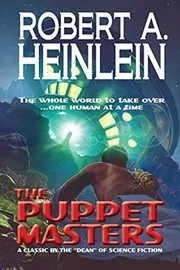
The Puppet Masters
by Robert A Heinlein
1951
When parasitic aliens begin quietly taking over human hosts, a clandestine U.S. agency fights back with infiltration and nerve. The story moves from spy thriller to full‑scale invasion horror, probing how much freedom people will trade away in the name of security.
The Rolling Stones / Tramp Space Ship / Space Family Stone
by Robert A Heinlein
1952
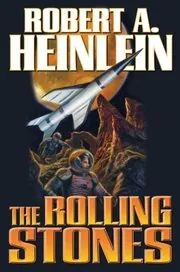
The lively Stone family buys a second‑hand spaceship and sets off on a grand tour of the Solar System. Trading, tinkering, and dodging trouble, they turn a family road trip into a warm, funny chronicle of life among the planets.

The Year of the Jackpot
by Robert A Heinlein
1952
A statistician tracking odd social and natural events notices all his cycles peaking at once, suggesting impending catastrophe. As he and a stranded woman decide whether to flee, the story blends apocalyptic tension with a wry look at human folly.

Assignment in Eternity
by Robert A Heinlein
1953
Four novellas explore the edges of what it means to be human: secret supermen, time travelers, latent telepaths, and a genetically engineered being seeking legal personhood. Together they preview many of the themes Heinlein would expand in later novels like Friday.
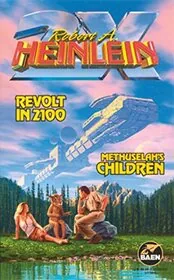
Revolt in 2100
by Robert A Heinlein
1953
A linked set of tales set in Heinlein's Future History, beginning with a coup against a fundamentalist American theocracy and its aftermath. These stories mix political rebellion, exile, and reluctant heroism as ordinary people push back against absolute power.
Starman Jones
by Robert A Heinlein
1953
Max Jones, an uncredentialed farm boy with an eidetic memory for star charts, stows away on a starship. When disaster strikes in deep space, his raw talent and quick learning may be all that stands between the crew and oblivion.
The Star Beast / Star Lummox
by Robert A Heinlein
1954
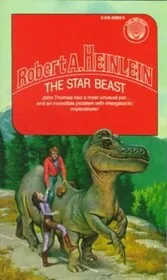
Teenager John Thomas Stuart has grown up with Lummox, an enormous, seemingly placid alien pet. When the authorities decide the creature is dangerous, John discovers that Lummox's true nature links Earth to a powerful alien civilization with its own demands.
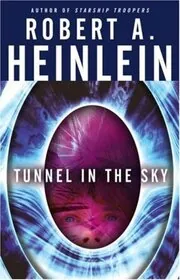
Tunnel in the Sky
by Robert A Heinlein
1955
As a final exam in survival, students are teleported to a distant wilderness world for a short test—then the gate fails to reopen. Stranded, they must build a society from scratch while fending off predators, politics, and the fear of never going home.
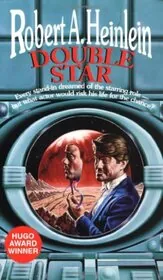
Double Star
by Robert A Heinlein
1956
A down‑on‑his‑luck actor is hired to impersonate a kidnapped statesman at a crucial moment in interplanetary politics. What begins as a job becomes a test of conscience as he grows into the role and learns what leadership actually demands.
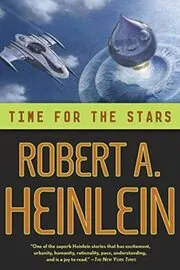
Time for the Stars
by Robert A Heinlein
1956
Tom Bartlett signs on as a starship crewman while his telepathic twin brother stays behind on Earth, providing instant communication across light‑years. As relativity stretches years into decades, the twins struggle with the changing meaning of family and home.
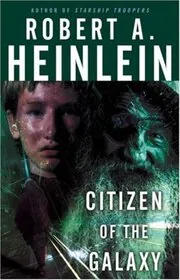
Citizen of the Galaxy
by Robert A Heinlein
1957
A slave boy named Thorby is bought by a crippled beggar who is much more than he seems. Thorby's journey—from the slums of a distant planet to star‑trading clans and beyond—becomes a search for identity, justice, and a place to belong.
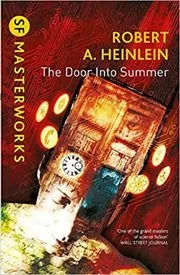
The Door into Summer
by Robert A Heinlein
1957
Cheated out of his company and the woman he loves, engineer Dan Davis turns to suspended animation and an experimental time‑travel gadget. His looping path into the future becomes a quietly romantic puzzle about justice, friendship, and second chances.
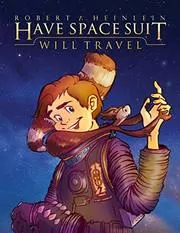
Have Space Suit - Will Travel
by Robert A Heinlein
1958
Kip Russell wins a battered spacesuit in a contest and tinkers it back to working order, only to be swept up in an alien kidnapping. From Luna to distant stars, he and two unlikely allies must convince a cosmic tribunal that humanity deserves to live.

'All You Zombies--'
by Robert A Heinlein
1959
A barroom conversation leads a time‑traveling agent into the strangest assignment of his career: ensuring that a tangled chain of events actually happens. The compact story folds identity, causality, and gender into one of the genre’s most famous paradoxes.
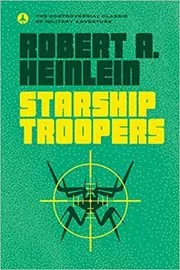
Starship Troopers
by Robert A Heinlein
1959
Juan "Johnny" Rico enlists in the Mobile Infantry, training for brutal powered‑armor combat against an alien swarm. Through boot camp and war he confronts questions of duty, citizenship, and the cost of defending a fragile human civilization.
Recommended by
2 people John Scalzi recommended this book
John Scalzi
John Scalzi mentioned this book on Twitter.
John Scalzi's recommendation of this book  Don Winslow recommended this book
Don Winslow
"A great novel." - Don Winslow
Don Winslow's recommendation of this book

The Menace from Earth
by Robert A Heinlein
1959
This collection gathers eight stories ranging from lunar teen drama to time‑travel puzzles and end‑of‑the‑world forecasts. Highlights include the title tale of a jealous young wing‑flier on the Moon and By His Bootstraps, a classic tangle of overlapping time loops.

The Science Fiction Novel
by Robert A Heinlein
1959
Originally delivered as a lecture, Heinlein’s essay Science Fiction: Its Nature, Faults, and Virtues appears here alongside pieces by other writers. His contribution argues for speculative fiction that takes science seriously while using stories to test social and political ideas.

The Unpleasant Profession of Jonathan Hoag
by Robert A Heinlein
1959
A collection of darkly whimsical fantasies, including the title novella about a man who can’t remember his own job and hires detectives to follow him. The stories bend reality, identity, and perception in ways closer to nightmare than hard science fiction.

Lost Legacy
by Robert A Heinlein
1960
Three ordinary Americans discover they possess powerful psychic abilities and are drawn to a hidden community training similar talents. Their awakening leads to a struggle over whether humanity is ready for such gifts and how quietly they should be used.
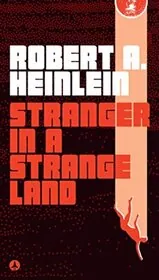
Stranger in a Strange Land
by Robert A Heinlein
1961
Valentine Michael Smith, a human raised by Martians, comes to Earth as an innocent with vast mental powers. As he learns human customs, he founds a controversial new movement that challenges ideas about religion, sexuality, and what it means to be truly human.
Recommended by
4 people Tim Ferriss recommended this book
Tim Ferriss
"Incredible." - Tim Ferriss
Tim Ferriss's recommendation of this book  Elon Musk recommended this book
Elon Musk
"I like [this book], although it kind of goes off the rails at the end." - Elon Musk
Elon Musk's recommendation of this book  Sahil Lavingia recommended this book
Sahil Lavingia
Sahil Lavingia recommended this book on Notion.
Sahil Lavingia's recommendation of this book  Bill Gates recommended this book
Bill Gates
"One of my favorite sci-fi novels of all time." - Bill Gates
Bill Gates's recommendation of this book
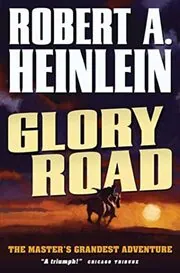
Glory Road
by Robert A Heinlein
1963
Disillusioned veteran E. C. "Scar" Gordon answers a mysterious ad and is recruited by the splendidly impossible Star to retrieve a legendary artifact on another world. Their quest riffs on sword‑and‑sorcery adventure while asking what comes after winning the prize.
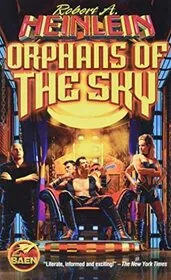
Orphans of the Sky
by Robert A Heinlein
1963
On a vast generation ship whose crew has forgotten it is a ship, young Hugh Hoyland discovers the terrifying truth about his closed world. His struggle to understand and act reshapes both his own beliefs and his society's future.
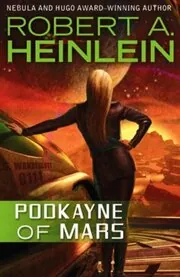
Podkayne of Mars
by Robert A Heinlein
1963
Teenage would‑be pilot Podkayne "Poddy" Fries and her brilliant, troublesome younger brother leave Mars for a luxury trip to Venus and Earth with their influential uncle. Political intrigue turns their holiday into a dangerous lesson in trust, responsibility, and growing up.
Farnham's Freehold
by Robert A Heinlein
1964
Hugh Farnham and his family survive a nuclear attack in their backyard shelter, only to emerge into a bizarre future where power and prejudice have been brutally rearranged. The story mixes survival adventure with deliberately uncomfortable social and racial thought experiments.

Three by Heinlein / Heinlein Triad
by Robert A Heinlein
1965
An omnibus volume collecting The Puppet Masters, Waldo, and Magic, Inc. Together they showcase Heinlein’s range—from alien‑invasion espionage to ingenious engineering puzzle to a wry urban fantasy about magic and organized crime.
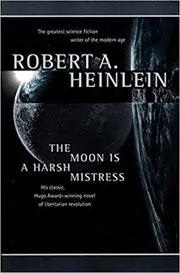
The Moon Is a Harsh Mistress
by Robert A Heinlein
1966
On Luna, a penal colony turned rough‑and‑ready society, a self‑aware computer and a handful of rebels plot independence from Earth. Their revolution plays out through underground organizing, orbital mechanics, and debates about what real freedom and self‑government might look like.
Recommended by
6 people- Elon Musk recommended this book
Elon Musk
One of Elon Musk's favorite books about space.
Elon Musk's recommendation of this book  Paul Graham recommended this book
Paul Graham
"Made me want to work on AI, which led to Lisp." - Paul Graham
Paul Graham's recommendation of this book  John Carmack recommended this book
John Carmack
John Carmack mentioned this book on Twitter.
John Carmack's recommendation of this book - Bill Gates recommended this book
Bill Gates
"Probably the [science fiction book] I read the most when I was younger." - Bill Gates
Bill Gates's recommendation of this book  Christopher Sommer recommended this book
Christopher Sommer
"I’m a big fan of [the author]." - Christopher Sommer
Christopher Sommer's recommendation of this book  Ryan Shea recommended this book
Ryan Shea
Ryan Shea recommended this book on his website.
Ryan Shea's recommendation of this book
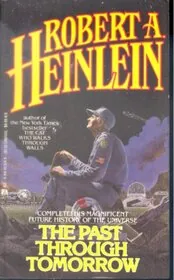
The Past Through Tomorrow
by Robert A Heinlein
1967
An omnibus of Heinlein's core Future History stories, tracing humanity from near‑future labor unrest and spaceflight through the rise of a theocracy and the long lives of the Howard Families. Ideal for readers who want his imagined timeline in one volume.

6 x H
by Robert A Heinlein
1969
A retitled edition of The Unpleasant Profession of Jonathan Hoag, this book bundles six fantasy‑leaning stories. Expect eerie mysteries, ironic miracles, and reality‑bending twists rather than spaceships, all delivered with Heinlein’s brisk, conversational storytelling.

Cliffsnotes Heinlein's Works
by Robert A Heinlein
1969
A concise study guide to several of Heinlein’s major novels, including Stranger in a Strange Land. It summarizes plots, characters, and themes and adds discussion points for students or book‑club readers who want help unpacking his most talked‑about books.
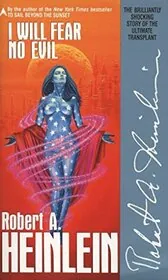
I Will Fear No Evil
by Robert A Heinlein
1970
An aging billionaire arranges to have his brain transplanted into a healthy young woman’s body, then wakes up sharing her memories and personality. The resulting inner dialogue drives a long, often uneasy exploration of gender, identity, and what survives death.

The Worlds of Robert A. Heinlein
by Robert A Heinlein
1972
A sampler that pairs a long introductory essay, Pandora’s Box, with key early stories such as Free Men, Blowups Happen, and Life‑Line. It offers both a compact tour of his themes and a snapshot of mid‑century hopes and anxieties.

The Best of Robert Heinlein, 1947-1959
by Robert A Heinlein
1973
A retrospective collection drawing on Heinlein’s short fiction from the late 1940s and 1950s, years when he was redefining modern science fiction. It’s a convenient way to sample his mature style in shorter forms, from adventure pieces to time‑twist tales.
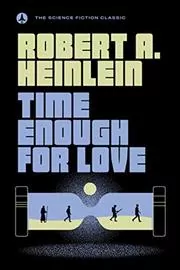
Time Enough for Love
by Robert A Heinlein
1973
Exhausted by millennia of life, the immortal Lazarus Long agrees to go on living only if he can keep telling stories. His memoirs range from frontier homesteads to interstellar colonies, exploring love, family, and the strange burden of outliving everyone.
The Notebooks of Lazarus Long
by Robert A Heinlein
1975
A collection of epigrams, grumbles, and one‑line philosophies attributed to the ageless adventurer Lazarus Long. Ranging from darkly funny to unexpectedly tender, these brief notes distill many of Heinlein’s recurring ideas about freedom, responsibility, love, and sheer stubborn survival.
Expanded Universe
by Robert A Heinlein
1980
A hefty grab‑bag of Heinlein’s fiction and nonfiction: early stories, later essays, predictions, and reflections on where he went right or wrong. It offers a backstage look at his ideas about technology, politics, space travel, and the craft of writing itself.
The Number of the Beast
by Robert A Heinlein
1980
Four eccentric geniuses take off in a dimension‑hopping vehicle that can visit both alternate Earths and worlds from fiction. Their wild journey turns into a meditation on storytelling, freedom, and how people build families in a chaotic multiverse.

Friday
by Robert A Heinlein
1982
Friday Jones is an engineered courier—part spy, part combat operative—working in a fractured, near‑future Earth. Betrayed by her employers, she must navigate corporate intrigue, guerilla wars, and deep prejudice against people like her while searching for a place she can finally call home.
Job
by Robert A Heinlein
1984
A devout but conventional man on a Christian cruise finds reality itself repeatedly resetting around him, tossing him through alternate Americas and afterlives. This sharp, playful satire chews over faith, bureaucracy, and how much justice the universe really offers.
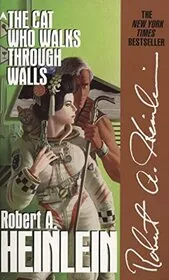
The Cat Who Walks Through Walls
by Robert A Heinlein
1985
A wounded soldier turned writer meets a mysterious woman and an equally mysterious cat aboard an orbital habitat, then is swept into an interdimensional conspiracy. The adventure pulls together characters and threads from across Heinlein's earlier novels.

The Fantasies of Robert A. Heinlein
by Robert A Heinlein
1986
An omnibus bringing together Waldo, Magic, Inc., The Unpleasant Profession of Jonathan Hoag, and related pieces that lean toward fantasy. Here Heinlein swaps rockets for witches, alternate dimensions, and uncanny coincidences while keeping his focus on clever, competent characters.
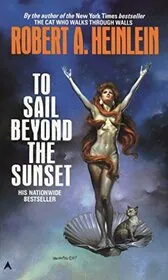
To Sail Beyond the Sunset
by Robert A Heinlein
1987
Maureen Johnson, mother and later lover of Lazarus Long, looks back on a life that stretches from small‑town Missouri to far‑future starships. Her memoir weaves family saga, time travel, and the World as Myth idea of universes born from stories.
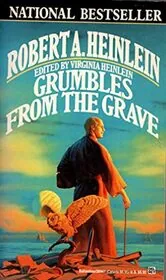
Grumbles from the Grave
by Robert A Heinlein
1989
Edited from Heinlein’s letters and papers, this posthumous volume reads like an informal autobiography in his own words. It follows his career from the first stories through battles with editors, health scares, travel, and everyday life with his wife, Virginia.

Take Back Your Government
by Robert A Heinlein
1992
Written in the 1940s and published decades later, this handbook draws on Heinlein’s own campaign experience to show how ordinary citizens can work inside party politics. It offers very practical advice on organizing, canvassing, and keeping representative government from becoming a spectator sport.
Tramp Royale
by Robert A Heinlein
1992
Heinlein’s travelogue of a yearlong around‑the‑world trip with his wife in the 1950s. Part itinerary, part social commentary, it records ships, cities, and fellow passengers while revealing how real places and politics fed into the settings of his later fiction.
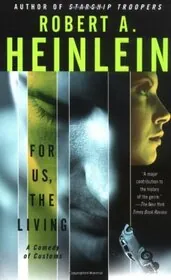
For Us, the Living
by Robert A Heinlein
2003
After dying in a car accident in 1939, Perry Nelson wakes up in a utopian America of 2086. Through long conversations and tours, he learns about new economics, relationships, and laws in this early, idea‑driven sketch of themes Heinlein would revisit later.

Off the Main Sequence
by Robert A Heinlein
2005
A large collection of twenty‑seven short stories, many long out of print, that sit outside Heinlein’s main Future History. From early magazine pieces to later experiments, it shows how he played with ideas that didn’t quite fit his major series.

Outward Bound
by Robert A Heinlein
2006
An omnibus volume collecting Have Space Suit—Will Travel, Starship Troopers, and Podkayne of Mars. It’s a handy three‑book tour of Heinlein’s young‑adult adventure, military SF, and interplanetary travel stories, ideal for readers who want a compact starter set.

Project Moonbase and Others
by Robert A Heinlein
2008
A collection of screenplays and teleplays, including Heinlein’s work for the film Project Moonbase and adaptations of several famous stories. It offers a behind‑the‑scenes look at how his ideas were reshaped for early television and cinema.
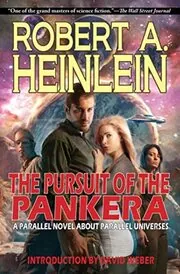
The Pursuit of the Pankera
by Robert A Heinlein
2020
An alternate version of The Number of the Beast, this novel sends four travelers and their dimension‑hopping car on the run from a vicious alien species called the Pankera. Their chase through parallel universes becomes both adventure and meditation on branching possibilities.
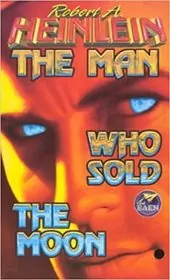
Man Who Sold the Moon
by Robert A Heinlein
This Future History collection includes the story of businessman D. D. Harriman's determined campaign to finance lunar travel. Alongside his schemes and space ambitions, other tales explore inventions, industrial dangers, and the social consequences of technological change.
Recommended by
1 person Peter Diamandis recommended this book
Peter Diamandis
"A brilliant 50-year-old vision that’s as relevant today." - Peter Diamandis
Peter Diamandis's recommendation of this book
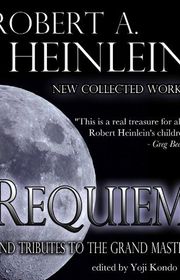
Requiem
by Robert A Heinlein
Rare fiction and other writings reveal Heinlein's enduring interest in space exploration, including Destination Moon and Tenderfoot in Space. Reflections from fellow writers accompany these works, examining the ideas and ambitions that shaped his influence on science fiction.
Where to start with Robert A Heinlein
If you want one landmark novel: The Moon is a Harsh Mistress.
If you enjoy military SF: Starship Troopers → The Moon is a Harsh Mistress.
If you prefer philosophical, character‑driven stories: Stranger in a Strange Land → Time Enough for Love.
If you're picking books for younger readers: Have Space Suit—Will Travel → Citizen of the Galaxy → Tunnel in the Sky.
If you want to follow his Future History: The Man Who Sold the Moon → The Green Hills of Earth → Methuselah's Children → Time Enough for Love.
Robert A Heinlein sub-series and character series
Future History/Heinlein Timeline books in order
Explore this seriesFuture History/Heinlein Timeline books in chronological order
Heinlein's Juveniles books in order
Explore this series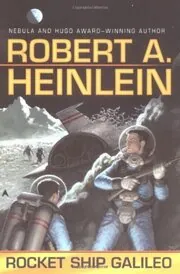
The Rolling Stones / Tramp Space Ship / Space Family Stone
by Robert A Heinlein
1952Heinlein's Juveniles, Book 6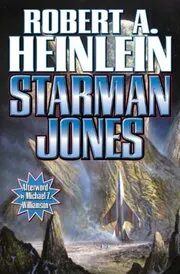
Heinlein's Juveniles books in chronological order
The Rolling Stones / Tramp Space Ship / Space Family Stone
by Robert A Heinlein
1952Heinlein's Juveniles, Book 6
Robert A Heinlein collections, short stories, and related book types
Short Stories/Novellas
Chapbooks
Short Story Collections
Non-Fiction
Standalone Robert A Heinlein books
Author bio
Robert A. Heinlein was born in Butler, Missouri, on July 7, 1907, and grew up mostly in Kansas City. Library stacks and the 1910 return of Halley's Comet fed a fascination with astronomy and engineering that never really left him.
Money was tight, so he aimed for a service academy instead of a traditional university. Heinlein entered the U.S. Naval Academy, graduated in 1929, and served as a naval officer on ships including the aircraft carrier USS Lexington and the destroyer USS Roper, working with then‑new radio technology and gunnery.
His naval career ended early when he developed pulmonary tuberculosis and was medically retired in 1934. During convalescence he sketched inventions such as a prototype waterbed, dabbled in graduate classes in physics and mathematics at UCLA, and threw himself into California politics, campaigning for Upton Sinclair’s End Poverty in California movement and even running—unsuccessfully—for the state legislature.
When those plans collapsed and money was again short, he tried something new: writing science fiction for the pulps. In 1939 his first story, Life Line, sold to Astounding, and a flood of stories followed. Working closely with editor John W. Campbell, he mapped out the Future History sequence, a charted timeline of stories that imagined human society stretching from the mid‑twentieth century into interplanetary expansion.
World War II pulled him back toward engineering. Heinlein worked at the Naval Air Experimental Station in Philadelphia, where he met chemist Virginia "Ginny" Gerstenfeld. After the war his second marriage ended; in 1948 he and Virginia married, beginning a partnership that shaped both his home life and his fiction. They designed their own houses, traveled widely, and shared an intense interest in rocketry and spaceflight.
In the late 1940s and 1950s Heinlein wrote a string of what became known as the "juveniles"—novels like Rocket Ship Galileo, Space Cadet, and Have Space Suit—Will Travel, published for younger readers but embraced by adults as well. These books mix clear prose, competent teenage protagonists, and hands‑on problem‑solving, and they helped bring space travel into the dreams of a generation.
At the same time, he was pushing in other directions. Double Star, Starship Troopers, Stranger in a Strange Land, and The Moon is a Harsh Mistress each won the Hugo Award for best novel and reached very different audiences. Together they cover everything from interplanetary politics and powered‑armor infantry to religious satire, free‑love communes, and a lunar revolution, all threaded with his recurring interest in duty, individual choice, and unconventional families.
Later books such as Time Enough for Love, The Number of the Beast, The Cat Who Walks Through Walls, and To Sail Beyond the Sunset knit his characters into a sprawling multiverse he called "World as Myth". Alongside the fiction he wrote essays about science fiction itself, lectured on speculative fiction as social criticism, and produced nonfiction books drawn from his correspondence, travels, and hard‑won political experience.
After serious health problems in the 1970s, Heinlein recovered enough to write steadily again, working right up until his death in Carmel, California, on May 8, 1988. Virginia Heinlein spent the rest of her life shepherding his manuscripts, letters, and legacy, and their names now sit on a shelf with the most widely read writers of the twentieth century. For many readers, his stories are still the gateway to modern science fiction.

Edited by
Software engineer whose passion for tracking book recommendations from podcasts inspired the creation of MRB.
Lead investor at 3one4 Capital whose startup expertise and love for books helped shape MRB and its growth.
Comments
Did we miss something? Have feedback?
Help us improve this page by sharing your thoughts