
Future History (Humphrey Hawksley) Books in Order
Part ofHumphrey Hawksley Books in OrderFollow the Future History books by Humphrey Hawksley in order, with quick summaries, series background, and where to start this near-future war trilogy.
Last updated:
As an Amazon Associate, we earn from qualifying purchases (at no extra cost to you).
Future History (Humphrey Hawksley) books in publication order
3 books
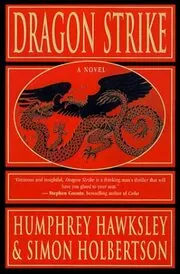
Dragon Strike
by Humphrey Hawksley
1997
A Chinese assault in the South China Sea triggers a fast-moving war that pulls in the United States and other powers. Written with Simon Holberton, it imagines how regional ambition and military miscalculation could spiral toward catastrophe.
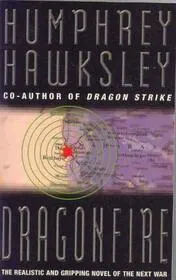
Dragon Fire
by Humphrey Hawksley
2000
A prison raid in Tibet and a surprise strike on India set off war among China, India, and Pakistan. As nuclear powers harden their positions, the crisis widens into a frightening regional showdown.
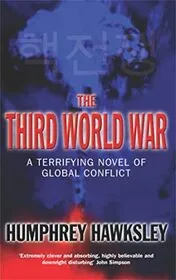
The Third World War
by Humphrey Hawksley
2003
As crises erupt across Asia, the Middle East, and the Pacific, leaders scramble to stop a widening global war. Hawksley turns military brinkmanship, espionage, and collapsing diplomacy into a bleakly plausible near-future thriller.
Future History (Humphrey Hawksley) books in chronological order
Series background & context
Humphrey Hawksley's Future History books are less a character series than a set of linked warning flares. Dragon Strike, Dragon Fire, and The Third World War each imagine a near-future conflict that begins in Asia and then spreads outward through alliances, miscalculation, and military escalation. The idea is simple and unsettling: the next big war may not start with one grand decision, but with a chain of smaller ones that nobody can stop in time.
Dragon Strike opens with a Chinese assault that throws the South China Sea into crisis and drags the United States and other powers toward open war. The book has the energy of a military thriller, but it is really interested in how governments think, hesitate, bluff, and misread one another. Hawksley and Simon Holberton treat strategy, trade routes, and regional ambition as active forces in the story, not background wallpaper.
Dragon Fire keeps that same approach but shifts the fault line west. A raid over Tibet and a surprise attack on India set off a conflict involving China, India, and Pakistan, with nuclear danger hanging over every move. The pace is quick, but the fear underneath is slow and heavy, because the book keeps showing how hard it is to de-escalate once armies, pride, and history are all in motion.
None of these books feels safely far away.
By The Third World War, Hawksley is working on an even wider canvas. Flashpoints break open across Asia, the Middle East, and the Pacific. Leaders in Washington, Delhi, Pyongyang, Tokyo, and elsewhere try to read the board while it keeps changing under them. Espionage, diplomacy, military force, and even biological threat all feed into the question the trilogy keeps asking: who really starts a world war, and who ends up paying for it?
What links the three books is Hawksley's reporter's eye. He does not write these stories as fantasy geopolitics. He writes them like scenarios built from real borders, real rivalries, and the kind of institutional failures he spent years covering as a foreign correspondent. The cast often includes presidents, generals, diplomats, and intelligence officials, but the books also remember cities, civilians, and the chaos left behind when systems break.
If you want a hero-centered spy series, this is not quite that. If you want sharp, fast-moving war fiction built around plausible international crises, it is a strong place to start. The trilogy is best read in publication order, because each book expands the scale of Hawksley's thinking about what modern conflict looks like.















Edited by
Software engineer whose passion for tracking book recommendations from podcasts inspired the creation of MRB.
Lead investor at 3one4 Capital whose startup expertise and love for books helped shape MRB and its growth.
Comments
Did we miss something? Have feedback?
Help us improve this page by sharing your thoughts