
Four Social Romances Books in Order
Part ofÉmile Zola Books in OrderExplore the Four Social Romances by Émile Zola, with reading order, story summaries, and background on how these late novels tackle work, family, and truth in modern society.
Last updated:
As an Amazon Associate, we earn from qualifying purchases (at no extra cost to you).
Four Social Romances books in publication order
3 books

Fruitfulness
by Émile Zola
1899
Mathieu and Marianne Froment choose to raise a large, lively family despite financial strain and fashionable talk of limiting births. Their story, entwined with that of friends who make other choices, becomes Zola’s broad plea for renewal and social responsibility.
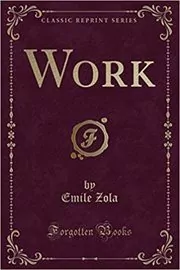
Work
by Émile Zola
1901
An idealistic engineer dreams of transforming a grim ironworks into a cooperative community where workers share ownership, housing, and education. As he struggles against financiers, clergy, and ingrained habits, Zola imagines what a more just world of work might look like.
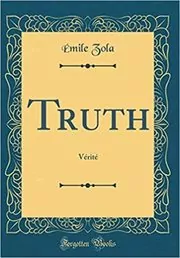
Truth
by Émile Zola
1903
Schoolteacher Marc Froment is drawn into a provincial scandal when a Jewish colleague is falsely accused of a child’s murder. As trials, pamphlets, and sermons divide the town, he fights for secular education and the slow, stubborn advance of truth.
Four Social Romances books in chronological order
Series background & context
Late in his career Zola turned from the sprawling, observational canvas of the Rougon Macquart novels to a more programmatic project he called the Four Gospels. In English these books are often grouped as the Four Social Romances. Three were completed and appear here as Fruitfulness, Work, and Truth; a planned fourth, Justice, remained unwritten at his death.
Where the earlier cycle set out mainly to show how things were, these later novels lean toward how things might be. They still grow out of concrete situations and recognisable characters, but they have a clearer agenda: to argue that society can remake itself around more generous values.
Fruitfulness centers on Mathieu and Marianne Froment, a couple who choose to have a large family even as friends and relatives preach the benefits of small households and strict birth control. Around them Zola sketches other marriages and arrangements, some loving, some harshly calculated. The book links private choices about children and care to wider debates about national decline, social policy, and the future of rural life.
In Work, sometimes published as Travail or Labor, Zola imagines an industrial town built first on exploitation and then painstakingly rebuilt on cooperation. An idealistic engineer tries to turn a grim foundry into a cooperative enterprise where workers share ownership, housing, and education. Opposition comes from churchmen, financiers, and those who simply prefer familiar hierarchies, but the novel also lingers on the practical difficulties of making utopian ideas work day to day.
Truth moves to a small town riven by a scandal that echoes the Dreyfus Affair. A Jewish schoolmaster is falsely accused of a child’s murder, and the local clergy and notables close ranks around the lie. Marc Froment, a secular teacher, becomes the quiet center of resistance. Through his classroom, his pamphlets, and his patience, Zola explores the role of education, free inquiry, and simple courage in slowly shifting public opinion.
Taken together, the Four Social Romances are more openly hopeful than much of Zola’s earlier work. They still contain illness, cruelty, and failure, but they give more space to constructive projects and cooperative experiments. The tone is less that of a detached observer and more that of an engaged citizen making his case.
Readers interested in how a hardened naturalist writer tried to imagine better futures find a different side of Zola here. The books also offer a bridge between the detailed social novels of the nineteenth century and the more overtly political fiction that followed in the twentieth.















Edited by
Software engineer whose passion for tracking book recommendations from podcasts inspired the creation of MRB.
Lead investor at 3one4 Capital whose startup expertise and love for books helped shape MRB and its growth.
Comments
Did we miss something? Have feedback?
Help us improve this page by sharing your thoughts