
The Laws of Social Justice Books in Order
Part ofVox Day Books in OrderThis page shows The Laws of Social Justice books in order by Vox Day, with short summaries, series background, and notes on what each volume covers.
Last updated:
As an Amazon Associate, we earn from qualifying purchases (at no extra cost to you).
The Laws of Social Justice books in publication order
2 books
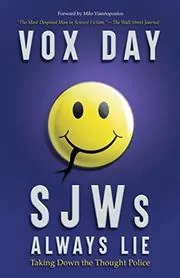
SJWs Always Lie
by Vox Day
2015
A short polemical manifesto in which Day lays out his framework for understanding social-justice activism, public rhetoric, and culture-war tactics. It is part glossary, part argument, part warning.
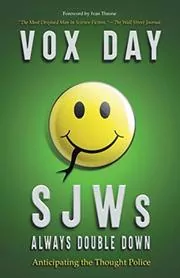
SJWs Always Double Down
by Vox Day
2017
This follow-up applies Day's framework to later public battles, arguing that movements under pressure rarely retreat. Expect examples drawn from media, politics, and internet culture.
The Laws of Social Justice books in chronological order
Series background & context
The Laws of Social Justice is not a story series in the usual sense. It is a short run of polemical nonfiction books in which Vox Day tries to explain a pattern he believes he sees in modern public life, especially in media, politics, online argument, and institutional culture. The two books, SJWs Always Lie and SJWs Always Double Down, are built less like slow academic studies and more like compact frameworks. They define terms, state rules, and then test those rules against public controversies.
The first book is the foundation. SJWs Always Lie lays out the author's central claim and then tries to show how it appears in activism, rhetoric, and social pressure campaigns. Much of the reading experience comes from that structure. Day is not trying to survey every side of the issue in equal depth. He is building an interpretive model and asking readers to see a long list of events through it.
The second book, SJWs Always Double Down, works as an extension rather than a restart. Once the first set of rules is in place, the follow-up asks what happens when institutions, movements, or public figures meet resistance. The answer, in this framework, is that they tend to escalate rather than retreat. That gives the series its shape: book one names the pattern, book two follows the pattern under pressure.
So what should you expect as a reader? Short chapters. Strong claims. A lot of commentary on incentives, language, status, and group behavior. These are books that assume ideas are not floating around in the abstract. They are being used by real people inside workplaces, media systems, fandoms, and political fights. The tone is direct and combative, sometimes more like an extended brief than a detached essay collection.
These are argument books.
That matters because the series is best read with the right expectations. If you want a neutral introduction to social theory, this is not that. If you want to understand a particular frame that became influential in some corners of online culture and culture-war commentary, it is a useful place to look. The books are short, but they are designed to be memorable, especially in the way they condense a broad argument into sharp slogans and repeatable rules.
As a pair, the books are linked by subject more than chronology. You can start with the first and move straight to the second without needing a long commitment, and that is probably the best way to read them. Together they show the nonfiction side of Vox Day's catalog at its most compact: naming enemies, defining behavior, and turning messy public conflict into a system the reader is meant to recognize almost everywhere.
















Edited by
Software engineer whose passion for tracking book recommendations from podcasts inspired the creation of MRB.
Lead investor at 3one4 Capital whose startup expertise and love for books helped shape MRB and its growth.
Comments
Did we miss something? Have feedback?
Help us improve this page by sharing your thoughts