
Emily Hauser Books in Order
Explore Emily Hauser books in order, including the Golden Apple trilogy, with publication dates and descriptions of novels inspired by ancient Greek myths.
Last updated:
As an Amazon Associate, we earn from qualifying purchases (at no extra cost to you).
Emily Hauser books in publication order
5 books
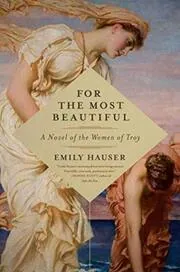
For the Most Beautiful
by Emily Hauser
2016
The Trojan War unfolds through the perspectives of Krisayis, a priest's daughter, and Briseis, a captured princess. As Greek warriors fight for glory, the women struggle to retain agency within a conflict shaped by men and gods.

For the Winner
by Emily Hauser
2017
Abandoned as an infant, Atalanta grows into a formidable hunter and disguises herself as a man to join Jason's Argonauts. The voyage for the Golden Fleece challenges her determination to prove herself in a world that excludes women.
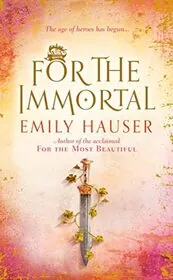
For The Immortal
by Emily Hauser
2018
Seeking a cure for her dying brother, Admete joins Hercules on a journey to the Amazons. There, Queen Hippolyta must protect her people and their secrets as the arrival of Greek visitors brings competing loyalties into conflict.
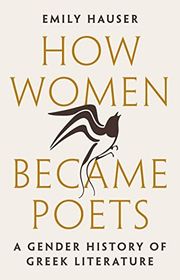
How Women Became Poets
by Emily Hauser
2023
Emily Hauser examines how ancient Greek writers defined authorship through gender, from Sappho’s struggle for a name to later debates about women poets. The study restores women’s role in shaping the language and traditions of literature.
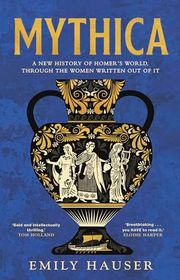
Mythica
by Emily Hauser
2025
Emily Hauser combines Homer’s epics with archaeology and scientific discoveries to reconstruct women’s lives in Bronze Age Greece. Queens, captives, mothers and workers reshape familiar legends while exposing whose experiences ancient history has neglected.
Where to start with Emily Hauser
For the Golden Apple trilogy: For the Most Beautiful → For the Winner → For The Immortal
For the history behind the myths: Mythica
For women and ancient authorship: How Women Became Poets
Emily Hauser sub-series and character series
Golden Apple Trilogy books in order
Standalone Emily Hauser books
Author bio
Emily Hauser is an ancient historian and novelist whose books approach Greek myth from the women's side of the story. Born in Brighton and brought up in Suffolk, she studied Classics at Cambridge, where Mary Beard was one of her teachers. A doctorate at Yale and a Junior Fellowship at Harvard followed, giving her a scholarly background for books that move between research and imagined lives.
Women who are marginal to a hero's story become central to hers.
Her debut novel, For the Most Beautiful, retells the Trojan War through Briseis and Krisayis. One is a princess of Pedasus; the other is the daughter of Troy's high priest. Their different loyalties and circumstances give the war a scale beyond battles and celebrated warriors. The gods still have power, but the women have desires and decisions of their own. Readers meet the cost of the conflict through people who can too easily be treated as possessions in someone else's account.
The Golden Apple trilogy continues with For the Winner, which turns to Atalanta and the voyage of Jason and the Argonauts. This is a different myth and a different heroine, rather than a continuation of the Trojan women's plot. Atalanta's place among the adventurers raises questions about who is allowed to take part in a heroic undertaking and who receives recognition for it. The books share a purpose while giving each woman her own narrative.
For The Immortal completes the trilogy by following Admete, who hopes to save her dying brother. She accompanies Hercules on a journey that brings the Greeks into contact with the Amazons and their queen, Hippolyta. A familiar heroic labour becomes a meeting between women with different loyalties, risks and reasons to resist. The trilogy can be followed in publication order without expecting a single continuous cast or one advancing timeline.
Hauser's nonfiction pursues related questions through evidence.
How Women Became Poets examines the relationship between gender and the idea of authorship in ancient Greek literature. Rather than simply adding overlooked names to a list, it asks how being a poet was defined and how women challenged those definitions. Mythica broadens the inquiry to the lives of women in the Bronze Age, bringing archaeology and scientific discoveries into conversation with Homer's stories. It gives readers of the novels another route into the society behind the myths, while keeping the distinction between historical evidence and fictional reconstruction in view.
Hauser is an Honorary Professor of Classics and Ancient History at the University of Exeter and a Bye-Fellow at Gonville and Caius. Her academic work and books for general readers return to a common problem: what changes when the women in an ancient story are treated as people with histories, rather than supporting figures around its men?













Edited by
Software engineer whose passion for tracking book recommendations from podcasts inspired the creation of MRB.
Lead investor at 3one4 Capital whose startup expertise and love for books helped shape MRB and its growth.
Comments
Spotted a missing book, a wrong order or a mistake? Tell us and we'll fix this page.
We're a reading guide, not the author or publisher, so we can't send books or pass on messages.