
Emily St John Mandel Books in Order
Explore Emily St. John Mandel's standalone novels in order, with short summaries, linked themes, and clear suggestions for where to start reading.
Last updated:
As an Amazon Associate, we earn from qualifying purchases (at no extra cost to you).
Emily St John Mandel books in publication order
8 books
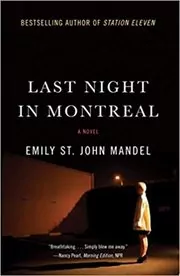
Last Night in Montreal
by Emily St John Mandel
2009
Restless and unable to remember much of her childhood, Lilia Albert keeps disappearing into new cities and new identities. When her boyfriend follows her to Montreal, he uncovers a deeper mystery tied to her father and a detective who never stopped searching.
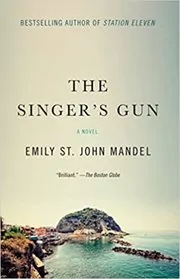
The Singer's Gun
by Emily St John Mandel
2009
Anton Waker grew up in a family built on forged documents and stolen goods, and he wants out. One last favor for his cousin Aria pulls him back toward blackmail, trafficking, and the life he thought he had escaped.
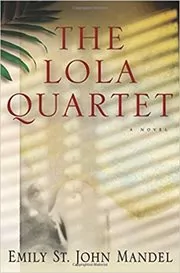
The Lola Quartet
by Emily St John Mandel
2012
Fired for plagiarism, Gavin Sasaki heads back to Florida and sees a photograph of a girl who may be his daughter. His search for Anna, his vanished high school girlfriend, pulls him into old loyalties, buried secrets, and real danger.
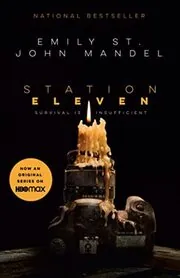
Station Eleven
by Emily St John Mandel
2014
During a Toronto performance of King Lear, actor Arthur Leander dies just as a flu pandemic begins. Years later, Kirsten travels the ruined Great Lakes with the Traveling Symphony and faces a dangerous prophet while old connections surface.
Recommended by
4 people Kathryn Minshew recommended this book
Kathryn Minshew
Most Recommended Books reached out to Kathryn Minshew directly.
Kathryn Minshew's recommendation of this book  Tyler Cowen recommended this book
Tyler Cowen
"[The author's] biggest-selling book to date." - Tyler Cowen
Tyler Cowen's recommendation of this book  George R. R. Martin recommended this book
George R. R. Martin
"Really blew me away." - George R. R. Martin
George R. R. Martin's recommendation of this book  Tim Urban recommended this book
Tim Urban
"Should be required reading to remind everyone that we all live in an incredible magical utopic civilization." - Tim Urban
Tim Urban's recommendation of this book
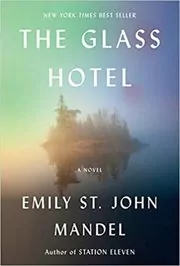
The Glass Hotel
by Emily St John Mandel
2020
Vincent works behind the bar at the remote Hotel Caiette when she meets financier Jonathan Alkaitis. After his Ponzi scheme collapses, lives splinter across Wall Street, shipping routes, and prison, in a ghostly story about greed, disappearance, and self-deception.
Recommended by
1 person- Tyler Cowen recommended this book
Tyler Cowen
"I think, is [the author's] very best, deepest, most subtle novel." - Tyler Cowen
Tyler Cowen's recommendation of this book
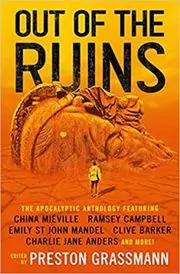
Out of the Ruins
by Emily St John Mandel
2021
This post-apocalyptic anthology features a story by Emily St. John Mandel alongside work by other writers, all circling the same question: what do people save when the world falls apart? It is a wide-ranging collection of ruin, survival, and uneasy hope.
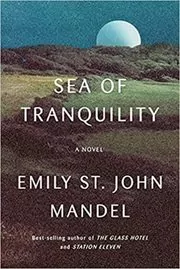
Sea of Tranquility
by Emily St John Mandel
2022
An exiled young man in 1912, a novelist from a moon colony, and a detective in the future are linked by a strange anomaly in the woods. Mandel turns time travel into a moving story about memory, plague, and what makes a world feel real.
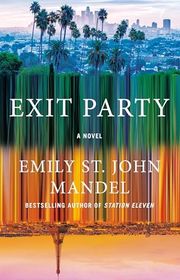
Exit Party
by Emily St John Mandel
2026
In Los Angeles in 2031, the curfew lifts after the collapse of the United States, and a glittering party tips into something uncanny. As Ari Waker investigates a disappearance, the story opens into doubles, fractured timelines, and a fragile new order.
Where to start with Emily St John Mandel
If you want the book most readers start with: Station Eleven
If you like interconnected speculative fiction: The Glass Hotel → Sea of Tranquility
If you prefer tense, grounded noir: Last Night in Montreal → The Singer's Gun → The Lola Quartet
If you want the shortest mind-bender: Sea of Tranquility
Standalone Emily St John Mandel books
Author bio
Emily St. John Mandel was born in Merville, British Columbia, in 1979 and grew up on Denman Island, off the coast of Vancouver Island. That landscape, remote, rainy, and edged by water, still feels close to her work, especially in the way her novels notice weather, distance, and solitude.
She did not come to fiction by way of a writing program.
At eighteen she left home to study contemporary dance at the School of Toronto Dance Theatre. After those years she lived in Toronto and Montreal, then moved to New York, trying to build an artistic life in big cities after growing up somewhere small. In Montreal, she began writing the novel that would become Last Night in Montreal.
St. John is her middle name, and the books go under M.
Her early novels, Last Night in Montreal, The Singer's Gun, and The Lola Quartet, are often shelved as crime fiction or literary suspense, but they do not sit neatly in one box. They are full of drifters, missing people, forged identities, private investigators, musicians, ex-lovers, and characters who are never quite sure they can trust the life they have built. Readers who love these books usually talk about the atmosphere first: cool, tense, and quietly sad.
Station Eleven changed her audience and, in a lot of ways, the conversation around her work. The novel begins with a famous actor dying onstage just as a flu pandemic starts, then leaps forward to a troupe of actors and musicians crossing the Great Lakes region after the collapse. It was a finalist for the National Book Award, won the Arthur C. Clarke Award, and later became a television limited series. What keeps bringing readers back, though, is not just the premise, but the way the book treats art as something necessary.
She kept widening the frame. The Glass Hotel turns a financial crime story into something stranger, part ghost story, part study of money, guilt, and the alternate lives people imagine for themselves. Sea of Tranquility goes further out, linking 1912 Vancouver Island, a pandemic-era book tour, and a colony on the moon through a time-travel investigation. Even when the settings shift, her real subjects stay recognizable: precarious lives, fragile systems, memory, reinvention, and the odd beauty people manage to salvage from chaos.
Her books talk to one another.
Characters recur, details echo, and a place or side figure from one novel may drift into another years later. That gives longtime readers a little extra pleasure, but it never turns her bibliography into homework, because each novel still stands on its own. Across all of them, she returns to performers, travelers, lonely rooms, broken systems, and the question of what remains when the world people trusted starts to wobble.
These days she lives in New York City and Los Angeles. Her seventh novel, Exit Party, is scheduled for September 2026 and returns to some of her favorite territory: fractured realities, unstable political worlds, and people trying to stay human inside systems built to watch and control them. That mix of the intimate and the uncanny is a big part of why her fiction feels so hard to pin down. The plots can get strange, but the people inside them always feel like they have histories to outrun and one more choice to make.











Edited by
Software engineer whose passion for tracking book recommendations from podcasts inspired the creation of MRB.
Lead investor at 3one4 Capital whose startup expertise and love for books helped shape MRB and its growth.
Comments
Did we miss something? Have feedback?
Help us improve this page by sharing your thoughts