
9 Best Zen Books
The best Zen books, ranked by how many expert sources recommend each one, with notes for choosing introductions, meditation guidance, koans, and everyday practice.
Our take
Zen books approach a Buddhist tradition through several doors: meditation instruction, historical explanation, stories and koans, philosophical reflection, and teachings about everyday life. Those forms do different work. A clear overview can help you understand the vocabulary, while a practice guide answers questions about posture, attention, and routine. Collections of talks often become more useful through rereading than through trying to finish them quickly.
The Way of Zen offers orientation, while Taking the Path of Zen gives a more practical beginning. Zen Mind, Beginner's Mind explores the attitude brought to sitting, and Everyday Zen connects practice with familiar difficulties. For a different reading experience, try the short texts in Zen Flesh, Zen Bones. Each Moment Is the Universe asks for more patience with philosophical questions. Start with Taking the Path of Zen if you want concrete instruction, then read the talks alongside your developing experience.
9 books · 8 sources · Last updated
As an Amazon Associate, we earn from qualifying purchases (at no extra cost to you).
How to choose from this list
Skip to the full rankingIf you want concrete beginner instruction: Taking the Path of Zen → Opening the Hand of Thought
If you want to explore the attitude of practice: Zen Mind, Beginner's Mind → Everyday Zen
If you want historical and conceptual orientation: The Way of Zen → An Introduction to Zen Buddhism
If you prefer short stories and koans: Zen Flesh, Zen Bones
If you want a substantial practice collection: The Three Pillars of Zen
If you're ready for philosophical reflection: Each Moment Is the Universe
The 9 books, ranked
Ranked by how many expert sources name each book. Ties go to the book more people recommend.

For newcomers who respond to short teachings they can return to over time. Suzuki connects ordinary sitting with an open attitude toward practice, though the apparent simplicity can be puzzling without experience or more explicit beginner instruction.
What it's about
Shunryu Suzuki’s informal talks introduce Zen meditation and practice through the idea of maintaining a beginner’s openness. The teachings address posture, breathing, nonattachment, and everyday awareness, connecting practical discipline with reflections on the nature of experience.
Also recommended by
7 people Steve Jobs recommended this book
Steve Jobs
Brent Schlender said Steve Jobs reread this book several times.
Steve Jobs's recommendation of this book  Kevin Rose recommended this book
Kevin Rose
"You could read over time and time again." - Kevin Rose
Kevin Rose's recommendation of this book  Sharon Salzberg recommended this book
Sharon Salzberg
"Greatly influenced my life." - Sharon Salzberg
Sharon Salzberg's recommendation of this book  Leo Babauta recommended this book
Leo Babauta
"A classic." - Leo Babauta
Leo Babauta's recommendation of this book  Marc Benioff recommended this book
Marc Benioff
Marc Benioff texted The New York Times a screenshot of a quote from this book.
Marc Benioff's recommendation of this book  Garry Tan recommended this book
Garry Tan
Garry Tan shared this book on Instagram.
Garry Tan's recommendation of this book +1
More recommendations
- Andy Puddicombe
"A great all-round book for anyone interested in mindfulness." - Andy Puddicombe
- Andy Puddicombe
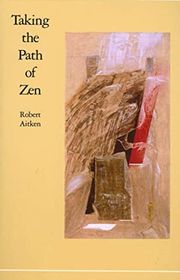
Taking the Path of Zen
For beginners who want a concise guide to what practice involves. Aitken connects basic sitting instruction with conduct and the wider training setting, though the compact treatment leaves some questions best explored through experience and guidance.
What it's about
Robert Aitken introduces Zen practice through guidance on sitting, breathing, attention, and conduct. The book also discusses obstacles, customs, and the place of practice in ordinary life, giving newcomers a framework for beginning and continuing.

For readers who want instruction alongside accounts of intensive practice. Kapleau brings several kinds of teaching into one substantial volume, though the strong emphasis on enlightenment experiences and demanding training offers a particular perspective rather than every Zen approach.
What it's about
Philip Kapleau introduces Zen through teaching, practice, and accounts of enlightenment, drawing on his experience as both student and teacher. The book combines practical guidance with insights from Zen masters, presenting Eastern and Western perspectives on developing a practice.

Everyday Zen
For readers who want practice connected with work, relationships, and difficult reactions. Beck's direct attention to ordinary experience makes the teachings concrete, though her challenging tone offers less immediate reassurance than a gentle introductory overview.
What it's about
Charlotte Joko Beck connects Zen practice with ordinary concerns such as relationships, work, fear, ambition, and suffering. Her teachings explore attention to daily experience as a spiritual practice, inviting readers to examine familiar difficulties through a Zen perspective.
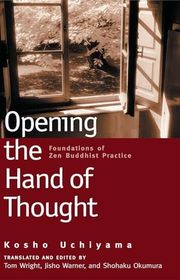
Opening the Hand of Thought: Foundations of Zen Buddhist Practice
For readers who want a sustained explanation of sitting practice and their relationship with thought. Uchiyama connects practical instruction with a wider Buddhist outlook, though the recurring arguments invite deliberate rereading rather than quick technique collecting.
What it's about
Kosho Uchiyama explains zazen and the practice of releasing one's grip on passing thoughts. His teachings connect sitting, posture, everyday activity, and Buddhist understanding, with reflections intended to support a sustained approach to practice.

For readers who prefer brief stories, koans, and contemplative texts to a continuous explanation. The varied collection invites slow rereading, though its compressed teachings and mixed origins make it less suitable as a systematic introduction to practice.
What it's about
Paul Reps and Nyogen Senzaki bring together stories, koans, and contemplative writings for exploring Zen. The collection includes 101 Zen Stories, The Gateless Gate, Ten Bulls, and Centering, inviting readers to consider teachings through narratives and exercises.

An Introduction to Zen Buddhism
For readers interested in an influential presentation of Zen to Western audiences. D. T. Suzuki foregrounds awakening and the limits of purely conceptual understanding, though the older explanatory framework is less practical than a contemporary beginner's meditation manual.
What it's about
D. T. Suzuki introduces Zen Buddhism through its emphasis on self-understanding and enlightenment. His explanation considers philosophical, psychological, and ethical dimensions of the tradition, providing a framework for readers approaching Zen, with a foreword by Carl Jung.

The Way of Zen
For readers who want an accessible intellectual and historical orientation. Watts connects Zen's ideas with a broad cultural account, though the interpretive overview gives less direct guidance on establishing a daily sitting practice.
What it's about
Alan Watts introduces Zen Buddhism through an account of its history, origins, principles, and practices. Written for readers unfamiliar with the tradition, the book explains its ideas and considers their significance for understanding life in the modern world.
Also recommended by
1 person- Steve Jobs recommended this book
Steve Jobs
Daniel Kottke said he and Steve Jobs definitely read this book prior to the India trip.
Steve Jobs's recommendation of this book

For readers ready to explore philosophical questions through practice. Katagiri develops Dogen's teaching on time and existence with sustained attention, though the abstract language and recurring themes reward slow study rather than quick answers.
What it's about
Dainin Katagiri explores the relationship between time and existence through Eihei Dogen's teaching on Being Time. His Zen reflections address impermanence, the present moment, and continual change, connecting these ideas with meditation and the experience of everyday life.
Sources
- 1
10 Best Zen Books You Cannot Miss
thedailymeditation.com
- 2
Reading List - Zen Studies Society
zenstudies.org
- 3
Suggested Reading – Green Mountain Zen Center
gmzc.us
- 4
Suggested Reading - Maria Kannon Zen Center
mkzc.org
- 5
Books for Beginners - San Francisco Zen Center
sfzc.org
- 6
Zen Books
goodreads.com
- 7
What are some good introductory sources for learning zen? : r/zenbuddhism
reddit.com
- 8
What is the best literature on Zen? : r/zenbuddhism
reddit.com







Edited by
Software engineer whose passion for tracking book recommendations from podcasts inspired the creation of MRB.
Lead investor at 3one4 Capital whose startup expertise and love for books helped shape MRB and its growth.
Comments
Did we miss something? Have feedback?
Help us improve this page by sharing your thoughts