
5 Best Wars of the Roses Books
The best Wars of the Roses books, ranked by how many expert sources recommend each one, with notes on who each suits, from narrative history to close analysis.
Our take
The Wars of the Roses involved competing claims to the English crown, but understanding them takes more than learning which family wore which rose. Royal authority, noble alliances, inheritance, and events beyond England all shaped the conflict. These books offer different ways through a period crowded with related names, reversals, and disputed interpretations.
Dan Jones's The Wars of the Roses provides a narrative route toward the Tudor takeover, while Alison Weir's book of the same title focuses closely on the dynastic struggle. Christine Carpenter's The Wars of the Roses puts more weight on politics and the working of government. Blood Sisters follows several influential women across the period, while The Women of the Cousins' War offers three separate biographical studies. The latter is nonfiction by Philippa Gregory, David Baldwin, and Michael Jones, rather than another Gregory novel. Start with Dan Jones for orientation, then Gristwood for interconnected lives or Carpenter for a more demanding interpretation.
5 books · 8 sources · Last updated
As an Amazon Associate, we earn from qualifying purchases (at no extra cost to you).
How to choose from this list
Skip to the full rankingIf you want a narrative introduction with Dan Jones: The Wars of the Roses
If you want women's interconnected political lives: Blood Sisters
If you want three focused biographical studies: The Women of the Cousins' War
If you want political analysis with Christine Carpenter: The Wars of the Roses
The 5 books, ranked
Ranked by how many expert sources name each book. Ties go to the book more people recommend.

For readers who want women’s political influence woven into the larger conflict, Gristwood connects several lives rather than isolating one queen. The overlapping families reward close reading, and some relationships make more sense after a general overview.
What it's about
Sarah Gristwood examines the Wars of the Roses through the women whose family ties, ambitions, and political choices influenced events. Their intertwined stories illuminate struggles within the Plantagenet dynasty and the transition toward Tudor rule.

For readers who want a clear narrative route through the conflict and the Tudor takeover, Jones supplies momentum and an accessible organizing thread. Its broad sweep favors synthesis, so specialized political debates receive less space than in Carpenter.
What it's about
Dan Jones traces fifteenth-century England's struggle for the crown as rival Plantagenet branches tear the dynasty apart. Battles, shifting alliances and royal ambitions lead toward the Tudor takeover, while the account challenges the victors' version of the conflict.

The Wars of the Roses
For readers who enjoy following dynastic rivalries through personalities and shifting alliances, Weir offers an approachable narrative. The closely connected families still require attention, and readers wanting a fuller institutional argument should turn to Carpenter.
What it's about
This narrative history follows the long struggle between the houses of Lancaster and York, from the weak rule of Henry VI through the rise and fall of Richard III, showing how family rivalries, battles and betrayals remade the English monarchy.
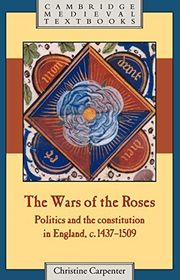
The Wars of the Roses: Politics and the Constitution in England, c.1437–1509
For readers ready to move beyond a narrative of battles and royal personalities, Carpenter emphasizes politics, institutions, and how government worked. Its analytical detail offers a deeper interpretive framework, but assumes more patience and background than Jones’s introduction.
What it's about
Christine Carpenter examines the political causes and consequences of England’s fifteenth-century civil wars. Her study connects royal government, noble power, local society, and constitutional expectations to explain the conflict within the structures of late medieval political life.

For readers wanting focused biographies behind Gregory’s novels, Gregory, David Baldwin, and Michael Jones provide three nonfiction studies. The separate essays allow closer attention to each woman, though they do not form a continuous history of the conflict.
What it's about
In this non fiction companion to her Wars of the Roses novels, Philippa Gregory and two historians reconstruct the real lives of Jacquetta of Luxembourg, Elizabeth Woodville and Margaret Beaufort, filling in the archival gaps behind the fictional queens and king’s mother.
Sources
- 1
100 Best War Of The Roses Books of All Time (Updated for 2026)
shortform.com
- 2
Wars Of The Roses Books
goodreads.com
- 3
Wars of the Roses: Historical Fiction & Books
historicalbookshelf.com
- 4
Reading List
warsoftheroses.com
- 5
Resource list: Component 2B The Wars of the Roses, 1450–1499
filestore.aqa.org.uk
- 6
Can anyone reccomend books about the wars of the Roses that aren’t too dry?
reddit.com
- 7
What is the definitive War of the Roses history book?
reddit.com
- 8
Enquiring History: The Wars of the Roses
thinkinghistory.co.uk





Edited by
Software engineer whose passion for tracking book recommendations from podcasts inspired the creation of MRB.
Lead investor at 3one4 Capital whose startup expertise and love for books helped shape MRB and its growth.
Comments
Spotted a missing book, a wrong order or a mistake? Tell us and we'll fix this page.
We're a reading guide, not the author or publisher, so we can't send books or pass on messages.