
11 Best Typography Books
The best typography books, ranked by expert source recommendation counts, with notes for beginners, typesetting, typeface design, visual history, and lettering.
Our take
Typography shapes how words are read as well as how they look. The books here address different parts of that work: selecting and setting type, understanding letterforms, designing a typeface, or finding visual references. A collection of historical specimens can train your eye, but it serves a different purpose from a practical manual or a book of exercises.
Thinking with type gives beginners a broad foundation through examples, while Designing with Type adds a teaching structure and assignments. The Elements of Typographic Style connects detailed practice with historical judgment, and The Complete Manual of Typography provides more extensive typesetting reference. For the letterforms themselves, The Anatomy of Type compares existing faces and Designing Type examines their construction. Just My Type takes a more accessible route through stories about fonts, while Typography Sketchbooks opens up designers’ working processes.
Start with whether you need to set words, draw letters, or understand visual history, then choose a practical guide or a reference that supports that aim.
11 books · 6 sources · Last updated
As an Amazon Associate, we earn from qualifying purchases (at no extra cost to you).
How to choose from this list
Skip to the full rankingIf you're new to typography: Thinking with type → Designing with Type
If you want detailed typesetting reference: The Complete Manual of Typography → The Elements of Typographic Style
If you want to compare letterforms: The Anatomy of Type
If you want to design a typeface: Designing Type
If you want historical context: Just My Type → The Visual History of Type
If you want lettering inspiration: Scripts → Typography Sketchbooks
The 11 books, ranked
Ranked by how many expert sources name each book. Ties go to the book more people recommend.

For beginners who want typography explained through clear examples and exercises. Its connection between letters, text, and grids makes design decisions understandable, though it introduces a broad field rather than exhaustively covering typesetting or typeface construction.
What it's about
Ellen Lupton explains typography through the design of letters, text, and grids. Examples and exercises explore type selection, spacing, hierarchy, and layout, helping designers, writers, and editors understand how typographic choices shape reading on pages and screens.
Also recommended by
1 person Shane Parrish recommended this book
Shane Parrish
"The foundational book that’s used around the world." - Shane Parrish
Shane Parrish's recommendation of this book

The Elements of Typographic Style
For readers ready to connect practical typesetting with historical and aesthetic judgment. Its detailed principles make it a lasting reference, though the dense, literary treatment and emphasis on traditional reading typography reward patient study rather than quick browsing.
What it's about
Robert Bringhurst combines a practical typography manual with a history of typographic usage and a reference to its concepts and traditions. The illustrated guide connects technical choices with aesthetic judgment, including discussion of typefaces and their historical context.

For readers who want to recognize the details that distinguish related typefaces. Its annotated comparisons make letterform analysis concrete, though its selected set of fonts offers less historical breadth than a larger chronological survey.
What it's about
Stephen Coles presents a visual examination of one hundred typefaces, focusing on their design and stylistic differences. The reference analyzes the details that distinguish fonts, offering typographers, designers, and students a guide to recognizing and comparing letterforms.

For readers who want a chronological view of typeface development grounded in original specimens. Its extensive visual record supports historical comparison, though the survey format offers less direct instruction in making layouts or drawing a typeface.
What it's about
Paul McNeil traces the development of type through more than three hundred typefaces arranged chronologically. Original specimens and early printed examples accompany brief histories and descriptions of defining characteristics, connecting letterform design with changes in printing and visual culture.

For students who want typography introduced through practical assignments and visual examples. Its teaching structure connects foundational knowledge with design work, though readers seeking detailed production rules or advanced typeface design will need a more specialized reference.
What it's about
This guide introduces typography through the history of letterforms, the characteristics of major typefaces, and practical design principles. Examples and assignments help readers work with type, developing layouts that balance readability, visual expression, and effective communication.

For readers who want the stories behind familiar fonts before studying technical rules. Its accessible anecdotes connect typography with everyday visual culture, though the historical tour gives less direct help with setting text or building a layout.
What it's about
Simon Garfield explores the history and everyday influence of fonts through stories about designers and typefaces. From Gutenberg to digital menus, he examines lettering in books, signs, branding, and films, including the popularity of Helvetica and Comic Sans.

Designing Type
For readers who want to understand how typefaces are constructed rather than only choose fonts. Its detailed letterform comparisons give design decisions a clear vocabulary, though the sustained technical focus assumes patience and interest in drawing type.
What it's about
Karen Cheng examines the construction of letterforms and the relationships that make a coherent typeface. Diagrams and examples explain proportions, optical adjustments, legibility, and differences among typographic styles, alongside historical context and methods relevant to designing digital fonts.

For designers looking for historical script lettering and expressive visual references. Its collected ephemera show a range of commercial styles, though it offers inspiration and context rather than a systematic course in drawing or using script type.
What it's about
Steven Heller and Louise Fili gather examples of script lettering from nineteenth- and twentieth-century Europe and America. Advertisements, invitations, signs, and printed ephemera show how handwritten forms became expressive tools for commercial design and everyday visual communication.
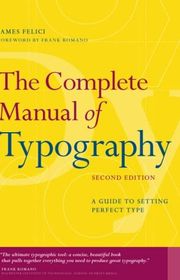
The Complete Manual of Typography
For designers who need detailed explanations of typesetting decisions beyond an introductory course. Its reference coverage connects small settings with readable text, though the technical density and production context make it less suitable for casual visual inspiration.
What it's about
James Felici explains the conventions and technical decisions involved in setting type, from character spacing and line breaks to paragraphs and page composition. The illustrated reference connects typography’s terminology with practical considerations in producing clear, readable text.

For readers who want to explore historical type specimens, ornaments, and graphic styles visually. Its archival range encourages comparison across periods, though the catalog based presentation provides less explanation of practical choices than an instructional typography book.
What it's about
Cees de Jong presents a visual history of typeface design through specimens drawn from historic catalogs. Examples of letterforms, borders, ornaments, and decorative initials trace changes in printed lettering and graphic styles across generations of designers and foundries.

Typography Sketchbooks
For designers interested in how lettering ideas develop before a finished piece exists. Its working sketches make experimentation and variation visible, though seeing another designer’s process does not provide a sequential method for developing your own.
What it's about
Steven Heller and Lita Talarico open the working sketchbooks of roughly 120 designers and typographers. Drawings of letters, logos, and compositions appear alongside commentary about process, revealing experiments and intermediate decisions behind finished typographic work.
Sources
- 1
11 Best Typography Design Books - Zeka Design
zekagraphic.com
- 2
A Review of the Best Typography Books for Designers in 2026 · Typewolf
typewolf.com
- 3
The best typography books | Creative Bloq
creativebloq.com
- 4
Bibliography | Butterick’s Practical Typography
practicaltypography.com
- 5
100 Best Typography Books of All Time (Updated for 2026)
shortform.com
- 6
Typography Books
goodreads.com







Edited by
Software engineer whose passion for tracking book recommendations from podcasts inspired the creation of MRB.
Lead investor at 3one4 Capital whose startup expertise and love for books helped shape MRB and its growth.
Comments
Spotted a missing book, a wrong order or a mistake? Tell us and we'll fix this page.
We're a reading guide, not the author or publisher, so we can't send books or pass on messages.