
11 Best TypeScript Books
The best TypeScript books, ranked by how many expert sources recommend each one, with notes on prerequisites, practical exercises, advanced types, and editions.
Our take
TypeScript books help JavaScript developers understand what types can express, how the compiler checks code, and how to organize applications that are easier to change. Some teach the language in sequence; others explain design choices, answer specific typing questions, or use a larger application to connect the pieces. Most assume JavaScript knowledge, so being new to TypeScript is different from being new to programming.
Choose a format that matches the work ahead. Josh Goldberg's Learning TypeScript develops the fundamentals, while Total TypeScript emphasizes exercises and feedback from the editor. Programming TypeScript offers a broad language treatment, and Effective TypeScript is useful once you want to improve decisions in code you already write. TypeScript Cookbook suits readers looking for solutions to individual problems. Check editions carefully: several titles here have older code examples or newer replacements, and framework chapters age faster than explanations of core ideas. Start with Learning TypeScript if you know JavaScript but haven't used static types.
11 books · 8 sources · Last updated
As an Amazon Associate, we earn from qualifying purchases (at no extra cost to you).
How to choose from this list
Skip to the full rankingIf you know JavaScript but are new to types: Learning TypeScript
If you learn through exercises: Total TypeScript
If you want a broad language course: Programming TypeScript
If you already use TypeScript at work: Effective TypeScript → TypeScript Cookbook
If you prefer short progressive lessons: TypeScript in 50 Lessons
If you want a topical companion: TypeScript Deep Dive
The 11 books, ranked
Ranked by how many expert sources name each book. Ties go to the book more people recommend.

For JavaScript developers who already write TypeScript and want better judgment about types. The focused items make it easier to revisit than a linear textbook, but this 62-item edition has been expanded in a newer edition.
What it's about
Dan Vanderkam presents sixty-two focused lessons on using TypeScript effectively. The guide examines the type system, inference, type design, and common pitfalls, showing JavaScript developers how to make clearer decisions when adding static types to applications.

Mastering TypeScript
Build Enterprise-Ready, Industrial Strength Web Applications Using TypeScript and JavaScript
For readers who prefer a broad textbook with classes, modules, and testing in view. It gives application structure more space than the focused type-system books, though this early edition predates substantial language changes and later editions.
What it's about
Nathan Rozentals introduces TypeScript's core features before moving into generics, modules, and object-oriented design. Practical code samples and a focus on test-driven development show how the language can be used with JavaScript frameworks to build larger web applications.
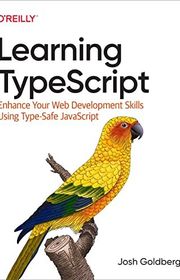
Learning TypeScript
For JavaScript developers meeting static types for the first time. It develops the fundamentals more patiently than Effective TypeScript and avoids making a framework the main subject, though it assumes you can already read and write JavaScript.
What it's about
Josh Goldberg introduces TypeScript to developers with beginner or intermediate JavaScript knowledge. The book explains how the type system analyzes code, documents intent, and supports development tools, building from basic types toward a practical understanding of typed JavaScript.

For JavaScript developers who want a systematic explanation of the language with application context. It connects fundamentals to production concerns more broadly than the short lesson books, though its framework and tooling examples need checking against current versions.
What it's about
Boris Cherny introduces TypeScript's types and operators, then explores error handling, asynchronous programming, and advanced type features. Practical material covers using frontend and backend frameworks, migrating JavaScript projects, and preparing TypeScript applications for production.

For developers who want to connect TypeScript's types with organizing larger applications. Its attention to modules, libraries, and testing makes it broader than a syntax primer, though some tooling and runtime examples reflect an older development ecosystem.
What it's about
Steve Fenton examines TypeScript's type system, compiler, runtime, and approach to object-oriented programming. The guide covers organizing large programs with modules, integrating JavaScript libraries, running code in browsers and servers, and automated testing.
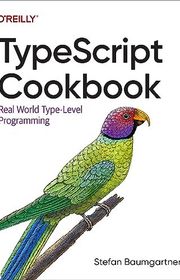
TypeScript Cookbook
For developers who already know the basics and need solutions to specific typing problems. Independent recipes make it easier to consult during real work than a linear course, though advanced examples are demanding for beginners.
What it's about
Stefan Baumgartner presents recipes for everyday and advanced TypeScript problems. Examples cover project organization, helper types, function signatures, API design, and integration, explaining both how a solution works and why it addresses the underlying type-system challenge.

TypeScript Deep Dive
For JavaScript developers who like browsing explanations of recurring language questions. The topical structure makes it a useful companion to a linear course, but the printed edition can lag behind the maintained online material.
What it's about
Basarat Ali Syed introduces professional TypeScript development through explanations and code examples drawn from recurring questions in the developer community. The guide builds on JavaScript knowledge and examines problems encountered when adopting the language in practical projects.

For readers who want a substantial guided course with compiler use and application examples. Its step-by-step scope is broader than a collection of tips, but the TypeScript 4 and framework material needs comparison with current documentation.
What it's about
Adam Freeman teaches TypeScript 4 from basic static types through functions, classes, interfaces, and advanced generics. Examples connect the language and its compiler with testing, debugging, browser programming, and application development using frameworks including Angular and React.
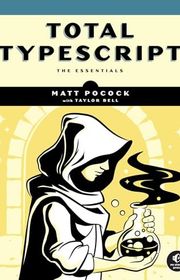
Total TypeScript
For JavaScript developers who want exercises and editor feedback to drive their learning. The workshop approach makes practice central rather than optional, though readers seeking quick reference answers may prefer the more independent recipes in TypeScript Cookbook.
What it's about
Matt Pocock and Taylor Bell guide readers from setting up TypeScript through unions, narrowing, generics, and type transformations. Exercises develop the ability to interpret compiler errors, configure projects, and design types that remain useful as applications grow.

TypeScript in 50 Lessons
For JavaScript developers who want short, progressive lessons centered on how types behave. The examples build a useful mental model without requiring a large application, though readers looking for framework integration will need another resource.
What it's about
Stefan Baumgartner teaches TypeScript through fifty short lessons for JavaScript developers. Code walkthroughs and examples progress from functions and basic types to unions, intersections, generics, conditional types, and ways to model a project's needs through its type system.

TypeScript Quickly
For JavaScript developers who learn best by building a complete application. The project gives interfaces and generics a concrete purpose, but its blockchain theme and older framework examples can add distractions to learning the language itself.
What it's about
Yakov Fain and Anton Moiseev introduce TypeScript through syntax lessons and a blockchain application project. The book covers classes, interfaces, generics, decorators, tooling, and integration with JavaScript, then develops clients using Angular, React, and Vue.
Sources
- 1
8 Best TypeScript Books in 2023 - Josip Miskovic
josipmisko.com
- 2
Best Typescript Books
careerkarma.com
- 3
Best TypeScript Books: Top Picks for Learning TypeScript
educba.com
- 4
Typescript book recommendations
reddit.com
- 5
Top Typescript Books recommended by experts (2026 Edition) - MentorCruise
mentorcruise.com
- 6
Top 10 TypeScript Books For Web Developers
whatpixel.com
- 7
GitHub - tscollege/typescript-books: A curated list of the best books for learning and mastering TypeScript
github.com
- 8
Free TypeScript books
goodreads.com





Edited by
Software engineer whose passion for tracking book recommendations from podcasts inspired the creation of MRB.
Lead investor at 3one4 Capital whose startup expertise and love for books helped shape MRB and its growth.
Comments
Spotted a missing book, a wrong order or a mistake? Tell us and we'll fix this page.
We're a reading guide, not the author or publisher, so we can't send books or pass on messages.