
19 Best Titanic Books
The best Titanic books, ranked by how many expert sources recommend each one, with notes on survivor accounts, detailed histories, the wreck and where to start.
Our take
Titanic books ask several different questions: what happened during the sinking, how the ship was built and operated, who traveled aboard, and how the disaster changed the lives of survivors. Accounts written soon afterward preserve firsthand observations, while later histories can compare those memories with inquiry testimony, archives and evidence from the wreck. Neither kind of book tells the whole story alone.
A Night to Remember offers a concise narrative of the final hours. On a Sea of Glass supplies a more detailed history and reconstruction, while The Discovery Of The Titanic turns toward exploration beneath the Atlantic. For a different emphasis, Gilded Lives, Fatal Voyage looks at the first-class social world, Shadow of the Titanic follows survivors beyond the rescue, and Down with the Old Canoe examines the disaster’s cultural meaning.
Start with A Night to Remember, then choose a firsthand account or a specialist history that answers the questions you still have.
19 books · 9 sources · Last updated
As an Amazon Associate, we earn from qualifying purchases (at no extra cost to you).
How to choose from this list
Skip to the full rankingIf you're new to the subject: A Night to Remember → On a Sea of Glass
If you want a survivor’s perspective: The Loss Of The S.S. Titanic → The Truth About The Titanic
If you want unresolved questions and rescue decisions: The Night Lives On → The Other Side of the Night
If you want the people and their wider world: Gilded Lives, Fatal Voyage → Shadow of the Titanic
If you want to follow the wreck’s discovery: The Discovery Of The Titanic
If you want to understand the disaster’s cultural legacy: Down with the Old Canoe
The 19 books, ranked
Ranked by how many expert sources name each book. Ties go to the book more people recommend.

For readers who want a concise, human account of the sinking before exploring specialist debates. Its movement among passengers and crew gives the night clarity and momentum, though later discoveries mean it works best alongside more recent research.
What it's about
Walter Lord reconstructs Titanic’s final hours through survivor testimony and extensive research. Moving among passengers and crew, he follows the collision, evacuation, sinking, and rescue, revealing the decisions and individual experiences within the unfolding disaster.

For readers ready for a substantial history that combines the ship’s development with close examination of the sinking. Its detail rewards sustained study, though the scale and appendices make it a heavier starting point than Walter Lord’s narrative.
What it's about
Tad Fitch, J. Kent Layton, and Bill Wormstedt trace Titanic from design and construction through its sinking. Firsthand accounts, photographs, and detailed appendices combine the ship’s history with an examination of disputed events and the people aboard.

The Loss Of The S.S. Titanic
For readers who want a survivor’s account written close to the disaster. Its immediacy gives personal observations a particular value, though one passenger’s position and incomplete information limit what it can establish about events across the whole ship.
What it's about
Lawrence Beesley recounts Titanic’s voyage, sinking, and rescue from his perspective as a surviving passenger. Written shortly after the disaster, his account describes leaving the ship, reaching Carpathia, and the circumstances surrounding the loss.

For readers who have finished A Night to Remember and want to examine lingering questions. Its issue-by-issue approach develops the earlier narrative, though it assumes some familiarity and predates much of the subsequent study of the wreck.
What it's about
Walter Lord returns to Titanic to examine questions left unresolved in his earlier account. He explores ice warnings, command decisions, lifeboats, the Californian, and other controversies, drawing on further research and evidence to revisit the disaster.

For readers who want the voyage placed within Edwardian wealth and society. Its passenger biographies give the first-class world texture, though the focus on prominent travelers offers a narrower social view than accounts spanning every class aboard.
What it's about
Hugh Brewster reconstructs Titanic’s maiden voyage through the lives of notable first-class passengers. Their stories and archival photographs reveal the wealth, culture, politics, and social conventions of the Edwardian world as the disaster unfolds.

For readers interested in what survival meant after the rescue. Its attention to grief, reputation and altered lives supplies an aftermath often compressed in disaster narratives, though it provides less sustained coverage of the ship’s construction or technical failures.
What it's about
Rather than retelling the sinking alone, Wilson follows what happened to the people who lived through it. Using letters, diaries, and family memories, he shows how survival shaped lives long after the night at sea ended.

The Truth About The Titanic
For readers who want to examine a survivor’s attempt to establish what happened beyond his own escape. Its collected lifeboat evidence adds useful detail, though gaps and conflicting testimony require care when treating its conclusions as settled.
What it's about
Archibald Gracie recounts his escape from Titanic and survival aboard an overturned collapsible boat. He supplements his own experience with lifeboat histories, interviews, and inquiry testimony in an effort to reconstruct the disaster’s events.

For readers who understand places and events through images. Its pairing of archival material with reconstructed scenes makes the ship easier to imagine, though paintings remain interpretations and visual browsing cannot replace closely argued historical research.
What it's about
Don Lynch recounts Titanic’s construction, voyage, sinking, rescue, and rediscovery, illustrated with Ken Marschall’s paintings and archival photographs. The book explores the ship’s interiors, passengers, crew, and enduring controversies through detailed historical and visual reconstruction.

The Band that Played On
The Extraordinary Story of the 8 Musicians Who Went Down with the Titanic
For readers curious about the people behind one of the disaster’s most familiar images. Its biographical focus restores individuality to the musicians, though evidence about their final performance remains limited and cannot settle every detail of the story.
What it's about
Steve Turner investigates the lives of Titanic’s eight musicians and the circumstances that brought them aboard. Family records, photographs, and historical research illuminate their backgrounds, faith, work, and the legacy of their performance during the sinking.

For readers drawn to underwater exploration and the discovery of the wreck. Its expedition perspective and photographs provide a different entry point from survivor accounts, though it reflects an early stage of research rather than everything later expeditions established.
What it's about
Robert D. Ballard recounts the search that located Titanic and the expedition that explored its wreck. Archival photographs, charts, and underwater images connect the ship’s final voyage with the technology and discoveries of deep-sea exploration.

For readers who understand history through individual lives and a wider social setting. Its selected passenger stories connect the voyage with Edwardian change, though readers seeking a detailed technical reconstruction will find the emphasis elsewhere.
What it's about
Gareth Russell follows six Titanic passengers to explore the social world surrounding the ship’s final voyage. Their intertwined stories connect the sinking with class divisions, technological change, industry, politics, and the approaching end of the Edwardian era.
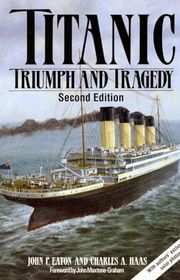
Titanic: Triumph and Tragedy
For readers who want a substantial illustrated reference beyond a narrative of the final night. Its combination of chronology, records and images supports repeated consultation, though the amount of detail makes it less convenient for a quick introduction.
What it's about
John P. Eaton and Charles A. Haas document Titanic’s construction, voyage, sinking and aftermath. Photographs, historical records and detailed chronology connect the people aboard with the ship’s design, operation, loss and continuing place in public memory.
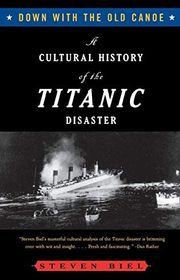
Down with the Old Canoe
For readers who already know the events and want to understand why the disaster acquired different meanings. Its cultural analysis broadens the topic beyond the ship, though it is not designed as a straightforward reconstruction of the sinking.
What it's about
Steven Biel examines how Americans have interpreted the Titanic disaster through debates about class, race, gender and progress. He follows its treatment in journalism, music, literature and popular memory, showing how the same event supported competing social arguments.

The Other Side of the Night
The Carpathia, the Californian, and the Night the Titanic Was Lost
For readers who want the surrounding ships and rescue decisions brought into focus. Its comparison widens the story beyond Titanic itself, though the author’s strong judgments about responsibility should be weighed alongside other interpretations and the inquiry evidence.
What it's about
Daniel Allen Butler examines Titanic’s sinking from the perspectives of Carpathia and Californian. He contrasts their captains’ responses, follows the rescue effort, and uses the subsequent inquiries to assess decisions made aboard the nearby vessels.

For readers interested in the investigation as much as the sinking. Its use of American inquiry testimony connects the disaster with questions of responsibility, though the strong emphasis on those hearings offers a particular angle rather than a complete synthesis.
What it's about
Wyn Craig Wade reconstructs Titanic’s last hours and examines the American investigation that followed. Senate testimony, eyewitness accounts, and evidence from exploration of the wreck inform his discussion of decisions, safety failures, and the disaster’s consequences.

For readers who want Gracie’s detailed testimony alongside Jack Thayer’s perspective. The paired accounts allow useful comparison, though much of Gracie’s material overlaps The Truth About The Titanic, so owning both is unnecessary for most readers.
What it's about
Archibald Gracie describes surviving Titanic’s sinking and investigates the experiences of other passengers and lifeboats. This edition pairs his detailed account with Jack Thayer’s recollections, presenting two firsthand perspectives on the disaster and its final moments.

For readers who want to examine an argument about construction decisions and institutional responsibility. Its forensic emphasis challenges a purely navigational explanation, though the prosecutorial framing makes comparison with broader histories especially useful before accepting its conclusions.
What it's about
Robert J. Strange examines Titanic’s construction and loss through forensic evidence and shipyard records. He argues that cost cutting, material defects, and negligence contributed to the disaster, directing scrutiny toward owners, builders, planners, and government oversight.

For readers who want women and children across passenger classes brought into view. Its biographical focus adds individual experience to general histories, though the selected lives provide less continuous coverage of the sinking or the ship’s technical story.
What it's about
Judith B. Geller focuses on the women and children aboard Titanic across its three passenger classes. Biographies, interviews, letters, diaries, and photographs connect individual experiences with the social divisions that shaped their lives and survival.

For readers interested in how people first learned about the disaster. Its collected reporting captures uncertainty and contemporary reactions, though early newspaper accounts contain errors and should be checked against later evidence rather than read as a settled history.
What it's about
Ken Rossignol assembles original newspaper reporting from the aftermath of Titanic’s sinking. Survivor interviews and crew accounts capture how the disaster was described as news broke, giving readers access to contemporary testimony and early public understanding.
Sources
- 1
10 Best Titanic Books You Should Read To Know The Real Story
marineinsight.com
- 2
11 Captivating Titanic Books
explorethearchive.com
- 3
11 Titanic Books That Will Make Your Jaw Drop
bookstr.com
- 4
16 Essential Titanic Books
earlybirdbooks.com
- 5
The best books on The Titanic
fivebooks.com
- 6
Recommendations
titanicinternationalsociety.org
- 7
Best Titanic Books
goodreads.com
- 8
What is the best Titanic book?
reddit.com
- 9
Give me your Titanic book recommendations! Fictional and nonfictional.
reddit.com










Edited by
Software engineer whose passion for tracking book recommendations from podcasts inspired the creation of MRB.
Lead investor at 3one4 Capital whose startup expertise and love for books helped shape MRB and its growth.
Comments
Spotted a missing book, a wrong order or a mistake? Tell us and we'll fix this page.
We're a reading guide, not the author or publisher, so we can't send books or pass on messages.