
10 Best Thomas Pynchon Books
The best Thomas Pynchon books, ranked by expert source recommendations, with notes to help you choose shorter introductions, comic mysteries, and historical epics.
Our take
Thomas Pynchon’s novels turn the search for connections into comedy, suspense, and uncertainty. Private investigators, scientists, wanderers, and ordinary families encounter systems of power that may be harder to understand than they first appear. Songs, technical detail, political history, and absurd jokes share the page, while a seemingly small mystery can open into a much larger world.
The books differ substantially in scale. The Crying of Lot 49 offers a short but dense introduction; Inherent Vice gives newcomers a more familiar detective framework. Vineland and Bleeding Edge connect political unease with family and contemporary culture. Shadow Ticket uses a historical private-eye adventure, while Slow Learner collects early stories with a reflective introduction. For a longer commitment, Mason & Dixon centers a historical friendship, Against the Day ranges across an enormous cast, and Gravity’s Rainbow makes sustained formal and interpretive demands. Start with Inherent Vice for comic detection or The Crying of Lot 49 for a shorter experiment.
10 books · 9 sources · Last updated
As an Amazon Associate, we earn from qualifying purchases (at no extra cost to you).
Reading Thomas Pynchon in order? See all Thomas Pynchon books in order
How to choose from this list
Skip to the full rankingIf you want a detective-story entry point: Inherent Vice → Shadow Ticket
If you want a short novel: The Crying of Lot 49
If you want early short fiction: Slow Learner
If you prefer family and contemporary culture: Vineland → Bleeding Edge
If you want expansive historical fiction: Mason & Dixon → Against the Day
If you are ready for a demanding experiment: V. → Gravity's Rainbow
The 10 books, ranked
Ranked by how many expert sources name each book. Ties go to the book more people recommend.
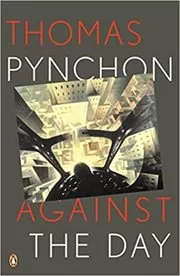
Against the Day
For readers who want Pynchon’s widest historical canvas and enjoy following many stories at once. The mix of adventure, science, and political imagination creates unusual range, though its length and digressions make it a substantial commitment.
What it's about
From the 1893 Chicago World's Fair to the years after World War I, a vast cast of balloonists, anarchists, mathematicians, spies, and wanderers chase private dreams while history closes in around them.
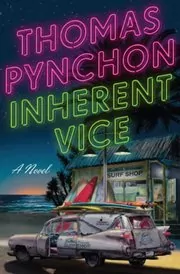
Inherent Vice
For newcomers who enjoy detective fiction and countercultural comedy. The private-eye framework provides a recognizable route through Pynchon’s eccentric world, though the proliferating connections and hazy atmosphere matter more than a tidy solution.
What it's about
Stoner private eye Doc Sportello is pulled into a missing-person case when his ex-girlfriend asks for help with a billionaire developer. In late-1960s Los Angeles, every clue leads to another haze of trouble.
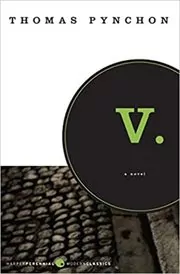
V.
For readers interested in seeing Pynchon’s recurring concerns emerge in his debut. The alternating contemporary and historical strands create a broad exploratory novel, though its uneven movement and elusive connections can make it a difficult first choice.
What it's about
Pynchon's debut follows ex-sailor Benny Profane and the obsessive Herbert Stencil, who is hunting for the elusive figure known only as V. Their paths roam through cities, memories, and conspiracies that keep slipping out of reach.

Vineland
For readers drawn to counterculture, television, and strained family histories. The relationships provide an emotional route through political satire, though abrupt shifts in time and tone can disrupt expectations of a straightforward narrative.
What it's about
In Reagan-era Northern California, ex-hippie Zoyd Wheeler and his daughter Prairie are pulled back into the wreckage of a 1960s radical past. Family history, federal power, and television culture collide in strange, comic ways.
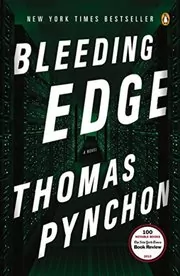
For readers who prefer a relatively familiar setting of technology businesses, urban life, and family responsibilities. Its investigative framework offers an accessible thread, though the jokes, detours, and uncertain connections still resist a conventional mystery payoff.
What it's about
In 2001 New York, fraud investigator Maxine Tarnow looks into a computer-security firm and its billionaire CEO. Her case winds through hackers, money trails, family life, and the uneasy months before September 11.
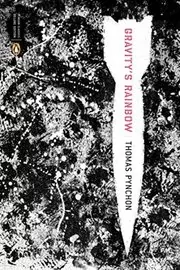
Gravity's Rainbow
For readers ready for a demanding novel about technology, power, and the search for hidden patterns. Its formal variety rewards rereading, though the huge cast, difficult passages, and disturbing sexual material make it a challenging introduction.
What it's about
As V-2 rockets fall on London, intelligence officers notice a strange link between impact sites and Lieutenant Tyrone Slothrop's private life. His search for Rocket 00000 becomes a sprawling journey through war, technology, fear, and desire.
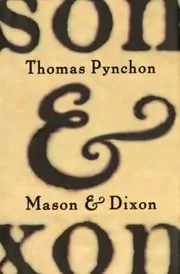
Mason & Dixon
For readers drawn to historical fiction who enjoy language as much as events. The central friendship gives its digressions emotional continuity, though the imitation eighteenth-century prose and sprawling structure require patience.
What it's about
Charles Mason and Jeremiah Dixon set out to survey the famous boundary line between Pennsylvania and Maryland. Pynchon turns their historical partnership into a comic, eerie trip through science, empire, friendship, and early America.

Shadow Ticket
For readers who want historical detective comedy with a relatively compact scope. The private-eye premise offers a recognizable entry into political uncertainty and absurdity, though its wandering investigation still favors atmosphere and unexpected connections over procedural clarity.
What it's about
In 1932 Milwaukee, private eye Hicks McTaggart is hired to find a runaway cheese heiress. The case carries him from Depression-era America to Europe, where gangsters, spies, fascists, and strange rumors crowd the trail.
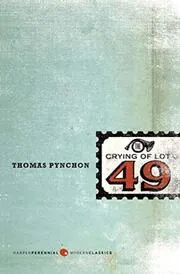
The Crying of Lot 49
For readers who want a compact encounter with Pynchon’s conspiracies, comedy, and uncertainty. The short length makes experimentation manageable, though its density and unresolved possibilities mean that brief does not necessarily mean easy.
What it's about
Oedipa Maas becomes coexecutor of a former lover's estate and stumbles into signs of a possible underground postal conspiracy. The deeper she looks, the harder it is to tell revelation from pattern-hunting.

Slow Learner
For readers who want shorter fiction and a glimpse of Pynchon examining his early work. The retrospective introduction adds unusual personal context, though these youthful stories do not fully represent the range or scale of the later novels.
What it's about
Slow Learner gathers five early Pynchon stories written before V., including The Small Rain, Entropy, and The Secret Integration. With Pynchon's own introduction, it shows the young writer testing science, jokes, paranoia, and social unease.
Sources
- 1
How to get into Thomas Pynchon, on the occasion of his birthday
lithub.com
- 2
Every Thomas Pynchon Novel, Briefly Ranked
vulture.com
- 3
Where to start reading Thomas Pynchon
penguin.co.uk
- 4
The greatest books written by Thomas Pynchon
thegreatestbooks.org
- 5
Books by Thomas Pynchon and Complete Book Reviews
publishersweekly.com
- 6
Thomas Pynchon Books
goodreads.com
- 7
For those who’ve read all (or most) of Pynchon...
reddit.com
- 8
Thomas Pynchon
fantasticfiction.com
- 9
Best starting Thomas Pynchon novel
reddit.com







Edited by
Software engineer whose passion for tracking book recommendations from podcasts inspired the creation of MRB.
Lead investor at 3one4 Capital whose startup expertise and love for books helped shape MRB and its growth.
Comments
Spotted a missing book, a wrong order or a mistake? Tell us and we'll fix this page.
We're a reading guide, not the author or publisher, so we can't send books or pass on messages.