
13 Best Technical Analysis Books
The best technical analysis books, ranked by how many expert sources recommend each one, with notes on who each suits, from chart beginners to serious students.
Our take
Technical analysis studies market prices, trading volume, and the patterns or indicators built from them. These books teach its vocabulary, explain different approaches, and help readers compare ways of interpreting a chart. Learning a method is only a starting point: a recognizable historical pattern is not proof that a trading rule will remain profitable after costs and changing conditions.
Getting Started in Technical Analysis offers a manageable introduction, while Technical Analysis of the Financial Markets provides broader reference coverage. Japanese Candlestick Charting Techniques and Encyclopedia of Chart Patterns concentrate on specific visual tools. Technical Analysis Using Multiple Timeframes addresses the relationship between chart horizons, and Market Wizards shifts attention toward traders’ decisions and risk. Readers who want a more academic treatment can choose Technical Analysis: The Complete Resource for Financial Market Technicians. Start with Getting Started in Technical Analysis if the vocabulary is unfamiliar, then use the larger references to study one method carefully.
13 books · 10 sources · Last updated
As an Amazon Associate, we earn from qualifying purchases (at no extra cost to you).
How to choose from this list
Skip to the full rankingIf you’re new to charts: Getting Started in Technical Analysis → Technical Analysis of the Financial Markets
If you want chart-pattern references: Technical Analysis of Stock Trends → Encyclopedia of Chart Patterns
If you want to study candlesticks: Japanese Candlestick Charting Techniques
If you want to compare chart horizons: Technical Analysis Using Multiple Timeframes
If you want structured academic study: Technical Analysis
If you want perspectives on trading judgment: Market Wizards
The 13 books, ranked
Ranked by how many expert sources name each book. Ties go to the book more people recommend.

Technical Analysis of the Financial Markets
A Comprehensive Guide to Trading Methods and Applications
For newcomers who want a broad vocabulary of charts, trends, and indicators. Its organized coverage makes a useful reference before specialization, though the older market examples need separating from claims about what will work in current trading.
What it's about
John J. Murphy explains how traders interpret price charts and technical indicators across financial markets. The guide covers trends, chart patterns, candlesticks, and intermarket relationships, connecting analytical tools with their applications in stocks and futures.
Also recommended by
1 person Raoul Pal recommended this book
Raoul Pal
"It’s really good!" - Raoul Pal
Raoul Pal's recommendation of this book
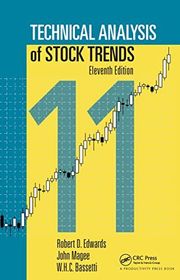
Technical Analysis of Stock Trends
For readers interested in the classic foundations of trend and chart-pattern analysis. The linked eleventh edition combines established concepts with later updates, though its extensive framework is better approached critically than treated as evidence of predictive certainty.
What it's about
Robert Edwards and John Magee’s charting reference examines trends, reversal and continuation patterns, and trading tactics. The eleventh edition, updated with W.H.C. Bassetti, extends the discussion to portfolio considerations, risk management, and developments in investment technology.

For readers interested in how experienced traders think about uncertainty and risk. The interviews expose contrasting approaches rather than one universal method, though selected success stories cannot show how a strategy performs across all who attempt it.
What it's about
Jack Schwager interviews leading traders across financial markets to explore how they developed their approaches. Their accounts of major wins and losses reveal contrasting strategies, practical lessons, and the discipline involved in managing risk.
Also recommended by
3 people Adam Robinson recommended this book
Adam Robinson
"Somehow [the author] cannily got the world's best traders to reveal amazing insider secrets!" - Adam Robinson
Adam Robinson's recommendation of this book  Nassim Taleb recommended this book
Nassim Taleb
"Twenty years from now, [this book] will still be fresh. There is no other like it." - Nassim Taleb
Nassim Taleb's recommendation of this book - Raoul Pal recommended this book
Raoul Pal
Raoul Pal recommended this book on Twitter.
Raoul Pal's recommendation of this book

Encyclopedia of Chart Patterns
For readers who want to compare chart patterns through identification rules and reported statistics. Its reference format supports detailed lookup, though historical pattern results depend on the sample and do not establish future profitability after trading costs.
What it's about
Thomas Bulkowski examines price-chart patterns through identification guidelines, performance statistics, failure analysis, and sample trades. The reference explains how patterns form and how traders can interpret them, connecting visual recognition with quantitative evidence and trading tactics.

Japanese Candlestick Charting Techniques
A Contemporary Guide to the Ancient Investment Techniques of the Far East
For readers who want a dedicated explanation of candlestick language and its use alongside other tools. The illustrated examples make visual conventions easier to learn, though recognizing a formation does not by itself establish a reliable trading advantage.
What it's about
Steve Nison explains Japanese candlestick charts and their use in interpreting market behavior. Hundreds of examples illustrate patterns and trading applications, showing how the technique can complement other forms of technical analysis across financial markets.

Technical Analysis Using Multiple Timeframes
For readers who understand basic charts and want a consistent way to compare time horizons. Its workflow connects context with trade management, though discretionary chart judgments still require explicit rules and evaluation rather than visual confidence alone.
What it's about
Brian Shannon explains how to compare price charts across multiple timeframes when evaluating trades. He connects trends, support and resistance, volume, and moving averages with trade timing, position management, stop placement, and the psychology of trading.
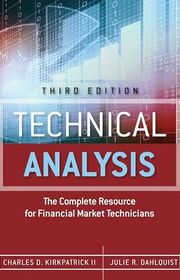
Technical Analysis: The Complete Resource for Financial Market Technicians
For serious students who want a textbook covering methods, evidence, and system evaluation. Its breadth supports structured study beyond pattern recognition, though the academic detail and substantial length make it a demanding first encounter with the subject.
What it's about
Charles Kirkpatrick and Julie Dahlquist survey technical-analysis theory, indicators, market behavior, and trading-system design. The linked third edition discusses evidence for and against methods, testing, risk management, and ways to evaluate patterns and signals more systematically.

Technical Analysis Explained
The Successful Investor's Guide to Spotting Investment Trends and Turning Points
For readers ready to connect several indicators with a broader view of market trends. Its systematic coverage gives more depth than a short primer, though the substantial reference format takes time and still requires independent evaluation of signals.
What it's about
Martin Pring explains technical analysis as a way to study market trends and turning points. His guide discusses price patterns, momentum, volume, relative strength, and investor sentiment, showing how these tools can be incorporated into a trading strategy.

For readers who specifically want to understand Elliott Wave terminology and counting conventions. It gives the theory a sustained treatment, though interpretation can be subjective and the framework should not be treated as a dependable forecast.
What it's about
A. J. Frost and Robert Prechter explain Elliott Wave theory and its proposed patterns in market price movements. The book introduces wave terminology, counting rules, and interpretive guidelines, then explores applications to stocks, commodities, and longer-term market trends.

Technical Analysis For Dummies
For beginners who prefer approachable explanations before moving into larger references. Its broad treatment introduces indicators and market behavior, though the simplified presentation leaves less room for rigorous testing or the mechanics of executing a strategy.
What it's about
Barbara Rockefeller introduces the principles, formulas, and indicators used in technical analysis. She discusses market trends, behavioral economics, and decisions in bull and bear markets, using examples to explain how traders interpret market information.

Technical Analysis from A to Z
For readers who need to look up how particular indicators are constructed and interpreted. Its alphabetical coverage makes selective consultation straightforward, though knowing a formula is different from demonstrating that it adds value to a trading process.
What it's about
Steven Achelis introduces technical analysis and provides a reference to more than 140 market indicators. Explanations, charts, and calculations show how the tools are constructed and interpreted, from the Absolute Breadth Index to the Zig Zag.

Getting Started in Technical Analysis
For beginners who want an introduction connecting chart reading with trading decisions and risk. Its practical scope makes the subject manageable, though it is an older overview rather than a detailed treatment of modern execution or statistical testing.
What it's about
Jack Schwager introduces the use of price charts to study markets and plan trades. Topics include trends, trading ranges, chart patterns, entry and exit decisions, trading systems, and the importance of managing risk.

For stock-focused readers who want a defined framework combining company performance with price behavior. Its historical examples make the method concrete, though it is not a pure technical-analysis textbook and the growth-stock emphasis will not suit every strategy.
What it's about
William O’Neil explains his CAN SLIM approach to selecting stocks and deciding when to buy or sell. Historical market examples and charts illustrate how company performance, price behavior, and disciplined rules fit into his investment method.
Sources
- 1
Technical Analysis Books - 10 Best Books [Updated 2026]
wallstreetmojo.com
- 2
The 12 Best Technical Analysis Books to Read in 2026
financialtechwiz.com
- 3
My 10 Favorite Technical Analysis Books
allstarcharts.com
- 4
Technical Analysis (22 books)
goodreads.com
- 5
The Best Technical Analysis Books, Judged on Testability
truetrader.net
- 6
My Overall Top Technical Analysis Trading Books After 12+ Years of Trading
reddit.com
- 7
Good books for tecnical analysis?
reddit.com
- 8
What are the Best Technical Analysis Books?
smbtraining.com
- 9
Recommended Reading
traderedge.net
- 10
Suggested reading list from John Bollinger, CFA, CMT
bollingerbands.com





Edited by
Software engineer whose passion for tracking book recommendations from podcasts inspired the creation of MRB.
Lead investor at 3one4 Capital whose startup expertise and love for books helped shape MRB and its growth.
Comments
Spotted a missing book, a wrong order or a mistake? Tell us and we'll fix this page.
We're a reading guide, not the author or publisher, so we can't send books or pass on messages.