
9 Best Stocks Books
The best books about stocks, ranked by how many expert sources recommend each one, with notes on who each suits, from indexing to company analysis.
Our take
Books about stocks can explain how markets behave, how to assess a company, or why an investor might choose broad funds instead of individual shares. Those are different questions, and the books here disagree about how much opportunity there is to outperform a market. Reading across approaches helps you understand their assumptions before treating any technique as a dependable system.
The Little Book of Common Sense Investing sets out the indexing argument, while A Random Walk Down Wall Street adds market history and theory. The Intelligent Investor emphasizes valuation and discipline; One Up On Wall Street and Fisher’s collected writings focus more closely on investigating businesses. Greenblatt presents a compact, formula-based approach. For a different perspective, Market Wizards compares traders’ experiences and Irrational Exuberance examines speculative behavior. Many examples reflect earlier markets and US institutions. Start with the broad market books, then choose a company-analysis or trading perspective according to the questions you want to understand.
9 books · 7 sources · Last updated
As an Amazon Associate, we earn from qualifying purchases (at no extra cost to you).
How to choose from this list
Skip to the full rankingIf you want the indexing argument: The Little Book of Common Sense Investing → A Random Walk Down Wall Street
If you want a valuation framework: The Intelligent Investor
If you want to study individual businesses: One Up On Wall Street → Common Stocks and Uncommon Profits and Other Writings
If you want a concise rules-based framework: The Little Book That Still Beats the Market
If you want to examine speculation and trader behavior: Irrational Exuberance → Market Wizards
If you want to study O’Neil’s method: How to Make Money in Stocks
The 9 books, ranked
Ranked by how many expert sources name each book. Ties go to the book more people recommend.
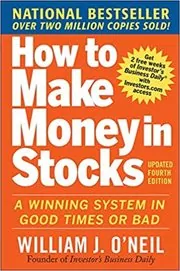
For readers curious about a specific growth-stock and market-timing method. O’Neil links company performance with price behavior in a structured system, though historical chart examples and selected successes do not establish reliable future results.
What it's about
William O’Neil explains his CAN SLIM approach to selecting stocks and deciding when to buy or sell. Historical market examples and charts illustrate how company performance, price behavior, and disciplined rules fit into his investment method.
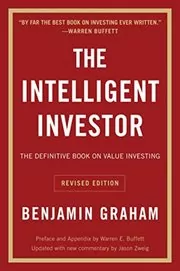
The Intelligent Investor
For readers who want a disciplined framework for valuation and investor behavior. Graham develops the reasoning behind a margin of safety more deeply than a quick stock-picking guide, though older examples and technical passages require patient interpretation.
What it's about
Benjamin Graham outlines a value-investing philosophy that distinguishes investing from speculation and emphasizes disciplined decision-making. He examines how investors can assess value, respond to market fluctuations, and use a margin of safety when considering purchases.
Also recommended by
7 people Warren Buffett recommended this book
Warren Buffett
"I obviously recommend, first and foremost, [this book]. Considered to be the 'Bible of Value Investing.'" - Warren Buffett
Warren Buffett's recommendation of this book  DJ Vlad recommended this book
DJ Vlad
"The single biggest influence on how I buy and sell stocks." - DJ Vlad
DJ Vlad's recommendation of this book  Kevin Rose recommended this book
Kevin Rose
"The foundation for investing." - Kevin Rose
Kevin Rose's recommendation of this book  Peter Mallouk recommended this book
Peter Mallouk
"A phenomenal book." - Peter Mallouk
Peter Mallouk's recommendation of this book  Bill Ackman recommended this book
Bill Ackman
"I found it fascinating." - Bill Ackman
Bill Ackman's recommendation of this book  Jamie Dimon recommended this book
Jamie Dimon
On Jamie Dimon's list of favorite books.
Jamie Dimon's recommendation of this book +1
More recommendations
- Ryan Petersen
"[Part of] my biz book canon." - Ryan Petersen
- Ryan Petersen
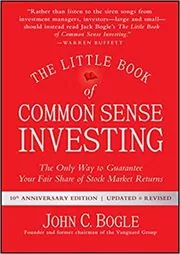
The Little Book of Common Sense Investing
The Only Way to Guarantee Your Fair Share of Stock Market Returns
For readers who want to understand the case for low-cost indexing rather than selecting companies. Bogle makes costs and diversification central, though the US-focused argument gives less attention to individual-stock analysis and does not remove market risk.
What it's about
John Bogle makes the case for buying and holding broadly diversified, low-cost index funds. He explains how expenses affect investment results and develops a long-term approach to participating in the stock market.
Also recommended by
3 people- Warren Buffett recommended this book
Warren Buffett
"Investors – large and small – should [read this book]." - Warren Buffett
Warren Buffett's recommendation of this book  Charlie Munger recommended this book
Charlie Munger
"A useful contribution to [the author's] fellow citizens." - Charlie Munger
Charlie Munger's recommendation of this book  Mr. Money Mustache recommended this book
Mr. Money Mustache
"Read any book by [this author], the founder of Vangard." - MMM
Mr. Money Mustache's recommendation of this book
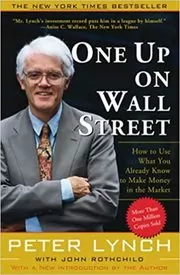
For readers interested in investigating businesses they encounter in everyday life. Peter Lynch and John Rothchild connect observations with company analysis, though recognizing a popular product is only a starting lead and does not establish investment value.
What it's about
Peter Lynch argues that individual investors can uncover promising companies through familiar products and everyday observations. Written with John Rothchild, his guide explains how to investigate those leads and connect business fundamentals with informed stock selection.
Also recommended by
2 people- Bill Ackman recommended this book
Bill Ackman
One of 11 Books Bill Ackman told a young man to read before hiring him.
Bill Ackman's recommendation of this book  Bill Gurley recommended this book
Bill Gurley
"Any investor starts with just building bedrock and that comes from reading. [For example,] you can read [this book]." - Bill Gurley
Bill Gurley's recommendation of this book
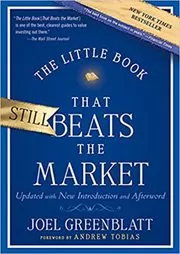
The Little Book That Still Beats the Market
For readers who want a concise example of a rules-based stock-selection framework. Greenblatt makes valuation and business returns accessible through a formula, though historical tests and rankings do not guarantee future outperformance or remove the need for judgment.
What it's about
Joel Greenblatt explains a systematic value-investing approach that ranks companies by profitability and price. This revised guide uses accessible examples and research to present his stock-selection formula, explore its rationale, and discuss the patience required to follow it.
Also recommended by
2 people- Mr. Money Mustache recommended this book
Mr. Money Mustache
"Really a lesson on value investing fundamentals; how to understand if a company actually is a good deal to buy." - MMM
Mr. Money Mustache's recommendation of this book  Lyn Alden recommended this book
Lyn Alden
"One short read I’d recommend to stock pickers." - Lyn Alden
Lyn Alden's recommendation of this book
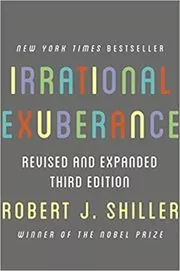
Irrational Exuberance
For readers interested in how enthusiasm and social narratives affect asset prices. Shiller offers a psychological and historical counterpoint to stock-selection guides, though identifying speculative behavior does not provide a precise timetable for a market reversal.
What it's about
Robert Shiller examines how investor enthusiasm, social influences, and psychological forces can produce unstable asset prices. This expanded edition considers stock, housing, and bond markets, discussing financial bubbles and ways to reduce their risks and consequences.
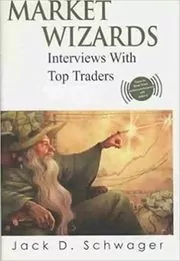
For readers who want to compare traders’ decision processes and experiences of loss. The interviews reveal varied methods rather than one system, though the selection of successful traders creates survivorship bias and extends beyond stock markets.
What it's about
Jack Schwager interviews leading traders across financial markets to explore how they developed their approaches. Their accounts of major wins and losses reveal contrasting strategies, practical lessons, and the discipline involved in managing risk.
Also recommended by
3 people Adam Robinson recommended this book
Adam Robinson
"Somehow [the author] cannily got the world's best traders to reveal amazing insider secrets!" - Adam Robinson
Adam Robinson's recommendation of this book  Nassim Taleb recommended this book
Nassim Taleb
"Twenty years from now, [this book] will still be fresh. There is no other like it." - Nassim Taleb
Nassim Taleb's recommendation of this book  Raoul Pal recommended this book
Raoul Pal
Raoul Pal recommended this book on Twitter.
Raoul Pal's recommendation of this book
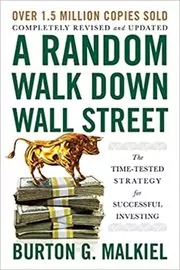
For readers who want market history and investment theory before choosing an approach. Malkiel’s broad treatment tests claims about prediction more fully than a strategy manual, though the range makes it longer than a focused introduction.
What it's about
Burton Malkiel examines investment theories, market bubbles, and the difficulty of consistently predicting stock prices. His guide argues for diversification and a disciplined approach, connecting the history of financial markets with practical considerations in building a portfolio over a lifetime.
Also recommended by
2 people- Mr. Money Mustache recommended this book
Mr. Money Mustache
"A great explanation of why index investing rules, written by a very wise professor/investor guy who has personally researched and debunked most of the common 'wisdom' that exists about stock trading today." - MMM
Mr. Money Mustache's recommendation of this book - Bill Gurley recommended this book
Bill Gurley
"Offers the most pragmatic advice for the long-term saver." - Bill Gurley
Bill Gurley's recommendation of this book
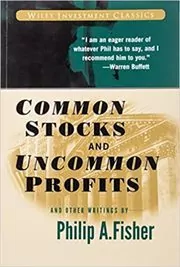
For readers who want to investigate business quality through qualitative research. Fisher’s attention to management and competitive strengths complements valuation-focused texts, though the demanding research process and subjective judgments offer no simple screen for selecting companies.
What it's about
Philip A. Fisher presents his approach to selecting stocks through a thorough understanding of businesses and their growth potential. This collection includes his investment principles and additional writings, with introductory reflections from his son Ken Fisher.
Also recommended by
2 people- Warren Buffett recommended this book
Warren Buffett
"I am an eager reader of whatever [this author] has to say, and I recommend him to you." - Warren Buffett
Warren Buffett's recommendation of this book - DJ Vlad recommended this book
DJ Vlad
"The 3rd most important book in my path to educating myself about the stock market." - DJ Vlad
DJ Vlad's recommendation of this book
Sources
- 1
20 Best Books to Learn Stock Trading in 2026
stockbrokers.com
- 2
10 Best Stock Market Books for Beginners [Updated 2026]
wallstreetmojo.com
- 3
100 Best Stocks Books of All Time
shortform.com
- 4
Stocks Books
goodreads.com
- 5
The 5 Best Stock Market Books To Learn How To Invest
blinkist.com
- 6
26 Epic Stock Market Books Successful Investors Read
liberatedstocktrader.com
- 7
Can you recomend books to read (mainly for intermediate level) about investing?
reddit.com
Edited by
Software engineer whose passion for tracking book recommendations from podcasts inspired the creation of MRB.
Lead investor at 3one4 Capital whose startup expertise and love for books helped shape MRB and its growth.
Comments
Spotted a missing book, a wrong order or a mistake? Tell us and we'll fix this page.
We're a reading guide, not the author or publisher, so we can't send books or pass on messages.