
15 Best Cinema Books
The best cinema books, ranked by expert source recommendations, with notes to help you choose filmmaking guides, director interviews, criticism, and film history.
Our take
Cinema books can change how you watch films or help you understand how they are made. Some explain directing, editing, and visual staging; others reconstruct an industry, analyze a national cinema, or argue about the nature of the medium. A practitioner’s memoir and a critical essay offer different kinds of insight, so your starting point depends on what you want to notice next.
Making Movies provides an accessible view of collaborative craft, while In the Blink of an Eye concentrates on editing judgment. Rebel without a Crew follows filmmaking under tight constraints, and Cinematography offers more technical study. For analysis, Film Art supplies a structured vocabulary. Pictures at a Revolution and Easy Riders, Raging Bulls examine Hollywood change through productions and personalities. Hitchcock opens directorial choices through conversation, while What Is Cinema? and From Caligari to Hitler present more demanding critical arguments. Start with Making Movies for craft or Film Art for a systematic way to examine what you watch.
15 books · 8 sources · Last updated
As an Amazon Associate, we earn from qualifying purchases (at no extra cost to you).
How to choose from this list
Skip to the full rankingIf you want an accessible view of filmmaking: Making Movies
If you want to analyze films: Film Art → What Is Cinema?
If you want editing and visual craft: In the Blink of an Eye → Cinematography → MasterShots Vol 1
If you want director perspectives: Something Like An Autobiography → Hitchcock
If you want Hollywood history: Pictures at a Revolution → Easy Riders, Raging Bulls
If you want a reference to browse: The New Biographical Dictionary of Film
The 15 books, ranked
Ranked by how many expert sources name each book. Ties go to the book more people recommend.
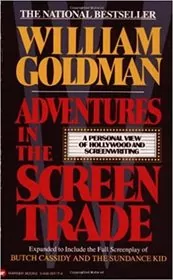
Adventures in the Screen Trade
For readers who want Hollywood from a working screenwriter’s skeptical perspective. The blend of anecdotes and practical reflection makes industry uncertainty vivid, though the personalities and business arrangements belong to an earlier studio era.
What it's about
Goldman opens up Hollywood from the writer's chair, mixing war stories, blunt advice, and a practical look at how scripts become movies. It is funny, skeptical, and still useful for anyone curious about screenwriting.
Also recommended by
2 people Andrew Klavan recommended this book
Andrew Klavan
"Still one of the great books on Hollywood." - Andrew Klavan
Andrew Klavan's recommendation of this book  Preet Bharara recommended this book
Preet Bharara
"Spectacular book." - Preet Bharara
Preet Bharara's recommendation of this book

Making Movies
For readers who want a director’s view of how many practical choices shape a film. The connection between craft and collaboration makes it unusually accessible, though it reflects Lumet’s working methods rather than a universal production manual.
What it's about
Sidney Lumet explains the artistic and practical decisions involved in directing a film. Drawing on his experience, he follows the process from rehearsals and production design through shooting, editing, sound, and release, showing how many choices shape the finished movie.
Also recommended by
1 person- Ava DuVernay recommended this book
Ava DuVernay
Ava DuVernay recommended this book on Twitter.
Ava DuVernay's recommendation of this book

Hitchcock
For readers who learn by hearing directors discuss concrete choices in individual films. The sustained conversation makes craft questions unusually specific, though the career-by-career detail rewards familiarity with Hitchcock’s films and remains centered on his own account.
What it's about
François Truffaut presents extensive conversations with Alfred Hitchcock about films spanning his career, from British silents to Hollywood productions. Their exchanges examine directorial choices, storytelling, and cinematic technique while revealing Hitchcock's perspective on his own work.

For editors and curious viewers who want to understand why a cut feels right. The emphasis on emotion and perception clarifies editorial judgment, though it is a reflective argument rather than a software guide or comprehensive editing textbook.
What it's about
Walter Murch asks why film cuts work and explores the judgments involved in editing. His reflections connect continuity, emotion, dreams, and the blink of an eye with practical decisions, alongside a discussion of digital editing.

On Directing Film
For directors and screenwriters who want a concentrated argument for telling stories through shots. The classroom format makes the reasoning direct, though Mamet’s prescriptive approach is best treated as one strong viewpoint rather than a complete theory of cinema.
What it's about
David Mamet examines the director's work from script development to the cutting room. Based on his film school classes, the book explores the decisions involved in presenting a story that an audience can follow and find compelling.

Easy Riders Raging Bulls
How the Sex-Drugs-And Rock 'N Roll Generation Saved Hollywood
For readers drawn to the personalities and conflicts of New Hollywood. The energetic reporting makes the period’s ambitions and excesses vivid, though its sensational emphasis and disputed portrayals call for reading alongside other histories.
What it's about
Peter Biskind chronicles the filmmakers who reshaped American cinema during the 1970s. Drawing on interviews, he examines artistic ambition, studio politics, personal excess, and the changing business of Hollywood during a period of unusually influential films.
Also recommended by
2 people B.J. Novak recommended this book
B.J. Novak
"Highly recommend it. [...] About filmmaking in the glory days of the '70s." - B.J. Novak
B.J. Novak's recommendation of this book  Trung Phan recommended this book
Trung Phan
"About the Post-70s Hollywood industry." - Trung Phan
Trung Phan's recommendation of this book

Rebel without a Crew
Or How a 23-Year-Old Filmmaker With $7,000 Became a Hollywood Player
For aspiring filmmakers who want a candid example of working with severe constraints. The diary makes resourcefulness concrete, though its film-era techniques and exceptional success should not be mistaken for a repeatable career formula.
What it's about
Robert Rodriguez recounts making El Mariachi on a tiny budget and the experience that followed its success. His filmmaking diary and practical reflections explore improvisation, resourcefulness, and the techniques he used to turn limited equipment and money into a feature film.
Also recommended by
1 person Edgar Wright recommended this book
Edgar Wright
"Great book." - Edgar Wright
Edgar Wright's recommendation of this book

Something Like An Autobiography
For readers interested in how a director’s early life and artistic habits connect. The recollections give the craft advice personal context, though the account stops early in Kurosawa’s career rather than covering all his major films.
What it's about
Akira Kurosawa recounts his life and early filmmaking career through the international success of Rashomon. Personal recollections accompany observations on Japanese cinema, while discussions of scripts, actors, and camera placement explain aspects of his approach to directing.
Also recommended by
1 person Jason Calacanis recommended this book
Jason Calacanis
"Top three director for me." - Jason Calacanis
Jason Calacanis's recommendation of this book

For readers who want film history told through the making of specific movies. The contrasting productions connect artistic decisions with institutional change, though the focus on Hollywood’s 1960s transition leaves other national cinemas outside the frame.
What it's about
Mark Harris follows the making of five films nominated for the 1967 Best Picture Oscar. Their contrasting productions reveal a Hollywood confronting changing audiences, social tensions, and artistic ambitions as the established studio system faced transformation.
Also recommended by
2 people Quentin Tarantino recommended this book
Quentin Tarantino
"Probably one of the best books I’ve ever read in my life." - Quentin Tarantino
Quentin Tarantino's recommendation of this book - Edgar Wright recommended this book
Edgar Wright
Edgar Wright recommended this book on Twitter.
Edgar Wright's recommendation of this book
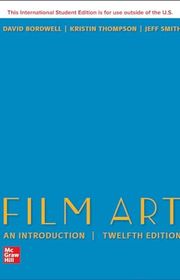
Film Art: An Introduction
For students and film lovers who want a systematic vocabulary for analyzing what they watch. The organized treatment of form and style offers a stronger foundation than scattered reviews, though the textbook format rewards study alongside the films discussed.
What it's about
Bordwell, Thompson, and Smith introduce the analysis of film form and style, examining narrative, staging, cinematography, editing, and sound. Examples explain how individual choices work together, helping readers develop a more precise understanding of cinematic effects.

For readers interested in how film criticism can interpret a society’s political anxieties. The argument makes Weimar cinema historically provocative, though its broad psychological claims should be examined as a contested interpretation rather than a neutral survey.
What it's about
Siegfried Kracauer examines German cinema during the Weimar Republic, linking films with the psychological and political atmosphere preceding Nazism. He argues that popular movies reveal collective fears and desires, using their themes to interpret developments in German society.
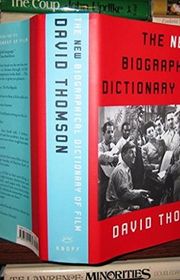
The New Biographical Dictionary of Film
For film lovers who enjoy browsing sharp, personal judgments about cinema’s people. The entries turn reference reading into criticism, though the opinions are deliberately subjective and the range of people covered depends on the edition.
What it's about
David Thomson profiles actors, directors, writers, and other figures in film through entries that combine biographical information with criticism. The dictionary’s individual judgments invite browsing across careers, connections, and changing assessments of cinema history.

For readers ready to examine cinema’s relationship with photographic reality and film form. The essays develop ideas that shaped later criticism, though the historical references and philosophical reasoning make them less immediate than a beginner’s analysis guide.
What it's about
André Bazin's essays examine the nature of cinema, the photographic image, and the development of film language. This first volume presents his critical thinking about the medium through arguments that connect film aesthetics with its relationship to reality.

For filmmakers who want visual storytelling connected with camera and lighting decisions. The technical breadth supports more detailed study than the memoirs here, though this third edition’s digital workflows need checking against the equipment you use.
What it's about
Blain Brown connects the visual language of filmmaking with the technical work of cinematography. This third edition discusses digital imaging, optics, focus, camera movement, color workflows, and set operations as parts of creating coherent screen images.

MasterShots Vol 1
100 Advanced Camera Techniques to Get an Expensive Look on Your Low-Budget Movie
For filmmakers who want illustrated ideas for staging scenes and moving a camera. The shot-by-shot format is convenient for visual reference, though choosing a striking technique still requires judging whether it serves the scene.
What it's about
Christopher Kenworthy presents one hundred camera techniques for filmmakers working with limited budgets. The illustrated guide examines complex shots and camera movement, explaining how directors can use visual staging to develop the style of their films.
Sources
- 1
The 25 Best Books About Cinema Every Film Lover Should Read
timeout.com
- 2
Read the 20 Best Books on Filmmaking for 2022
nofilmschool.com
- 3
100 Best Cinema Books of All Time
shortform.com
- 4
Cinema Books
goodreads.com
- 5
Any recommendations for great film criticism/theory books?
reddit.com
- 6
10 Best Filmmaking Books to Read in 2020
studiobinder.com
- 7
The best film books, by 51 critics
bfi.org.uk
- 8
Looking for books about filmmaking after picking up the camera again
reddit.com




Edited by
Software engineer whose passion for tracking book recommendations from podcasts inspired the creation of MRB.
Lead investor at 3one4 Capital whose startup expertise and love for books helped shape MRB and its growth.
Comments
Spotted a missing book, a wrong order or a mistake? Tell us and we'll fix this page.
We're a reading guide, not the author or publisher, so we can't send books or pass on messages.