
10 Best PowerShell Books
The best PowerShell books, ranked by how many expert sources recommend each one, with notes on who each suits, from new users to working administrators.
Our take
PowerShell books serve several different jobs: learning the shell, understanding its object-based pipeline, writing reusable scripts, and automating administration. A beginner needs a sequence of lessons and exercises. An experienced administrator may get more value from recipes or a concise reference kept nearby while working. Pick the format that matches what you need to do next.
Version and platform matter here. Windows PowerShell books can still explain useful language concepts, but their administration examples may depend on Windows-only modules or older software. Learn PowerShell in a Month of Lunches, Fourth Edition offers a starting point for Windows, Linux, and macOS. PowerShell for Sysadmins connects scripting with administrative work, while PowerShell Pocket Reference helps when you already know what you are trying to write. Start with a guided introduction, practice on small tasks you understand, and move to deeper scripting or server automation when those tasks become familiar.
10 books · 10 sources · Last updated
As an Amazon Associate, we earn from qualifying purchases (at no extra cost to you).
How to choose from this list
Skip to the full rankingIf you’re new to PowerShell: Learn PowerShell in a Month of Lunches, Fourth Edition → PowerShell for Sysadmins
If you want to write reusable scripts: Mastering PowerShell Scripting → PowerShell in Depth
If you need help while working: PowerShell Pocket Reference → PowerShell Cookbook
If you manage Windows infrastructure: PowerShell 7 for IT Professionals → Windows Server Automation with PowerShell Cookbook
The 10 books, ranked
Ranked by how many expert sources name each book. Ties go to the book more people recommend.

Windows PowerShell in Action
For readers who want to understand why PowerShell behaves as it does. Its language-centered explanations offer more depth than task recipes, though the Windows-focused editions require care when applying examples to modern cross-platform environments.
What it's about
Bruce Payette explains PowerShell as both an interactive shell and a programming language for administrative work. Examples connect its object-based commands, scripting features, and language behavior with everyday use cases, giving readers a foundation for understanding how PowerShell programs operate.

For administrators who want to turn recurring work into scripts. Its workflow emphasis connects learning with everyday responsibilities, though readers looking for a compact syntax reference or a deep language treatment should supplement it.
What it's about
Adam Bertram teaches PowerShell through the administrative tasks involved in managing desktops and servers. Practical examples connect scripting fundamentals with workflow automation, helping readers turn recurring system administration work into scripts and develop more organized approaches to maintaining their environments.
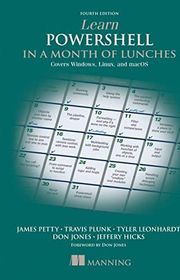
Learn PowerShell in a Month of Lunches, Fourth Edition
For beginners who want a structured introduction that includes Windows, Linux, and macOS. Its short lessons make regular practice manageable, though platform-specific administration still requires documentation for the systems and modules you use.
What it's about
Travis Plunk, James Petty, and Tyler Leonhardt introduce PowerShell through short lessons and hands-on exercises. The book covers commands, objects, the pipeline, and scripting, with examples designed for readers working across Windows, Linux, and macOS.

Mastering PowerShell Scripting
Automate and Manage your Environment Using PowerShell 7.1
For administrators moving beyond individual commands into reusable scripts. It gives language features more sustained treatment than a pocket reference, though readers should check version-specific examples against the PowerShell release they actually use.
What it's about
Chris Dent develops PowerShell scripting from fundamentals into more complex automation, data handling, and asynchronous processing. Examples explain functions, modules, objects, debugging, and error handling, connecting language features with the practical work of maintaining and administering computing environments.

For readers who already write scripts and need compact help with syntax and language features. It is easier to consult quickly than a full cookbook, though its brevity leaves little room for extended teaching.
What it's about
Lee Holmes provides a compact reference to PowerShell language features and scripting conventions. Concise entries cover variables, operators, classes, regular expressions, and related tools, giving working scripters a way to check syntax and refresh their understanding of everyday programming tasks.

Windows PowerShell Step by Step
For Windows administrators who learn best through guided exercises and a clear sequence. Its labs provide more structure than a reference book, though the Windows-specific material is less helpful for readers mainly using Linux or macOS.
What it's about
Ed Wilson introduces Windows PowerShell scripting through guided examples, labs, and structured exercises. Readers build scripts step by step while exploring commands and administrative techniques, connecting language fundamentals with the automation of Windows setup, deployment, and ongoing system management.

For working scripters who want solutions organized around the task in front of them. Its recipe format makes selective reading useful, though beginners may need a structured course before adapting examples confidently.
What it's about
Lee Holmes organizes PowerShell scripting solutions as practical recipes for common computing and administrative tasks. Examples address files, folders, data, and system management, while explanations connect individual commands with reusable approaches to solving problems in desktop and server environments.
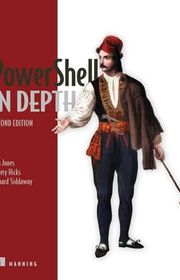
PowerShell in Depth
For administrators who know the basics and want a substantial reference for building maintainable scripts. Its broad treatment goes beyond introductory lessons, though the Windows PowerShell focus means checking older examples against current environments.
What it's about
Don Jones, Jeffery Hicks, and Richard Siddaway explain PowerShell techniques for administrators who already understand the basics. Chapters cover automation, script organization, deployment, and related administrative tools, showing how to develop more capable and maintainable scripts.

PowerShell 7 for IT Professionals
A Guide to Using PowerShell 7 to Manage Windows Systems
For IT professionals who want PowerShell tied closely to Windows administration. Its infrastructure examples offer a practical counterpart to language-focused books, though readers seeking a platform-neutral introduction will find the scope too specialized.
What it's about
Thomas Lee demonstrates how PowerShell can automate Windows administration through examples and sample scripts. Networking, storage, directory services, reporting, and virtualized environments provide practical settings for learning commands and organizing administrative tasks across desktop, server, and cloud systems.

Windows Server Automation with PowerShell Cookbook
Powerful Ways To Automate And Manage Windows Administrative Tasks
For Windows Server administrators looking up concrete automation tasks as they work. Its recipe structure supports selective use, though examples depend on particular roles, modules, and software versions rather than serving as universal scripts.
What it's about
Thomas Lee presents PowerShell recipes for managing Windows Server roles, services, and administrative tasks. Worked examples connect scripting with networking, directory management, security, virtualization, and cloud services, offering ways to organize automation and troubleshoot the environments administrators maintain.
Sources
- 1
Best Books To Learn PowerShell Scripting in 2023
computingforgeeks.com
- 2
44 Best Powershell Books of All Time
shortform.com
- 3
The best 14 PowerShell books
blinkist.com
- 4
PowerShell Books
educba.com
- 5
PowerShell Books
goodreads.com
- 6
Books
powershellstation.com
- 7
Good book for moderate to advanced skills?
reddit.com
- 8
Best Powershell Books to Learn
elvanco.com
- 9
Is this a good option for learning powershell?
reddit.com
- 10
Best PowerShell resources for beginners and IT pros
pdq.com





Edited by
Software engineer whose passion for tracking book recommendations from podcasts inspired the creation of MRB.
Lead investor at 3one4 Capital whose startup expertise and love for books helped shape MRB and its growth.
Comments
Spotted a missing book, a wrong order or a mistake? Tell us and we'll fix this page.
We're a reading guide, not the author or publisher, so we can't send books or pass on messages.