
5 Best Pharmacy Books
The best pharmacy books, ranked by how many expert sources recommend each one, with notes on study texts, drug references, and the right place to start.
Our take
Pharmacy study brings together drug action, formulation, calculations, and the use of medicines in patient care. A book that helps explain receptor mechanisms will not necessarily teach dosage-form design or the mathematics of drug disposition. These texts are most useful when matched to a particular course, professional question, or gap in your understanding.
Lippincott Illustrated Reviews: Pharmacology offers a visual route through mechanisms and drug classes. Katzung's Basic and Clinical Pharmacology provides fuller explanations, while Goodman and Gilman's The Pharmacological Basis of Therapeutics suits deeper reference work. For pharmaceutical science, Remington: Essentials of Pharmaceutics concentrates on formulations and delivery, and Applied Biopharmaceutics & Pharmacokinetics develops the quantitative side. Check which edition your course requires, and use current professional resources for changing treatment recommendations. Start with the illustrated review for revision, then move to the subject-specific text that addresses what you need to learn.
5 books · 7 sources · Last updated
As an Amazon Associate, we earn from qualifying purchases (at no extra cost to you).
How to choose from this list
Skip to the full rankingIf you’re reviewing drug mechanisms: Lippincott Illustrated Reviews: Pharmacology → Katzung's Basic and Clinical Pharmacology
If you want detailed drug-action explanations: Goodman and Gilman's The Pharmacological Basis of Therapeutics
If you’re studying formulation: Remington: Essentials of Pharmaceutics
If you’re studying drug disposition: Applied Biopharmaceutics & Pharmacokinetics
The 5 books, ranked
Ranked by how many expert sources name each book. Ties go to the book more people recommend.
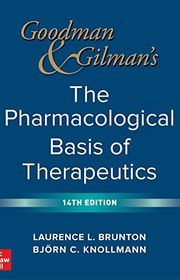
Goodman and Gilman's The Pharmacological Basis of Therapeutics
For advanced students and professionals who want detailed explanations behind drug therapy. Its depth in mechanisms and biomedical science exceeds the shorter study books, though the dense chapters make selective reference reading more practical than rapid review.
What it's about
Edited by Laurence L. Brunton and Bjorn C. Knollmann, this reference connects pharmacology with physiology, disease processes, and therapeutic applications. Chapters examine major drug classes and their actions, providing a detailed foundation for understanding drug treatment.
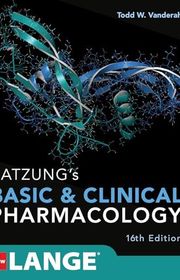
Katzung's Basic and Clinical Pharmacology
For students ready to connect drug mechanisms with clinical uses in a full course text. It offers more explanation than the illustrated review, though its breadth makes it a substantial reading commitment rather than quick revision.
What it's about
Edited by Todd W. Vanderah, this pharmacology textbook explains drug actions and therapeutic uses through foundational principles and major organ systems. Clinical examples connect mechanisms with practice, supporting structured study of medicines and their effects.

For students reviewing drug mechanisms before classes or exams. The visual outlines make it easier to revisit core concepts than the larger references, though concise summaries provide less explanation of difficult or disputed details.
What it's about
Karen Whalen presents pharmacology through an illustrated outline designed for study and review. Diagrams explain drug mechanisms, while concise summaries and questions with answers help readers revisit foundational concepts and connect drug actions with their uses.

Applied Biopharmaceutics & Pharmacokinetics
For pharmacy students who need quantitative work on drug absorption, distribution, and elimination. Its solved examples give pharmacokinetics more sustained attention than the broader references, though readers need comfort with algebra and careful calculation.
What it's about
Leon Shargel, Susanna Wu-Pong and Andrew Yu explain biopharmaceutics and pharmacokinetics through practical applications. Theoretical discussions, illustrative examples and solved problems connect the mathematical foundations with drug delivery, product development and the principles underlying drug therapy.

For students focused on dosage forms, formulation, and pharmaceutical science. This selective volume is more manageable than the full Remington reference, though it offers less coverage of the profession’s wider clinical and administrative work.
What it's about
Edited by Linda Felton, this volume focuses on essential pharmaceutics, from scientific principles to dosage forms and drug delivery. Chapters examine analysis, quality control, stability, sterile compounding, excipients and packaging, supporting pharmacy education and pharmaceutical work.
Sources
- 1
Books and Textbooks - PharmD Program
libguides.usc.edu
- 2
Books - Pharmacy and pharmaceutical sciences
guides.library.uq.edu.au
- 3
Pharmacy: Books
libguides.urmc.rochester.edu
- 4
Top 10 Pharma Books for Pharmacy Students
pharmaspecialists.com
- 5
Pharmacy Books
goodreads.com
- 6
Top 10 Best Pharmacology Books Every Student Should Know
drugsbanks.com
- 7
Top 15 Pharmacy Textbooks Every Serious Pharmacy Student Should Own
rxcalculations.com





Edited by
Software engineer whose passion for tracking book recommendations from podcasts inspired the creation of MRB.
Lead investor at 3one4 Capital whose startup expertise and love for books helped shape MRB and its growth.
Comments
Spotted a missing book, a wrong order or a mistake? Tell us and we'll fix this page.
We're a reading guide, not the author or publisher, so we can't send books or pass on messages.