
11 Best Umberto Eco Books
The best Umberto Eco books, ranked by expert-source recommendations, with notes for readers choosing historical mysteries, comic essays and philosophy.
Our take
Umberto Eco’s books ask how people make meaning, tell stories and sometimes persuade themselves to believe inventions. His novels turn those concerns into historical mysteries, conspiracies and unreliable memories. His nonfiction ranges from philosophical arguments to comic sketches and practical advice, so the right starting point depends on how much scholarship you want beside the storytelling.
The Name of the Rose gives readers an investigation to follow through medieval debates and a labyrinthine library. Foucault's Pendulum builds a much denser game around occult connections, while Numero Zero compresses questions about media and manipulation into a shorter satire. Baudolino: A Novel is more fantastical and expansive. For nonfiction, How to Travel with a Salmon: And Other Essays offers brief comedy, On Ugliness combines ideas with images, and Kant and the Platypus: Essays on Language and Cognition takes a more technical philosophical route.
Begin with The Name of the Rose for fiction, or choose How to Travel with a Salmon: And Other Essays for a lighter nonfiction introduction.
11 books · 8 sources · Last updated
As an Amazon Associate, we earn from qualifying purchases (at no extra cost to you).
Reading Umberto Eco in order? See all Umberto Eco books in order
How to choose from this list
Skip to the full rankingIf you want a historical mystery: The Name of the Rose → The Prague Cemetery
If you want conspiracy and media satire: Numero Zero → Foucault's Pendulum
If you want imaginative historical fiction: Baudolino: A Novel → The Island of the Day Before
If you want memory and visual culture: The Mysterious Flame of Queen Loana → On Ugliness
If you want nonfiction from light to demanding: How to Travel with a Salmon: And Other Essays → Kant and the Platypus: Essays on Language and Cognition
If you are planning a research project: How to Write a Thesis
The 11 books, ranked
Ranked by how many expert sources name each book. Ties go to the book more people recommend.
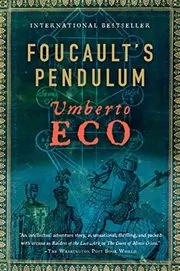
Foucault's Pendulum
For readers who enjoy conspiracy stories examined through satire and intellectual play. Its elaborate network of references rewards curiosity more than a straightforward thriller, but the long digressions and deliberate complexity make it a demanding starting point.
What it's about
Three editors at a vanity press invent an occult conspiracy as a game, linking the Knights Templar to every secret society they can imagine, only to see their fictional Plan taken deadly seriously by real fanatics.
Also recommended by
1 person Patrick Collison recommended this book
Patrick Collison
Patrick Collison labeled this book "substantially above average."
Patrick Collison's recommendation of this book
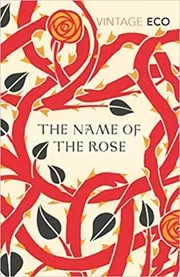
The Name of the Rose
For readers who want a historical mystery as an entry into Eco. Its investigation provides a clear narrative thread through ideas about knowledge and authority, but the theology, Latin and descriptive passages require patience alongside the suspense.
What it's about
In 1327, Franciscan friar William of Baskerville and his novice Adso investigate a series of deaths in a remote Italian abbey, uncovering forbidden books, theological battles, and political intrigue in a dense, atmospheric mystery.
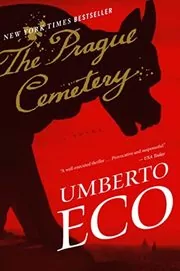
The Prague Cemetery
For readers interested in how forgery, prejudice and conspiracy can reinforce each other. Its historical machinery gives Eco’s concern with false narratives a darker setting, but the repellent narrator and sustained antisemitic material make it an uncomfortable read.
What it's about
This dark historical novel traces forger and spy Simone Simonini as he crosses nineteenth century Europe, weaving together plots, police files, and pulp fiction to help create the notorious Protocols of the Elders of Zion.
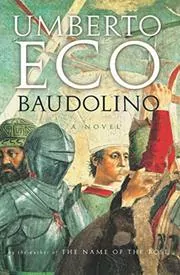
For readers who prefer exuberant historical adventure and unreliable storytelling. Its fantastic journey gives Eco’s scholarship a more playful setting than the abbey mystery, but the digressions and shifting boundary between invention and history can feel sprawling.
What it's about
Set during the twelfth century, the novel follows Baudolino, an imaginative peasant adopted by Emperor Frederick Barbarossa, whose tall tales carry readers from imperial politics to the quest for the legendary kingdom of Prester John.
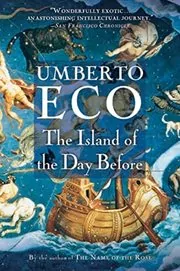
The Island of the Day Before
For readers who enjoy philosophical speculation inside a historical adventure. Its stranded narrator turns navigation, time and memory into imaginative puzzles, but the baroque digressions and suspended action make it slower than a conventional shipwreck story.
What it's about
Stranded on an apparently deserted ship in the seventeenth century Pacific, nobleman Roberto della Griva broods over lost love, imaginary rivals, and schemes for measuring longitude, in a baroque tale steeped in science and metaphysics.
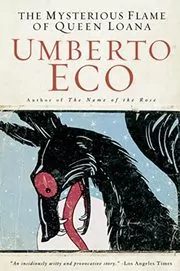
The Mysterious Flame of Queen Loana
For readers interested in memory shaped by books, images and popular culture. Its illustrated reconstruction of a life gives Eco’s collecting instinct an intimate focus, but the many Italian cultural references can require patience from unfamiliar readers.
What it's about
After a stroke leaves antiquarian bookseller Yambo without personal memories, he returns to his childhood home and sifts through comics, records, and clippings, trying to recover his past and the face of a long lost love.
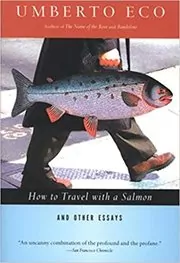
For readers who want Eco’s humor in short pieces before committing to a novel. Its everyday absurdities and parodies show a lighter side of his intelligence, but the uneven collection and period-specific references offer less sustained argument.
What it's about
Eco’s short comic essays and parodies examine the frustrations of contemporary life, from bureaucracy and travel to technology and cultural conventions. Everyday inconveniences become occasions for satire, with practical-sounding instructions exposing the absurdities beneath supposedly ordinary routines.
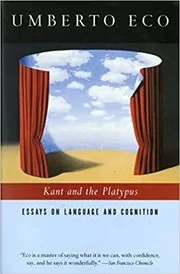
For readers interested in how language and perception organize experience. Its concrete puzzles give philosophical questions a vivid starting point, but the sustained engagement with semiotics and cognition is more technical than the comic essays.
What it's about
Eco uses cases like the arrival of the platypus in Europe to explore how humans perceive, name, and classify new things, blending philosophy, cognitive science, and semiotics into an accessible meditation on language and reality.
Also recommended by
1 person Nassim Taleb recommended this book
Nassim Taleb
"I was taken aback by the combination of depth and the vividness of the style." - Nassim Taleb
Nassim Taleb's recommendation of this book
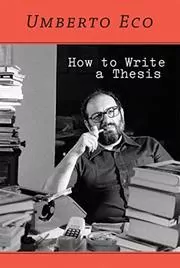
How to Write a Thesis
For students who want a thoughtful process for choosing and developing a research topic. Its practical advice on sources and organization remains useful, but the pre-digital examples and Italian academic setting need adaptation to current departmental requirements.
What it's about
A practical, often humorous guide for students on choosing a topic, planning research, taking notes, organizing sources, and surviving the long haul of writing an academic thesis.
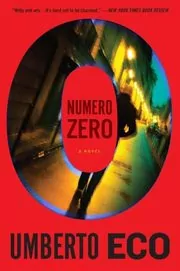
Numero Zero
For readers who want a short satire of journalism and manufactured suspicion. Its compressed newsroom setting makes Eco’s recurring concerns more immediate than the larger novels, but the characters and plot receive less development than in his longer fiction.
What it's about
Set in Milan in 1992, this short novel follows a team of down on their luck journalists hired to produce a newspaper that will never be printed, exposing tabloid tricks, conspiracy thinking, and the entanglement of media and power.
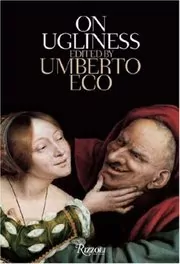
On Ugliness
For readers who want Eco’s ideas alongside a rich visual anthology. Its range of disturbing and unconventional images broadens the question beyond conventional beauty, but the largely Western selection and thematic excerpts do not form a comprehensive art history.
What it's about
A lavish companion to History of Beauty, this volume traces changing ideas of ugliness in Western culture, from demons and monsters to kitsch and camp, pairing Eco's commentary with artworks and literary excerpts.
Sources
- 1
Seven books that best reveal the fascinating mindworld of Umberto Eco
scroll.in
- 2
Ranking the Umberto Eco novels
freelanceflaneur.blogspot.com
- 3
The Greatest Books Written by Umberto Eco
thegreatestbooks.org
- 4
I 10 saggi e romanzi da conoscere per riaprire il discorso su Umberto Eco
wired.it
- 5
Umberto Eco Books
goodreads.com
- 6
Which Umberto Eco book should I read first?
reddit.com
- 7
Where to start with Umberto Eco?
reddit.com
- 8
Umberto Eco
kirkusreviews.com









Edited by
Software engineer whose passion for tracking book recommendations from podcasts inspired the creation of MRB.
Lead investor at 3one4 Capital whose startup expertise and love for books helped shape MRB and its growth.
Comments
Spotted a missing book, a wrong order or a mistake? Tell us and we'll fix this page.
We're a reading guide, not the author or publisher, so we can't send books or pass on messages.