
15 Best Organic Chemistry Books
The best organic chemistry books, ranked by how many expert sources recommend each one, with notes for beginners, course support, and advanced study.
Our take
Organic chemistry asks you to connect molecular structure with how reactions happen. The books here range from short study companions to full undergraduate courses and advanced references. Your choice depends on what you already know and whether you need explanations, repeated practice, or help interpreting more specialized chemistry. If you're taking a class, check the assigned edition and topic sequence before choosing an additional book.
David Klein's Organic Chemistry as a Second Language works through first-semester foundations in a compact form. His full Organic Chemistry develops skills across a broader course, while Jonathan Clayden and colleagues put mechanisms and underlying connections at the center of their textbook. Wade, Bruice, McMurry, Vollhardt, and the other full texts offer different teaching approaches to much of the same material. Modern Physical Organic Chemistry and Carey and Sundberg's advanced volumes belong later. Start with one course-level text and use a companion for the problems you find difficult.
15 books · 9 sources · Last updated
As an Amazon Associate, we earn from qualifying purchases (at no extra cost to you).
How to choose from this list
Skip to the full rankingIf you want an approachable first companion: Organic Chemistry I For Dummies → Organic Chemistry as a Second Language
If you want Clayden's mechanism-centered course: Organic Chemistry
If you're ready for physical organic chemistry: Modern Physical Organic Chemistry
If you want Carey and Sundberg's advanced sequence: Advanced Organic Chemistry → Advanced Organic Chemistry, Part B
If you need an advanced reaction reference: March's Advanced Organic Chemistry
The 15 books, ranked
Ranked by how many expert sources name each book. Ties go to the book more people recommend.

Organic Chemistry
For students who want mechanisms, orbitals, and stereochemistry to connect the subject into a coherent whole. Clayden and colleagues emphasize reasoning about unfamiliar reactions, though the density and breadth demand sustained attention and some comfort with chemical ideas.
What it's about
Jonathan Clayden, Nick Greeves, and Stuart Warren organize organic chemistry around understanding how reactions work. Mechanisms, orbitals, and stereochemistry provide connections across topics, helping students reason about unfamiliar reactions rather than treat each one as an isolated fact.

Organic Chemistry as a Second Language
For first-semester students who need practice turning core concepts into workable solutions. Klein's short explanations and exercises target common stumbling blocks, though this companion leaves out the breadth and detail expected from the main course textbook.
What it's about
David Klein explains the foundations of first-semester organic chemistry, including molecular drawings, resonance, geometry, and reaction mechanisms. This study guide uses exercises and step-by-step explanations to help students connect core concepts and solve problems.
Also recommended by
1 person Hamilton Morris recommended this book
Hamilton Morris
"Fantastic, very well written, very clear, very accessible." - Hamilton Morris
Hamilton Morris's recommendation of this book

Organic Chemistry
For students who prefer a structured course with reactions broken into manageable steps. Wade's guided approach supports working through standard problems, though the comprehensive coverage is a larger commitment than a targeted guide to difficult concepts.
What it's about
Leroy Wade presents organic chemistry through fundamental reasoning and structured problem solving. Coverage moves from bonding, functional groups, and stereochemistry to reaction mechanisms, spectroscopy, and biological molecules, with guidance that breaks reactions into their individual steps.

For advanced undergraduates and beginning graduate students who need a systematic account of structure and mechanisms. Carey and Sundberg provide a substantial theoretical foundation, though the dense treatment assumes earlier coursework and is separate from Part B's synthesis focus.
What it's about
Francis Carey and Richard Sundberg examine the structural principles and reaction mechanisms underlying organic chemistry. Aimed at advanced students, Part A connects stereochemistry, conformation, and aromaticity with substitution, addition, carbonyl, radical, and other major reaction types.

Organic Chemistry
For students who want a full course with deliberate practice built into the explanations. Klein's emphasis on developing reusable skills supports problem solving, though the substantial textbook requires more time than his shorter companion guides.
What it's about
David Klein introduces organic chemistry through an approach that connects concepts with problem-solving skills. Worked examples and practice activities help students apply course material, emphasizing the development of proficiency rather than understanding theory in isolation.
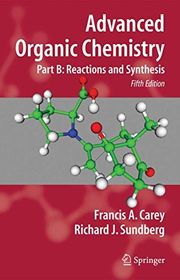
Advanced Organic Chemistry, Part B
For advanced students moving from understanding mechanisms to planning and comparing syntheses. Carey and Sundberg organize the material by useful reaction types, though prior undergraduate chemistry is assumed and Part A supplies the complementary structural foundation.
What it's about
Francis Carey and Richard Sundberg survey synthetic reactions and methods of controlling reactivity, organized by reaction type. The volume uses examples, problems, and references to help advanced students connect established principles with the interpretation and use of research literature.
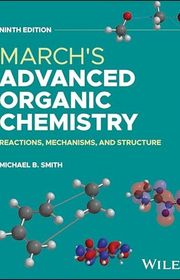
March's Advanced Organic Chemistry
For advanced students and working chemists who need a substantial reference across reactions, mechanisms, and structure. Its wide coverage supports looking up unfamiliar chemistry, though the scale and detail make it less suitable for learning the subject sequentially.
What it's about
Michael Smith's revised reference examines molecular structure, reaction mechanisms, and synthetic transformations, supported by extensive literature references. The book combines theoretical principles with discussions of substitution, addition, elimination, rearrangement, oxidation, and reduction for advanced study and consultation.

Organic Chemistry
For students who want a broad undergraduate course with clear explanations and worked applications. McMurry connects molecular structure with reaction behavior, though the required edition and problem numbering should be checked against your course before choosing it.
What it's about
John McMurry introduces organic chemistry through explanations of molecular structure and reaction mechanisms. This edition includes expanded nuclear magnetic resonance coverage, mechanism problems, and scientific reasoning exercises that help students practice applying the concepts they encounter.

For students who prefer following functional groups while connecting molecular structure with chemical behavior. Vollhardt and Schore build those relationships through explanations and problems, though the large scope can feel demanding when used only for a quick refresher.
What it's about
Peter Vollhardt and Neil Schore connect the structures of organic molecules with their behavior and reactions. Organized through functional groups, the textbook develops the relationship between structure and function while offering problems that reinforce students' understanding.
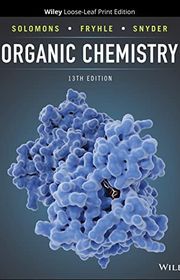
Organic Chemistry
For undergraduates who want molecular structure and mechanisms connected with examples from living systems. Solomons, Fryhle, and Snyder provide another full-course teaching approach, though its breadth makes it more useful as a main text than a quick supplement.
What it's about
Solomons, Fryhle, and Snyder introduce organic molecules through their structures, reaction mechanisms, and roles in living systems and the wider world. Their textbook develops a connected undergraduate account of the subject, linking chemical principles with examples and applications.

Organic Chemistry I For Dummies
For beginners who want less intimidating explanations alongside a first course. Winter makes terminology and common problem types approachable, though the simplified treatment works best as support and does not provide the depth of a full university textbook.
What it's about
Arthur Winter introduces the language, compounds, and functional groups encountered in a first organic chemistry course. Worked examples and problem-solving strategies help students interpret chemical structures and approach coursework without relying entirely on memorized reaction facts.

Modern Physical Organic Chemistry
For advanced students who want to explain reactivity through physical principles and experimental reasoning. Anslyn and Dougherty connect mechanisms with neighboring fields, though the theoretical depth assumes a solid undergraduate foundation and makes this unsuitable as a first textbook.
What it's about
Eric Anslyn and Dennis Dougherty connect molecular structure with reactivity through physical organic chemistry. The textbook examines mechanisms and their underlying principles while linking the subject to organometallic chemistry, materials, bioorganic chemistry, and biochemistry for advanced study.

Organic Chemistry
For students interested in the chemical reasoning shared by synthetic reactions and biological systems. Bruice's links to biochemistry and medicine give the fundamentals context, though the extensive coverage takes more commitment than a compact review book.
What it's about
Paula Yurkanis Bruice emphasizes the chemical logic connecting organic reactions. This textbook links synthetic organic chemistry with biochemistry and medicine, helping students recognize how related principles explain reactions carried out in laboratories and in living cells.
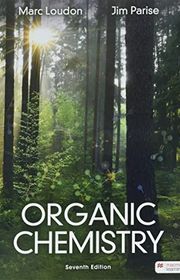
Organic Chemistry
For students who learn by tackling a substantial range of problems. Loudon and Parise combine explanations with exercises drawn partly from research, though the volume of practice is demanding and any required online access needs checking separately.
What it's about
Marc Loudon and Jim Parise present an undergraduate course in organic chemistry with explanations, illustrations, and extensive problem sets. Examples connect the subject with medical practice and synthetic chemistry, while exercises ask students to apply and extend the principles.
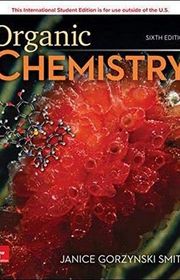
Organic Chemistry
For undergraduates who prefer labeled illustrations and concise lists to long explanatory paragraphs. Smith offers a visibly different presentation of a full organic course, though readers who learn best through sustained prose may prefer another teaching style.
What it's about
Janice Gorzynski Smith presents undergraduate organic chemistry using detailed teaching illustrations, labeled chemical structures, and concise lists. The textbook develops course concepts in a visual format designed to make important relationships and reaction information easier to follow.
Sources
- 1
Best Organic Chemistry Books for Undergraduates
gauravtiwari.org
- 2
7 Best Organic Chemistry Textbooks (2022 Review) - Best Books Hub
bestbookshub.com
- 3
The 9 Best Organic Chemistry Textbooks [2026]
conqueryourexam.com
- 4
10 Best Organic Chemistry Textbooks (2026 Review)
mygreexampreparation.com
- 5
Guía docente de Química Orgánica II (2041125) | Universidad de Granada
ugr.es
- 6
Best organic textbook for the average person? : r/chemhelp
reddit.com
- 7
Organic Chemistry (10 books)
goodreads.com
- 8
Recommended Textbooks
ethz.ch
- 9
Bibliographic Sources in Organic Chemistry | Chemistry Online
chemistry-online.com




Edited by
Software engineer whose passion for tracking book recommendations from podcasts inspired the creation of MRB.
Lead investor at 3one4 Capital whose startup expertise and love for books helped shape MRB and its growth.
Comments
Spotted a missing book, a wrong order or a mistake? Tell us and we'll fix this page.
We're a reading guide, not the author or publisher, so we can't send books or pass on messages.