
14 Best Inorganic Chemistry Books
The best inorganic chemistry books, ranked by how many expert sources recommend each one, with notes on who each suits, from new students to researchers.
Our take
Inorganic chemistry connects the periodic table with the structures, bonding, and reactions of elements and their compounds. These books suit different stages of that journey, from a first university course to laboratory work and advanced reference. A broad textbook can explain why compounds behave as they do, while a descriptive reference helps you look up what particular elements form and how those substances react.
For foundations across the subject, Chemistry3 connects inorganic ideas with organic and physical chemistry. Housecroft and Sharpe offer an illustrated undergraduate route, while Miessler gives bonding and molecular orbitals a central role. Concise Inorganic Chemistry and Instant Notes in Inorganic Chemistry serve readers who want shorter treatments. At a higher level, Advanced Inorganic Chemistry and Chemistry of the Elements provide substantial reference material, while the laboratory and structural-methods books address experimental work. Start with a text that matches your course and your grasp of general chemistry before adding a specialist reference.
14 books · 7 sources · Last updated
As an Amazon Associate, we earn from qualifying purchases (at no extra cost to you).
How to choose from this list
Skip to the full rankingIf you're new to university chemistry: Chemistry3 → Foundations of Inorganic Chemistry
If you want an accessible first explanation: Inorganic Chemistry For Dummies → Concise Inorganic Chemistry
If you want the chemistry of particular elements: Descriptive Inorganic Chemistry → Chemistry of the Elements
If you're ready for an advanced reference: Advanced Inorganic Chemistry
If you're taking a laboratory course: Synthesis and Technique in Inorganic Chemistry → Structural Methods in Inorganic Chemistry
The 14 books, ranked
Ranked by how many expert sources name each book. Ties go to the book more people recommend.

Inorganic Chemistry
For students who want bonding and molecular orbitals to organize their understanding. Miessler builds a strong theoretical framework in a relatively compact text, but some explanations move quickly without a lecturer or supporting reference.
What it's about
Miessler and his coauthors develop inorganic chemistry through atomic structure, bonding, molecular orbitals, and group theory. The text uses these foundations to explain the structures and reactions of inorganic compounds, supported by problems for undergraduate study.

Inorganic Chemistry
For undergraduates who benefit from illustrated explanations and a broad account of the elements. Housecroft and Sharpe give descriptive chemistry more room than compact alternatives, though the length makes quick revision harder.
What it's about
Housecroft and Sharpe combine explanations of bonding and molecular symmetry with descriptive chemistry of the elements. Illustrations of three-dimensional structures and examples from practical chemistry help connect theoretical ideas with the behavior of inorganic compounds.

Advanced Inorganic Chemistry
For advanced students and researchers who need detailed information about inorganic compounds. Its systematic treatment makes it a useful reference beside a course text, but its density and older research coverage limit its value as an introduction.
What it's about
F. Albert Cotton and his coauthors provide a systematic account of inorganic chemistry organized around the periodic table. The sixth edition emphasizes the structures, bonding, and reactivity of elements and their compounds, including developments relevant to research.
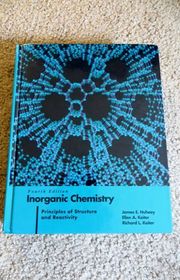
Inorganic Chemistry: Principles of Structure and Reactivity
For students who want a detailed conceptual account of structure and chemical reactivity. Its treatment of bonding rewards sustained study, though the older edition is less useful for following recent materials chemistry or current research methods.
What it's about
Huheey and the Keiters develop inorganic chemistry through atomic structure, bonding, symmetry, and reactivity. Their treatment connects theoretical models with the properties of compounds, offering students a framework for understanding patterns across the periodic table.
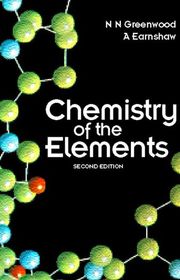
Chemistry of the Elements
For students and researchers who need detailed descriptive chemistry arranged by element. Its substantial coverage of compounds and their behavior complements bonding-focused textbooks, but its size and older literature make it better for reference than rapid revision.
What it's about
Greenwood and Earnshaw examine the elements and their compounds through structure, bonding, preparation, reactions, and uses. The book connects periodic trends with detailed descriptive chemistry, providing a substantial reference for advanced study and laboratory questions.

Concise Inorganic Chemistry
For undergraduates who want a compact route from physical principles to the chemistry of element groups. Its breadth makes it useful for review, though concise explanations and older examples can leave beginners needing extra support.
What it's about
This undergraduate text connects physical principles with the chemistry of the elements. It covers bonding, periodic trends, the main and transition groups, and nuclear chemistry, alongside industrial uses and environmental issues.

Inorganic Chemistry
For undergraduates seeking one course text that connects principles, element chemistry, and research applications. Weller and his coauthors balance those strands well, although beginners will still need general chemistry and time for the exercises.
What it's about
Weller and his coauthors organize inorganic chemistry around fundamental principles, the chemistry of elements and compounds, and advanced applications. The seventh edition connects core concepts with developments in research and provides exercises for undergraduate learning.

Inorganic Chemistry For Dummies
For readers who need a gentler explanation before tackling a university textbook. Accessible language and worked problems help with unfamiliar concepts, but the simplified treatment cannot replace the depth or exercises of a full course.
What it's about
Matson and Orbaek introduce inorganic chemistry through accessible explanations and worked problems. Coverage moves from atomic structure, bonding, and periodic trends to coordination compounds, catalysis, biological chemistry, and solid-state materials.

Instant Notes in Inorganic Chemistry
For undergraduates revising a course they have already studied. Short topic summaries make it easier to locate essential ideas, but the compressed format offers less explanation and problem-solving support than a main textbook.
What it's about
Tony Cox presents concise explanations for undergraduate study and revision. The book covers bonding, solids, solutions, and the chemistry of element groups, then introduces characterization methods and biological, environmental, and industrial applications.

For first-year students who need inorganic ideas connected to the rest of chemistry. Its integrated approach helps establish shared principles across three branches, though readers taking a dedicated inorganic course will eventually need greater depth.
What it's about
Andrew Burrows and his coauthors introduce university chemistry with balanced coverage of inorganic, organic, and physical principles. The textbook emphasizes underlying concepts, including a mechanistic approach to organic chemistry, as a foundation for further study.

Descriptive Inorganic Chemistry
For students who learn best by studying what inorganic substances actually do. Its emphasis on properties, preparation, and reactions complements more theoretical texts, though readers seeking a sustained molecular-orbital treatment should choose another main book.
What it's about
James and Kathleen House examine the properties, preparation, and reactions of inorganic substances. Topics include acid-base behavior, coordination compounds, organometallic chemistry, and biological applications, with attention to industrial processes and environmentally conscious chemistry.

Foundations of Inorganic Chemistry
For students moving from general chemistry into their first inorganic course. Worked problems and illustrated explanations make it useful for building confidence, although its introductory scope leaves advanced structural and research questions to other references.
What it's about
Designed for an introductory inorganic chemistry course, this text develops the subject from general chemistry foundations. Illustrated explanations, worked problems, and exercises help students build their understanding and prepare for further study.

Structural Methods in Inorganic Chemistry
For advanced students who need to interpret structural evidence rather than memorize compound geometries. Its focus on spectroscopy and diffraction complements general texts, though the older treatment needs supplementation for current instruments and computational methods.
What it's about
Ebsworth, Rankin, and Cradock explain physical techniques used to determine the structures of inorganic compounds. Spectroscopy, diffraction, and related methods are presented through their underlying principles and the interpretation of experimental data.

For students taking a supervised inorganic laboratory course. Its experiments connect synthesis with characterization and careful record keeping more directly than lecture texts, but it requires appropriate laboratory facilities, safety instruction, and instructor guidance.
What it's about
This laboratory manual develops inorganic synthesis and characterization skills through experiments in solid-state, main-group, coordination, organometallic, and bioinorganic chemistry. Guidance on safety, laboratory records, and analysis accompanies problems and opportunities for independent investigation.
Sources
- 1
Inorganic chemistry - Chemistry and Chemical Engineering - Guides at Stanford University
guides.library.stanford.edu
- 2
What are the best textbooks if I'm interested in an advanced field?
chem.isodn.org
- 3
15 Best Inorganic Chemistry Books for Undergraduates
gauravtiwari.org
- 4
The Best Inorganic Chemistry Textbooks [Reference Guide]
chemistryhall.com
- 5
100 Best Inorganic Chemistry Books of All Time
shortform.com
- 6
Chemistry Core Books
physicalsciences.library.cornell.edu
- 7
Non-Metals98
vrchemistry.chem.ox.ac.uk


Edited by
Software engineer whose passion for tracking book recommendations from podcasts inspired the creation of MRB.
Lead investor at 3one4 Capital whose startup expertise and love for books helped shape MRB and its growth.
Comments
Spotted a missing book, a wrong order or a mistake? Tell us and we'll fix this page.
We're a reading guide, not the author or publisher, so we can't send books or pass on messages.