
12 Best Napoleon Books
The best Napoleon books, ranked by how many expert sources recommend each one, with notes on biographies, military campaigns, diplomacy and where to begin.
Our take
Napoleon's life can be approached as a biography, a study of military command or a history of power after the French Revolution. The books here answer different questions. Some follow the man from his early ambitions to exile; others concentrate on an army, a disastrous campaign or the diplomats who dealt with the world he left behind.
Andrew Roberts's Napoleon offers a substantial single-volume starting point. Adam Zamoyski's biography provides a less admiring perspective, while David Bell's Napoleon: A Concise Biography gives readers a shorter route through the career. For military detail, The Campaigns of Napoleon goes much further into operations than a general life. Rites of Peace shifts attention to the diplomatic settlement, and The Napoleonic Wars: A Global History expands the view beyond Europe.
Start with Bell for an overview or Roberts for a fuller life, then choose a campaign or a contrasting biography.
12 books · 9 sources · Last updated
As an Amazon Associate, we earn from qualifying purchases (at no extra cost to you).
How to choose from this list
Skip to the full rankingIf you want a short introduction: Napoleon: A Concise Biography
If you want Roberts's full biography: Napoleon
If you want military detail: The Campaigns of Napoleon → With Eagles to Glory
If you want the Russian campaign: 1812: Napoleon's Fatal March on Moscow → With Napoleon in Russia
If you want the wider consequences: The Napoleonic Wars: A Global History → Rites of Peace
The 12 books, ranked
Ranked by how many expert sources name each book. Ties go to the book more people recommend.
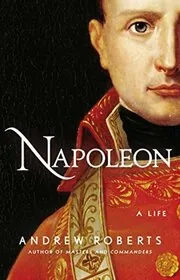
For readers who want one substantial, readable account of Napoleon as both ruler and soldier. Roberts connects the personal life with the public career, though his sympathetic interpretation benefits from comparison with a more skeptical biographer.
What it's about
Roberts's one-volume life of Napoleon uses the vast publication of his letters and visits to battlefields across Europe. It follows the conqueror as soldier, ruler, propagandist, and exile, and tries to understand both his brilliance and his appetite for control.

The Campaigns of Napoleon
For readers who want to understand the campaigns rather than follow a full personal biography. Detailed operational analysis explains Napoleon's military methods, though the scale is demanding and politics and civilian experience receive less attention.
What it's about
David Chandler analyzes Napoleon's military campaigns to explain the development of his methods of warfare. Drawing on correspondence and contemporary accounts, he examines strategy, battlefield decisions, and the strengths and weaknesses revealed across Napoleon's career.
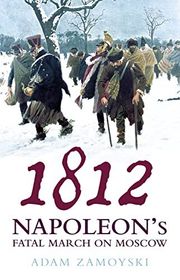
1812: Napoleon's Fatal March on Moscow
For readers who want one disastrous campaign explored through both strategy and human experience. Soldiers' accounts give the retreat unusual immediacy, though the suffering is relentless and the narrow period works better after a general overview.
What it's about
Adam Zamoyski traces Napoleon's invasion of Russia and the retreat that devastated his army. Drawing on accounts from different sides, he follows strategic decisions alongside soldiers' experiences, showing how the campaign unraveled and changed the course of the wars.
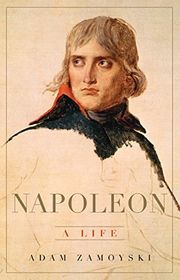
Napoleon: A Life
For readers who want a less admiring counterpoint to Roberts. Zamoyski places Napoleon within his European world and questions the heroic image, though the skeptical emphasis can leave less sense of the loyalty he inspired.
What it's about
Adam Zamoyski follows Napoleon's life against the background of the Enlightenment and revolutionary Europe. The biography examines his ambitions, uncertainties and choices while questioning the mythology that has shaped accounts of his rise, rule and downfall.
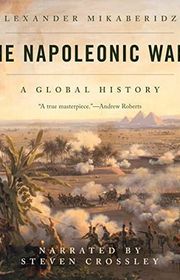
The Napoleonic Wars: A Global History
For readers who want to understand the wars beyond Napoleon's own decisions. Its global reach connects European conflict with other regions and empires, though that breadth makes it a substantial commitment and often takes Napoleon offstage.
What it's about
Alexander Mikaberidze examines the Napoleonic Wars as a global conflict with consequences far beyond European battlefields. The history connects military campaigns, diplomacy and imperial rivalry across regions, widening the view from Napoleon's career to the international forces surrounding it.
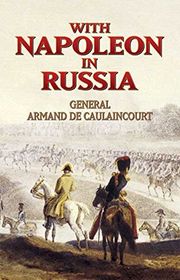
With Napoleon in Russia
For readers who want an eyewitness close to Napoleon during the Russian catastrophe. Caulaincourt offers access to conversations and decisions absent from broader narratives, though a participant's later recollections need reading alongside independent historical accounts.
What it's about
Armand de Caulaincourt recalls accompanying Napoleon during the Russian campaign and retreat. His position as an aide and diplomat gives a close view of the emperor under pressure, combining observations of military disaster with remembered conversations and political judgments.
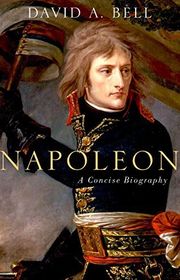
Napoleon: A Concise Biography
For newcomers who want the whole career without committing to a long biography. Bell makes the revolutionary context central to Napoleon's rise, though the short format leaves little room for detailed campaigns or extended debates.
What it's about
David A. Bell presents a short account of Napoleon's rise, rule and fall. He emphasizes the French Revolution's role in making Napoleon's concentration of power possible and connects the military career with the political changes that transformed Europe.

For readers interested in how Europe was reorganized as Napoleon's power collapsed. Diplomacy and competing ambitions replace battlefield tactics as the main action, though readers seeking a life of Napoleon will find him increasingly offstage.
What it's about
Adam Zamoyski traces Napoleon's downfall and the diplomatic negotiations that culminated in the Congress of Vienna. Political maneuvering, competing rulers, and personal relationships shape an account of how European powers constructed a new settlement after years of war.

For general readers who want a narrative account of the final campaign. Cornwell brings a novelist's attention to the experience of battle, though the tight focus on four days offers little of Napoleon's wider political career.
What it's about
This narrative history follows the tense days leading to Waterloo, tracing Napoleon’s return, Wellington’s preparations, and the clash that ended an era. Cornwell focuses on battlefield decisions and the people caught in them.

For readers who want a deeper examination of Napoleon's rise and self-presentation. Dwyer gives the formative years much more space than a one-volume life, though the account stops in 1799 and requires later volumes for the empire.
What it's about
Philip Dwyer examines Napoleon's rise from Corsican childhood to the coup of 1799. Focusing on formative experiences and early campaigns, he explores ambition, political manipulation, and the carefully constructed public image that accompanied Napoleon's ascent.

For readers who want to see Napoleonic power through a diplomat who survived it. Cooper's portrait makes political adaptation vivid, though it is an older biography centered on Talleyrand rather than a comprehensive assessment of Napoleon.
What it's about
Duff Cooper traces the life of Charles-Maurice de Talleyrand, examining a diplomat whose career survived dramatic changes in French government. The biography explores his contradictions, political judgment, and ability to navigate revolutionary and Napoleonic power.

For readers who already know the main campaigns and want the German allies brought into focus. Its close study corrects an exclusively French view of the army, though the narrow campaign detail makes it a specialist follow-up.
What it's about
John Gill examines the German soldiers who fought alongside Napoleon against the Habsburg Empire in 1809. His study follows their substantial role within the campaign, connecting military performance with the political relationships between France and its German allies.
Sources
- 1
The best books on Napoleon
fivebooks.com
- 2
The Best Napoleon Books: Where To Actually Start
turbohistory.com
- 3
12 Best Books About Napoleon, From Corsica to Saint Helena (2026)
skriuwer.com
- 4
Best books about Napoleon
goodreads.com
- 5
Which Napoleon's biography buy?
reddit.com
- 6
Four Napoleon experts on what to watch and read after (or before) Napoleon
gq-magazine.co.uk
- 7
The Best Napoleonic Wars Books: A Complete Reading Guide
napoleonicarchive.com
- 8
8 Essential Texts About Napoleon Bonaparte and the Napoleonic Wars
explorethearchive.com
- 9
Which biography of Napoleon Bonaparte do you recommend?
reddit.com








Edited by
Software engineer whose passion for tracking book recommendations from podcasts inspired the creation of MRB.
Lead investor at 3one4 Capital whose startup expertise and love for books helped shape MRB and its growth.
Comments
Spotted a missing book, a wrong order or a mistake? Tell us and we'll fix this page.
We're a reading guide, not the author or publisher, so we can't send books or pass on messages.