
15 Best Malcolm X Books
The best Malcolm X books, ranked by how many expert sources recommend each one, with notes to help you choose memoirs, speeches, biographies, and studies.
Our take
Books by and about Malcolm X offer several ways into a life marked by political and religious change. The Autobiography of Malcolm X, told to Alex Haley, gives his own account of that development. The speech collections let readers encounter his arguments in public, with the audience and moment shaping what he says. These are standalone collections rather than a series that needs to be read in order, and some selections overlap.
The biographies and studies ask different questions. Manning Marable examines the life through historical research, James H. Cone compares Malcolm X with Martin Luther King Jr., and Michael Eric Dyson considers his cultural influence. Family memories, surveillance records, and competing investigations of the assassination each offer another perspective. Spike Lee's filmmaking account turns to the challenge of portraying him on screen. Begin with The Autobiography of Malcolm X, then read Malcolm X Speaks before choosing a biography or a more specialized study.
15 books · 9 sources · Last updated
As an Amazon Associate, we earn from qualifying purchases (at no extra cost to you).
How to choose from this list
Skip to the full rankingIf you're starting with his own account: The Autobiography of Malcolm X → Malcolm X Speaks
If you want more of his later speeches: Malcolm X Speaks → February 1965
If you want to compare political visions: Martin & Malcolm & America
If you want accounts of his death: The Death and Life of Malcolm X → The Judas Factor
If you want family memory and cultural influence: Seventh Child → Making Malcolm
The 15 books, ranked
Ranked by how many expert sources name each book. Ties go to the book more people recommend.
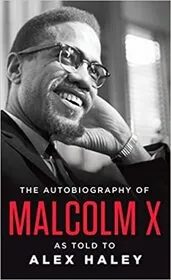
For a first encounter with Malcolm X's life and changing outlook. The narrative told to Alex Haley gives personal transformation an immediacy the studies cannot, though it remains a shaped retrospective account rather than an independent biography.
What it's about
Told to Alex Haley, this autobiography follows Malcolm X from Omaha and Lansing to prison, the Nation of Islam, Mecca, and beyond. It is both a personal story of reinvention and a sharp record of race in America.
Also recommended by
6 people Casey Neistat recommended this book
Casey Neistat
"I’ve read [this book] more times than I can count. I cried at the end of [this book]." - Casey Neistat
Casey Neistat's recommendation of this book  Jason Calacanis recommended this book
Jason Calacanis
Jason Calacanis recommended this book on his blog.
Jason Calacanis's recommendation of this book  Ryan Holiday recommended this book
Ryan Holiday
"[One] of the most inspiring men of the last 150 years." - Ryan Holiday
Ryan Holiday's recommendation of this book  Jerrod Carmichael recommended this book
Jerrod Carmichael
Jerrod Carmichael mentioned this book on "The Tim Ferriss Show" podcast.
Jerrod Carmichael's recommendation of this book  Steve Aoki recommended this book
Steve Aoki
"[I] was blown away by the determination and commitment that Malcolm X had to his people and to fight against a system that was not designed to support or help him or his people." - Steve Aoki
Steve Aoki's recommendation of this book  Brian Koppelman recommended this book
Brian Koppelman
"[One of the autobiographies] I have read the most often." - Brian Koppelman
Brian Koppelman's recommendation of this book

For readers ready to examine the autobiography against a historian's research. Marable connects personal change with political organizations and wider events, though the substantial length and contested interpretations make this a demanding companion rather than a final verdict.
What it's about
Manning Marable traces Malcolm X’s changing life and political outlook, from his troubled youth through the Nation of Islam and his later activism. The biography examines race, class, personal reinvention, and the circumstances surrounding his assassination.

For readers who want to examine government surveillance through documents. Carson's commentary helps place the records in context, though FBI reports reflect the agency's perspective and need critical reading rather than automatic acceptance as fact.
What it's about
Clayborne Carson uses FBI records to examine Malcolm X's political development and the government's surveillance of him. Documents and analysis explore his relationships with other Black leaders and institutions, placing his public career within the policing practices of the period.
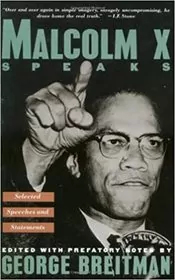
For readers who want to engage with Malcolm X's public arguments directly. The selection makes changes in emphasis easier to hear than a biographer's paraphrase, though separate speeches bring repetition and require attention to their occasions.
What it's about
A key collection of speeches and statements from the last year of Malcolm X's life. It lets readers track his thinking on Black liberation, global politics, and self-determination as his views kept changing.

The Death and Life of Malcolm X
For readers drawn to a journalist's close examination of the final period. Goldman combines biographical narrative with investigation, though this earlier account cannot incorporate all the archival research available to later biographers.
What it's about
Peter Goldman traces Malcolm X's rise as a public leader, emphasizing the final year of his life. The biography examines his separation from the Nation of Islam, the threats surrounding him, and the questions raised by his assassination.

For readers comparing explanations of Malcolm X's assassination. Evanzz builds an investigative argument from documents and political context, though its wider conspiracy claims need assessment alongside other accounts rather than treatment as settled conclusions.
What it's about
Karl Evanzz investigates Malcolm X's assassination alongside his political development and government scrutiny of Black nationalist movements. Drawing on documentary evidence, he presents an argument about a wider conspiracy, placing Malcolm's death within the international conflicts of the period.

For readers interested in Malcolm X's cultural afterlife. Dyson examines competing images across politics and popular culture, offering more analysis of his meaning than chronology, though the debates reward some prior knowledge of the life.
What it's about
Dyson examines Malcolm X's continuing cultural influence and the competing interpretations of his life. Drawing on film, scholarship, hip-hop, and debates over race and gender, he challenges both romanticized admiration and hostile caricatures that obscure the leader's achievements.

For readers studying Black liberation through a revolutionary socialist framework. Barnes places Malcolm X within labor and international struggles, though this explicit political interpretation works best alongside accounts written from other perspectives.
What it's about
Jack Barnes interprets Malcolm X's political development within a broader history of Black liberation and working-class struggle. He connects migration, labor, and revolutionary movements, arguing that socialist transformation offers a route toward freedom and racial equality.
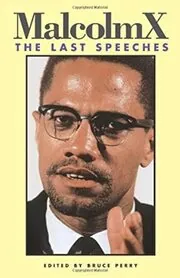
Malcolm X: The Last Speeches
For readers who want more of Malcolm X's later public voice after the autobiography. Bruce Perry's edited selection combines speeches and interviews, though it overlaps with other collections and offers less continuous context than a biography.
What it's about
Gathering speeches and interviews from the last two years of his life, this volume shows Malcolm X thinking beyond narrow national limits. You can hear him moving toward a broader human rights frame even as the danger around him grows.

For readers seeking a family perspective beyond the public speeches. Collins draws on relatives' memories to bring private relationships forward, though personal proximity produces a particular viewpoint rather than the distance of an independent historical study.
What it's about
Rodnell Collins draws on his mother Ella's memories and his own experiences of Malcolm X as an uncle and mentor. The family memoir recounts private relationships, difficult years, and political change from the perspective of relatives who knew him closely.
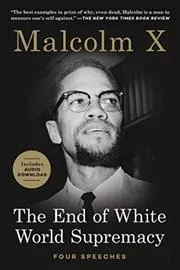
For readers who prefer a compact encounter with Malcolm X's rhetoric. Four speeches concentrate his arguments about racial power and liberation, though the small selection cannot represent the full development of his thinking.
What it's about
Four speeches present Malcolm X's arguments about Black history, racial oppression, revolution, and political self-determination. The collection captures his forceful criticism of white supremacy and his call for a transformed understanding of African American identity and power.

For readers interested in how history becomes cinema. Lee and Wiley combine production experience with the screenplay, giving a filmmaker's perspective absent from the biographies, though the focus is making the film rather than assessing its historical claims.
What it's about
Spike Lee and Ralph Wiley recount the challenges of bringing Malcolm X to the screen. The book combines reflections on the production with its screenplay, offering a view of the creative and practical demands behind the film.
Also recommended by
1 person Christopher Hitchens recommended this book
Christopher Hitchens
"Very interesting." - Christopher Hitchens
Christopher Hitchens's recommendation of this book
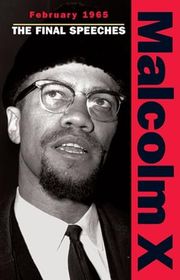
February 1965: The Final Speeches
For readers studying Malcolm X's thinking at the end of his life. The tightly defined period allows close attention to immediate concerns, though the collection is more useful with background than as a first introduction.
What it's about
Speeches and interviews from the final three weeks of Malcolm X's life document his public arguments shortly before his assassination. The collection places statements about Black liberation and international struggles within a concentrated chronological frame.

For readers questioning the familiar opposition between King and Malcolm X. Cone develops a sustained comparison of their political and religious visions, though his interpretive argument requires more attention than a straightforward life narrative.
What it's about
Cone examines the lives and political visions of Martin Luther King Jr. and Malcolm X. Tracing their differing views of America and racial liberation, he argues that their approaches had complementary elements and increasingly converged as their thinking developed.

The Assassination of Malcolm X
For younger readers seeking a short introduction focused on Malcolm X's death. Draper connects the event with his life and activism, though the narrow scope and older publication leave less room for the wider historical debate.
What it's about
Allison Stark Draper introduces Malcolm X's life and political work before examining the events surrounding his assassination. This short account for young readers discusses his accomplishments, the circumstances leading to his death, and competing explanations of the killing.
Sources
- 1
Cultural Front: Some Books on Malcolm X
culturalfront.org
- 2
Home - Malcolm X - Research Guides at University at Buffalo
research.lib.buffalo.edu
- 3
5 Books Every Muslim Should Read On Malcolm X And His Legacy | The Muslim Vibe
themuslimvibe.com
- 4
What Books Best Capture Malcolm X's Legacy? - Philly's Hip Hop and R&B Station.
wrnbhd2.com
- 5
Malcolm X Books
goodreads.com
- 6
Looking for... : r/suggestmeabook
reddit.com
- 7
Books About Malcolm X - Malcolm X Resources - LibGuides at Cornell University
guides.library.cornell.edu
- 8
Malcolm X Resources - Cross Cultural Solidarity
crossculturalsolidarity.com
- 9
Books By and About Malcolm X - Malcolm X: Selected Resources - Library Guides at Penn State University
guides.libraries.psu.edu






Edited by
Software engineer whose passion for tracking book recommendations from podcasts inspired the creation of MRB.
Lead investor at 3one4 Capital whose startup expertise and love for books helped shape MRB and its growth.
Comments
Spotted a missing book, a wrong order or a mistake? Tell us and we'll fix this page.
We're a reading guide, not the author or publisher, so we can't send books or pass on messages.