
10 Best Civil Rights Books
The best civil rights books, ranked by how many expert sources recommend each one, with notes for readers choosing histories, firsthand accounts, and fiction.
Our take
Books about the American civil rights movement can begin with a national campaign, a local community, or an individual life. Histories reconstruct the institutions and organizing behind public events. Firsthand accounts explain what participants believed they were doing, while fiction explores the pressures of racial hierarchy through imagined lives. Reading across these forms can broaden the picture, provided their different purposes remain clear.
For an overview of the mid-century movement, start with Eyes on the Prize. Why We Can't Wait offers King’s own argument for action, and The Autobiography of Malcolm X follows a different political and personal journey. For detailed history, choose Parting the Waters or the Birmingham focus of Carry Me Home. Ella Baker and the Black Freedom Movement shifts attention toward sustained grassroots organizing. Fiction readers can turn to Freshwater Road for an imagined perspective on Freedom Summer, then pair it with a historical account.
10 books · 8 sources · Last updated
As an Amazon Associate, we earn from qualifying purchases (at no extra cost to you).
How to choose from this list
Skip to the full rankingIf you want a historical overview: Eyes on the Prize → Parting the Waters
If you want a participant’s argument: Why We Can't Wait
If you want Malcolm X’s perspective: The Autobiography of Malcolm X
If you want to understand grassroots organizing: Ella Baker and the Black Freedom Movement
If you want a focused local history: Carry Me Home
If you prefer historical fiction: Freshwater Road
The 10 books, ranked
Ranked by how many expert sources name each book. Ties go to the book more people recommend.
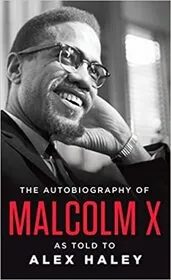
For readers who want to follow the development of Malcolm X’s political and religious thinking through personal narrative. The first-person perspective makes change visible, though the collaboration with Alex Haley calls for attention to how an autobiography is constructed.
What it's about
Told to Alex Haley, this autobiography follows Malcolm X from Omaha and Lansing to prison, the Nation of Islam, Mecca, and beyond. It is both a personal story of reinvention and a sharp record of race in America.
Also recommended by
6 people Casey Neistat recommended this book
Casey Neistat
"I’ve read [this book] more times than I can count. I cried at the end of [this book]." - Casey Neistat
Casey Neistat's recommendation of this book  Jason Calacanis recommended this book
Jason Calacanis
Jason Calacanis recommended this book on his blog.
Jason Calacanis's recommendation of this book  Ryan Holiday recommended this book
Ryan Holiday
"[One] of the most inspiring men of the last 150 years." - Ryan Holiday
Ryan Holiday's recommendation of this book  Jerrod Carmichael recommended this book
Jerrod Carmichael
Jerrod Carmichael mentioned this book on "The Tim Ferriss Show" podcast.
Jerrod Carmichael's recommendation of this book  Steve Aoki recommended this book
Steve Aoki
"[I] was blown away by the determination and commitment that Malcolm X had to his people and to fight against a system that was not designed to support or help him or his people." - Steve Aoki
Steve Aoki's recommendation of this book  Brian Koppelman recommended this book
Brian Koppelman
"[One of the autobiographies] I have read the most often." - Brian Koppelman
Brian Koppelman's recommendation of this book

For readers ready for a detailed narrative history of the movement’s early years. The broad cast connects King with local struggles and national politics, though its length and position as a trilogy’s first volume require a substantial reading commitment.
What it's about
Taylor Branch traces Martin Luther King Jr.’s rise and the American civil rights movement from 1954 to 1963. His narrative connects grassroots organizing, boycotts, sit-ins, and freedom rides with national politics and the movement’s internal conflicts.
Also recommended by
4 people Cory Booker recommended this book
Cory Booker
"If you’re an American, it’s just an unbelievable story of our country." - Cory Booker
Cory Booker's recommendation of this book  Barack Obama recommended this book
Barack Obama
On the "favorite books" section of Barack Obama's Facebook profile.
Barack Obama's recommendation of this book  Christopher Hitchens recommended this book
Christopher Hitchens
"A noble edifice of work about the United States in the era of Martin Luther King." - Christopher Hitchens
Christopher Hitchens's recommendation of this book - Ryan Holiday recommended this book
Ryan Holiday
"Epic." - Ryan Holiday
Ryan Holiday's recommendation of this book

Why We Can't Wait
For readers who want King’s own explanation of nonviolent direct action and the Birmingham campaign. Its immediacy makes it a useful primary account, though the argument reflects a participant’s purpose rather than the distance of a later history.
What it's about
Martin Luther King Jr. recounts the Birmingham campaign of 1963 and explains the case for nonviolent direct action. Including his letter from jail, the book examines the pressures driving the civil rights movement and the work still ahead.
Also recommended by
1 person Alexandria Ocasio-Cortez recommended this book
Alexandria Ocasio-Cortez
Alexandria Ocasio-Cortez recommended this book on Twitter.
Alexandria Ocasio-Cortez's recommendation of this book
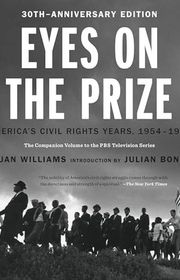
Eyes on the Prize: America's Civil Rights Years, 1954-1965
For readers who want a narrative overview of the movement’s central campaigns before choosing a narrower study. Its documentary connection makes it a useful companion to viewing, though the limited period leaves later developments outside its main scope.
What it's about
Juan Williams recounts major events and campaigns in the American civil rights movement from 1954 to 1965. Created as a companion to the documentary series, the book combines historical narrative with accounts of the people involved in the struggle.
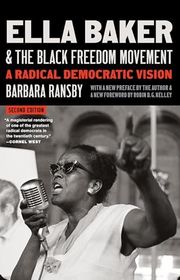
Ella Baker and the Black Freedom Movement: A Radical Democratic Vision
For readers who want to understand organizing through a woman whose influence extended beyond public leadership roles. The biography highlights grassroots practice and collective leadership, though its scholarly detail asks for more concentration than a general introductory history.
What it's about
Barbara Ransby follows Ella Baker’s life and work across decades of Black activism. The biography examines her roles in major organizations, her support for younger organizers, and her commitment to democratic participation and leadership rooted in local communities.

The Help
For readers who want a popular fictional entry into the racial hierarchies of segregated Mississippi. The accessible ensemble narrative encourages discussion, though its representation of Black domestic workers comes through a white author’s imagined perspective rather than firsthand testimony.
What it's about
In Jackson, Mississippi, in 1962, Black maids Aibileen and Minny join aspiring writer Skeeter in a risky project. Their book about working in white households challenges the town's racial rules and threatens to transform the lives of everyone involved.

For readers who want a close account of Birmingham’s struggle over segregation. Its attention to local power structures adds depth beyond a national overview, though the dense network of people and institutions requires sustained attention.
What it's about
McWhorter reconstructs the struggle over segregation in Birmingham, Alabama, with particular attention to 1963. Archival records, interviews, and childhood memories connect civil-rights activism, police repression, and the church bombing with the white power structures resisting change.

For readers who want historical fiction centered on the experience of joining grassroots activism. The intimate viewpoint brings questions of commitment and identity into focus, though an imagined narrative serves a different purpose from documented movement history.
What it's about
During Freedom Summer in 1964, University of Michigan student Celeste Tyree travels to Mississippi to help register Black voters. Her experiences in Pineyville bring her into contact with local courage, entrenched racism, and the complicated demands of political commitment.

For readers who want to compare King and Malcolm X without treating their positions as fixed opposites. Cone’s interpretive argument gives their ideas a shared frame, though readers looking for a comprehensive biography of either man will need another book.
What it's about
Cone examines the lives and political visions of Martin Luther King Jr. and Malcolm X. Tracing their differing views of America and racial liberation, he argues that their approaches had complementary elements and increasingly converged as their thinking developed.

Passing
For readers interested in the racial boundaries and social pressures that preceded the mid-century movement. Its concentrated psychological fiction examines identity at an intimate scale, though it is neither a movement history nor a direct account of political organizing.
What it's about
Childhood friends Irene Redfield and Clare Kendry reconnect after choosing different relationships with racial identity. Clare passes as white, while Irene lives within the Black community. Their renewed connection unsettles the boundaries each has built around her life.
Sources
- 1
7 classics to mark the American civil rights movement
penguin.co.uk
- 2
16 Civil Rights Books for the Whole Family
bookriot.com
- 3
Civil Rights Books
goodreads.com
- 4
Books on The Civil Rights Era
fivebooks.com
- 5
Books on civil rights movements
reddit.com
- 6
Reading List
julianbondoralhistoryproject.org
- 7
Civil Rights and Social Justice
guides.pnw.edu
- 8
6 Great Books on the American Civil Rights Movement
forreadingaddicts.co.uk








Edited by
Software engineer whose passion for tracking book recommendations from podcasts inspired the creation of MRB.
Lead investor at 3one4 Capital whose startup expertise and love for books helped shape MRB and its growth.
Comments
Did we miss something? Have feedback?
Help us improve this page by sharing your thoughts