
9 Best Learn German Books
The best books for learning German, ranked by how many expert sources recommend each one, with notes on who each suits, from beginners to grammar learners.
Our take
Books for learning German serve different purposes. A course introduces language in a sequence, a workbook gives you focused practice, and a reference explains a rule when you need more detail. Graded stories offer a way to use what you have learned without jumping straight into an unadapted novel. Combining those roles usually makes more sense than expecting one book to teach every skill.
The Everything Learning German Book and German Made Simple provide broad starting points. Basic German and Practice Makes Perfect concentrate on grammar and exercises, while Hammer’s German Grammar and Usage suits more detailed questions once the basics are familiar. Learn German With Stories: Café in Berlin introduces short connected episodes, and Short Stories in German for Beginners offers another route into supported reading. Choose one course or workbook first, then add stories at a manageable level. Pair book study with listening and conversation so the German you recognize on the page becomes language you can use.
9 books · 6 sources · Last updated
As an Amazon Associate, we earn from qualifying purchases (at no extra cost to you).
How to choose from this list
Skip to the full rankingIf you're starting from zero: The Everything Learning German Book → Learn German With Stories
If you want short daily grammar lessons: German Grammar for Beginners
If you want grammar explanations with exercises: Basic German → Practice Makes Perfect
If you want detailed grammar reference: Hammer's German Grammar and Usage
If you want more reading practice: Learn German With Stories → Short Stories in German for Beginners
If you prefer a conventional self-study course: German Made Simple
The 9 books, ranked
Ranked by how many expert sources name each book. Ties go to the book more people recommend.

For beginners ready to read connected German beyond isolated sentences. The short episodes and vocabulary support make narrative reading approachable, though the simplified language is a bridge to everyday material rather than a complete language course.
What it's about
A young Sicilian newcomer navigates work, relationships, and daily life in Berlin across ten short stories. Simplified German, vocabulary support, and reading exercises help beginners move from isolated phrases to connected narrative.

Hammer's German Grammar and Usage
For intermediate and advanced learners who need detailed answers about German usage. Its depth distinguishes it from beginner workbooks, though it is more useful for consulting specific questions than for learning the language from zero.
What it's about
Martin Durrell provides a reference to German grammar and usage, explaining forms and structures through examples of written and spoken language. Coverage includes pronunciation, word stress, spelling, and differences in register, helping learners connect grammatical rules with actual communication.

For learners who understand some German and want repeated practice with grammar. Its exercises make weak points easier to identify than passive rereading, though completing written drills does not by itself develop fluent speech.
What it's about
Ed Swick teaches German grammar through clear explanations, everyday examples, and varied exercises. Units cover practical usage, including noun cases, adjectives, pronouns, and verbs, with an answer key that supports independent study and helps learners check their progress.
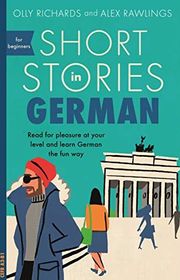
Short Stories in German for Beginners
For learners who want more sustained reading practice after basic lessons. The range of stories offers variety beyond a single continuing character’s experiences, though the beginner label still assumes enough vocabulary and grammar to follow connected prose.
What it's about
Olly Richards presents eight short stories for learners of German, using controlled language and varied genres. Vocabulary support, summaries, and comprehension questions help readers follow connected narratives, check understanding, and build confidence reading without translating every word.

For beginners who want an English-language introduction covering several skills in one place. Its breadth supplies a useful starting framework, though a general book cannot provide the listening practice or conversational feedback needed alongside it.
What it's about
Ed Swick introduces basic German through explanations of pronunciation, vocabulary, and grammar, supported by practice activities. The book covers sentence formation, verb conjugation, noun cases, and everyday expressions, giving beginners material for learning to speak, write, and understand the language.

For learners who want concise grammar explanations immediately followed by practice. The workbook format makes it easier to check understanding than a large reference, though its focus on structure needs balancing with listening, speaking, and extended reading.
What it's about
This beginner's German reference pairs grammar explanations with exercises and examples in German and English. Units cover verbs, cases, articles, adjective endings, sentence structure, and other essentials, supported by checklists and an answer key.

German Grammar for Beginners
Supercharge Your German with Essential Lessons and Exercises
For beginners who want grammar broken into manageable lessons with exercises. The daily structure helps make regular study concrete, though concentrating on rules alone leaves speaking and understanding natural conversation underpracticed.
What it's about
My Daily German organizes beginner grammar into short daily lessons with an integrated workbook. Straightforward explanations, practice exercises, and recorded pronunciation material support a regular routine for studying German rules and using them.

For independent beginners who prefer a conventional course with readings and review exercises. Its self-contained structure supports steady study, though the older presentation and limited interaction may feel less engaging than stories or guided conversation.
What it's about
This self-study guide introduces German grammar, pronunciation, vocabulary, and common expressions. Reading passages and review exercises provide practice, while an answer key and German-English dictionary support learners studying independently or preparing for travel.

For independent learners who want a daily plan rather than an open-ended reference. The scheduled approach can support consistency, though the ninety-day title is not a reliable promise of fluency and progress depends on practice beyond the book.
What it's about
Kevin Marx lays out a daily program for independent German study, combining pronunciation, grammar, vocabulary, and idiomatic expressions. Lessons explain both what to learn and how to practice, with guidance on retaining and using the language.
Sources
- 1
11 Best Books to Learn German Efficiently and Quickly
viatravelers.com
- 2
8 Best Books for Learning German [That You Need To Try]
emmalovesgerman.com
- 3
10 Best books to learn German in 2026: Your ultimate guide
preply.com
- 4
Learning German Books
goodreads.com
- 5
The 13 Best Books to Learn German in 2025
fluentu.com
- 6
What Are the Best Book(s) for Leaning German as a Complete Beginner?
reddit.com






Edited by
Software engineer whose passion for tracking book recommendations from podcasts inspired the creation of MRB.
Lead investor at 3one4 Capital whose startup expertise and love for books helped shape MRB and its growth.
Comments
Spotted a missing book, a wrong order or a mistake? Tell us and we'll fix this page.
We're a reading guide, not the author or publisher, so we can't send books or pass on messages.