
11 Best Journalism Books
The best journalism books, ranked by how many expert sources recommend each, with notes for students, working reporters, and readers seeking a starting point.
Our take
Journalism involves finding things out, checking what people tell you, and deciding how to present what the public needs to know. Books can explain those responsibilities, show the daily work behind an investigation, or demonstrate what a distinctive reporting voice can achieve. Students and working reporters may need practical guidance; other readers may prefer to see how a particular story was uncovered.
The Elements of Journalism introduces principles for judging news, while The Journalist And The Murderer questions the relationship between reporters and their subjects. All the President's Men follows the work of pursuing leads and corroborating claims. Sound Reporting turns to the decisions involved in telling stories through audio. For something different, Scoop satirizes the profession through fiction, and Thompson's campaign reporting makes the writer's personality part of the experience. Start with the principles if you're new to the field, then choose a craft guide or reporting account that fits your interests.
11 books · 8 sources · Last updated
As an Amazon Associate, we earn from qualifying purchases (at no extra cost to you).
How to choose from this list
Skip to the full rankingIf you're new to journalism: The Elements of Journalism → All the President's Men
If you want to examine reporting ethics: The Journalist And The Murderer
If you want to improve nonfiction prose: On Writing Well
If you want to work with audio: Sound Reporting
If you want to study investigations: Bad Blood → She Said → Dark Money
If you want a newsroom satire: Scoop
The 11 books, ranked
Ranked by how many expert sources name each book. Ties go to the book more people recommend.

The Journalist And The Murderer
For reporters and readers questioning the promises made during an interview. Malcolm probes the power imbalance between writer and subject more sharply than a craft manual, though her provocative argument resists easy ethical rules.
What it's about
Janet Malcolm examines the relationship between journalist Joe McGinniss and convicted murderer Jeffrey MacDonald. Their dispute over Fatal Vision becomes a study of trust, betrayal, power, and the ethical tensions between nonfiction writers and the people they portray.
Also recommended by
2 people Patrick Collison recommended this book
Patrick Collison
Patrick Collison labeled this book "substantially above average."
Patrick Collison's recommendation of this book  Balaji Srinivasan recommended this book
Balaji Srinivasan
"Short and well worth reading. Presages much of today's train crash on social media." - Balaji Srinivasan
Balaji Srinivasan's recommendation of this book

All the President's Men
For aspiring investigators who want to see how a story develops through persistent reporting. Its attention to sourcing and corroboration makes the process concrete, though its newspaper setting predates today's digital reporting tools.
What it's about
Bob Woodward and Carl Bernstein recount their investigation of the Watergate break-in for The Washington Post. Following sources and evidence through successive revelations, they describe the reporting behind the exposure of a widening political conspiracy.

Scoop
For readers who want a comic look at newsroom incentives and foreign correspondence. Waugh makes competition for a story look absurd, though the colonial setting and period attitudes call for context, and this is fiction rather than reporting instruction.
What it's about
Comic masterpiece about shy nature columnist William Boot, who is mistakenly sent to cover a civil war in the fictional African state of Ishmaelia. Waugh lampoons foreign correspondents, newspaper proprietors and the absurdities of news-making under deadline pressure.

For reporters whose research is stronger than their prose. Its practical attention to clarity, structure, and unnecessary words complements the reporting accounts here, though it covers nonfiction broadly rather than newsroom verification or media law.
What it's about
William Zinsser offers guidance on writing nonfiction with clarity and effective structure. He addresses common problems in style and wording, then applies his principles to interviews, travel, science, sports, criticism, and other forms of nonfiction.
Also recommended by
4 people Tim Ferriss recommended this book
Tim Ferriss
"I have read this book more than a dozen times, more often for thinking than for writing." - Tim Ferriss
Tim Ferriss's recommendation of this book  Matt Mullenweg recommended this book
Matt Mullenweg
"I love reading about writers and the process of writing." - Matt Mullenweg
Matt Mullenweg's recommendation of this book  Derek Sivers recommended this book
Derek Sivers
"Great blunt advice about writing better non-fiction. So inspiring." - Derek Sivers
Derek Sivers's recommendation of this book  Jodie Cook recommended this book
Jodie Cook
"A fascinating exploration of writing for different genres." - Jodie Cook
Jodie Cook's recommendation of this book
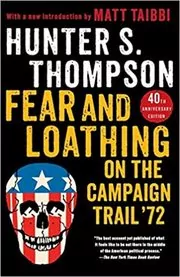
For readers interested in a political reporter's voice and proximity to campaign life. Thompson makes partisanship and the press circus impossible to ignore, though his gonzo style demands a different reading approach from a conventional factual chronicle.
What it's about
Thompson’s month‑by‑month account of the 1972 U.S. presidential race follows George McGovern’s doomed challenge to Richard Nixon from inside the press bus. Equal parts serious political reporting and gonzo riff, it captures the paranoia, deal‑making, and media circus of modern campaigns.
Also recommended by
1 person Jim Cramer recommended this book
Jim Cramer
"A most amazing book... Total Gonzo! Must read for all!!!" - Jim Cramer
Jim Cramer's recommendation of this book

For readers studying how long investigations expose networks of political influence. Mayer connects donors, organizations, and policy through documentary reporting, though the detailed focus on American conservative funding is narrower than a general account of money in politics.
What it's about
Jane Mayer investigates wealthy conservative donors and the institutions they fund, including the Koch network. Interviews and documentary research underpin her account of how money moves through think tanks, universities, advocacy organizations, and politics to advance their agendas.
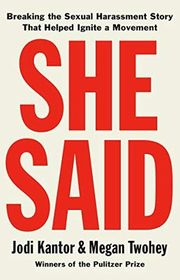
She Said
For reporters thinking about trust, corroboration, and the risks faced by vulnerable sources. Its detailed account of pursuing sexual misconduct allegations makes those tensions concrete, though the subject matter is distressing and the setting is largely American.
What it's about
Jodi Kantor and Megan Twohey recount their investigation into Harvey Weinstein and the reporting that preceded public revelations. The book examines confidential interviews, documents, legal pressure, and the decisions involved in persuading sources to share their experiences.

For students and news consumers who want a framework for judging journalism. Its focus on verification, independence, and public responsibility gives common standards for discussion, though principles alone cannot resolve every difficult editorial decision.
What it's about
Bill Kovach and Tom Rosenstiel examine journalism's purpose and the principles the public should expect from news organizations. Drawing on research and discussions with journalists, they explore reporting's civic role and the challenges posed by technology, misinformation, and changing news economics.

For readers interested in investigating powerful companies and checking persuasive claims. Carreyrou's account shows the value of skeptical reporting under pressure, though its narrative focus on one startup offers fewer general instructions than a reporting handbook.
What it's about
John Carreyrou investigates Theranos and Elizabeth Holmes’s claims about revolutionary blood-testing technology. Through reporting and accounts from employees and whistleblowers, he traces how secrecy, ambition, and pressure concealed serious problems within a celebrated Silicon Valley company.
Also recommended by
4 people Bill Gates recommended this book
Bill Gates
"I couldn’t put down this thriller with a tragic ending." - Bill Gates
Bill Gates's recommendation of this book  Andrew Wilkinson recommended this book
Andrew Wilkinson
"Soooo good." - Andrew Wilkinson
Andrew Wilkinson's recommendation of this book  Bill Gurley recommended this book
Bill Gurley
"An incredible book that should be read by each and every player in the startup/Silicon Valley ecosystem." - Bill Gurley
Bill Gurley's recommendation of this book  Michael Mauboussin recommended this book
Michael Mauboussin
"Amazing [book] about human nature." - Michael Mauboussin
Michael Mauboussin's recommendation of this book

For reporters moving into radio or other audio storytelling. Its attention to writing for the ear and production decisions supplies practical detail absent from print-focused books, though older technical examples need adapting to current equipment and workflows.
What it's about
Jonathan Kern introduces audio journalism through the practices of NPR reporting and production. The guide covers finding and shaping stories, broadcast writing, fairness, field reporting, editing, and studio work, connecting journalistic decisions with the craft of communicating through sound.

For readers curious about the habits and pressures of a police reporter. Buchanan's firsthand perspective brings daily beat work closer than a broad principles book, though the Miami crime stories and dark humor make this an intense introduction.
What it's about
Buchanan's breakthrough memoir gathers true stories from her years on the Miami police beat. It shows the murders, chaos, and dark absurdity of the city, but also the ordinary people caught in every headline.
Sources
- 1
Must-Read Books by Journalists
penguinrandomhouse.com
- 2
Any books on journalism you’d recommend?
reddit.com
- 3
Journalism Books
goodreads.com
- 4
100 Best Journalism Books of All Time (Updated for 2026)
shortform.com
- 5
The Best Investigative Journalism Books Of All Time
bookscrolling.com
- 6
SPJ Rio Grande: Tips & Tools for Journalists in New Mexico & El Paso
spjriogrande.org
- 7
The Best Books on Journalism
fivebooks.com
- 8
Best books about journalism?
reddit.com






Edited by
Software engineer whose passion for tracking book recommendations from podcasts inspired the creation of MRB.
Lead investor at 3one4 Capital whose startup expertise and love for books helped shape MRB and its growth.
Comments
Spotted a missing book, a wrong order or a mistake? Tell us and we'll fix this page.
We're a reading guide, not the author or publisher, so we can't send books or pass on messages.