
17 Best Hacking Books
The best hacking books, ranked by how many expert sources recommend each one, with notes on Linux basics, penetration testing, web security and analysis.
Our take
Hacking books cover several kinds of security work: understanding software weaknesses, testing applications and networks, analyzing suspicious programs and examining how people are manipulated. Some are introductory courses, others are specialist references or collections of cases. The right starting point depends on your familiarity with operating systems, networks and programming. Many influential titles use older environments, so their conceptual value and the current usability of their examples are separate questions.
Linux Basics for Hackers develops prerequisites, while The Basics of Hacking and Penetration Testing introduces an assessment process. Georgia Weidman's Penetration Testing expands that approach through lab work. For web security, The Web Application Hacker's Handbook offers depth and Real-World Bug Hunting adds cases. Hacking by Jon Erickson concentrates on low-level systems, while Black Hat Python suits readers who already program. Practical Malware Analysis serves a different investigative goal. Ghost in the Wires is memoir, and Social Engineering examines human behavior. Begin with foundations and a testing methodology, then choose the specialty that matches the work you want to understand.
17 books · 8 sources · Last updated
As an Amazon Associate, we earn from qualifying purchases (at no extra cost to you).
How to choose from this list
Skip to the full rankingIf Linux is new to you: Linux Basics for Hackers → The Basics of Hacking and Penetration Testing
If you want a broad testing course: Penetration Testing → The Hacker Playbook 2
If you're studying web application security: The Web Application Hacker's Handbook → Real-World Bug Hunting
If you already program in Python: Black Hat Python
If you want to investigate malicious software: Practical Malware Analysis
If you want the human side of security: Ghost in the Wires → Social Engineering
The 17 books, ranked
Ranked by how many expert sources name each book. Ties go to the book more people recommend.

For readers who want a personal story about hacking, deception and pursuit. Mitnick's memoir makes the human and telephone-system dimensions vivid, though the retrospective perspective and self-told narrative offer history and entertainment rather than a modern technical course.
What it's about
Kevin Mitnick recounts his computer and telephone exploits, life under false identities, and attempts to evade the authorities. Written with William L. Simon, the memoir follows the escalating pursuit that ended his years as a fugitive hacker.
Also recommended by
1 person Thomas Frank recommended this book
Thomas Frank
"I love stuff at the intersection of crime and computers." - Thomas Frank
Thomas Frank's recommendation of this book

For readers who want to understand low-level software behavior rather than only run security tools. Erickson connects C programming with exploitation concepts, though the older environment and examples require adaptation and reward patience with systems-level detail.
What it's about
Jon Erickson introduces computer exploitation through the fundamentals of C programming and the behavior of software. Technical explanations and examples connect programming mistakes, memory, networks, and security weaknesses, showing how a detailed understanding of systems supports creative problem solving.

For readers who want a systematic foundation for examining web application security. Its detailed treatment helps develop a testing mindset beyond a checklist, though the older technology coverage needs supplementation for current frameworks, protocols and application architectures.
What it's about
Dafydd Stuttard and Marcus Pinto examine web application vulnerabilities through systematic testing and defense. This second edition updates the techniques for evolving application technologies, including client-side weaknesses, and explains how attackers approach systems and how defenders address those risks.

For Python programmers who want security-oriented projects rather than a general testing survey. Building tools connects programming with practical investigation, though the Windows and networking focus assumes prior Python ability and requires checking libraries and environment compatibility.
What it's about
Justin Seitz and Tim Arnold demonstrate how to build security testing tools with Python 3. Projects cover network analysis, web testing, Windows systems, and memory forensics, connecting programming techniques with the work of penetration testers.

For readers who want a broad laboratory-based introduction to penetration-testing methodology. The progression connects several testing areas within one practical course, though the older tools and target environments need rebuilding or adjustment rather than expecting every example to run unchanged.
What it's about
Georgia Weidman introduces ethical hacking through a hands-on laboratory approach. Readers work through reconnaissance, password attacks, network and web application testing, exploit development, and mobile security while learning how to identify weaknesses and document their findings.
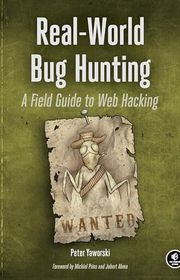
Real-World Bug Hunting
For readers who want web-security concepts connected with reported cases. The real examples show how a vulnerability category becomes a concrete finding, though historical reports need context and cannot serve as a complete guide to today's applications.
What it's about
Peter Yaworski explains common web application vulnerability types through published bug-bounty cases. Each chapter connects a category of weakness with real reports and practical lessons, helping readers understand how findings are investigated, communicated and addressed in software security work.
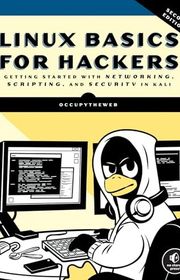
Linux Basics for Hackers
For beginners whose missing prerequisite is confidence in Linux. The revised second edition connects operating-system basics, networking and scripting with a security-focused environment, though it is a foundation-building guide rather than a complete penetration-testing course.
What it's about
OccupyTheWeb introduces Linux through Kali, beginning with a virtual-machine setup and core command-line concepts. Lessons cover text, permissions, environment variables and scripting, connecting operating-system skills with the needs of learners entering security testing.

For readers who learn through a worked assessment sequence rather than isolated technical chapters. The playbook structure gives preparation and reporting a visible place, though the older tools and scenarios need refreshing and the broad workflow cannot replace foundational knowledge.
What it's about
Peter Kim organizes penetration testing into a sequence modeled on a football playbook. The guide moves from preparation and reconnaissance into exploitation, web attacks, movement through networks, and reporting, with practical scenarios and tool-focused examples throughout.

For readers with penetration-testing experience who want to examine red-team assessment as a campaign. The focus extends toward evaluating defenses and responses, though the advanced scenarios and older technical examples demand more preparation than a beginner's walkthrough.
What it's about
Peter Kim shifts the playbook toward red team operations, emphasizing campaigns that test an organization's defenses and responses. Practical exercises and a laboratory environment connect advanced attack scenarios with the assessment of security controls and detection capabilities.

For experienced testers who want to think about complex assessments as coordinated scenarios. Allsopp connects programming, human factors and network weaknesses, though the advanced scope assumes substantial foundations and the technical examples need comparison with current environments.
What it's about
Wil Allsopp examines advanced penetration testing through simulations of sophisticated attacks on highly secured organizations. The book combines social engineering, programming, and vulnerability assessment to explore how complex attack scenarios can reveal weaknesses in network defenses.

For practitioners who want a broad collection of technical security topics and labs. The sixth edition connects testing with reverse engineering and different platforms, though the range makes it more suitable for targeted study than a gentle first course.
What it's about
Allen Harper and his coauthors explain ethical security testing through case studies and practical labs. This sixth edition covers network threats, penetration testing, malware analysis, reverse engineering, and security issues involving mobile devices, cloud systems, and connected hardware.

For readers who want the Metasploit Framework placed within a structured testing process. The focused examples make the tool's role easier to understand, though the linked older edition requires substantial version checks and does not cover the whole assessment discipline.
What it's about
David Kennedy and his coauthors introduce the Metasploit Framework through a structured penetration testing methodology. The guide shows how simulated attacks can expose network vulnerabilities, combining explanations of the tools with practical examples for security professionals.

For readers ready to investigate suspicious programs through detailed exercises. The emphasis on analysis develops skills beyond simply recognizing alerts, though the demanding material and older Windows-focused examples require technical preparation and adaptation to newer software.
What it's about
Michael Sikorski and Andrew Honig explain how analysts investigate malicious software. Hands-on labs and detailed dissections of malware samples give readers practice examining programs, interpreting their behavior, and combining investigative techniques to understand what a suspicious file does.

For practitioners who already understand their tools and need compact syntax reminders. The reference format is convenient during prepared work, though it explains little background and older commands need validation against the specific platform and tool versions in use.
What it's about
Ben Clark's compact reference gathers commands and syntax for penetration testers who need information quickly during an engagement. It organizes practical reminders for working across operating systems and security tools rather than presenting a lengthy introductory course.

For readers who want to understand the human factors that technical security books can overlook. Hadnagy examines persuasion and manipulation through examples, though the practitioner's framework and psychology claims need critical reading rather than treating every technique as universally reliable.
What it's about
Christopher Hadnagy examines how attackers exploit human behavior to gain access to information and protected spaces. Past examples illustrate techniques for influencing people and bypassing technical defenses, with discussion aimed at helping security professionals recognize and address the human side of attacks.

The Basics of Hacking and Penetration Testing
Ethical Hacking and Penetration Testing Made Easy
For beginners who want a clear testing process before a larger technical reference. The four-stage structure gives the work a manageable sequence, though the linked second edition's tools and examples are dated and need current practice alongside the explanations.
What it's about
Patrick Engebretson introduces ethical hacking through a four-stage testing methodology. This second edition explains foundational tools and techniques with practical examples, following the process from initial reconnaissance through exploitation and the interpretation of security testing results.

For readers studying the development and mechanics of cryptographic protocols. The breadth and C examples make it a substantial historical reference, though the older algorithms and implementation guidance should not be treated as current recommendations for protecting production systems.
What it's about
Bruce Schneier explains cryptographic protocols and algorithms, including methods for authentication, key exchange, and digital signatures. C source code and technical discussions connect the mathematical tools with implementation, providing developers a broad reference to the capabilities and workings of cryptography.
Sources
- 1
Best Hacking Books in 2026: The Definitive List
ceos3c.com
- 2
15 Best Cyber Security Books for Beginners and Pros (2026)
cyberdefence.org.in
- 3
100 Best Hacking Books of All Time
shortform.com
- 4
Hacking Books
goodreads.com
- 5
Book recommendation for ethical hacking
reddit.com
- 6
15 BEST Ethical Hacking Books (2026 Update)
guru99.com
- 7
Want To Learn Hacking? Check Out These Hacking Books
hackr.io
- 8
Top 18 Cyber Security Books You Must Read
simplilearn.com




Edited by
Software engineer whose passion for tracking book recommendations from podcasts inspired the creation of MRB.
Lead investor at 3one4 Capital whose startup expertise and love for books helped shape MRB and its growth.
Comments
Did we miss something? Have feedback?
Help us improve this page by sharing your thoughts