
11 Best Immunology Books
The best immunology books, ranked by how many expert sources recommend each one, with notes for general readers, medical students, and advanced study.
Our take
Immunology explains how the body recognizes threats, coordinates defenses, remembers earlier encounters, and sometimes reacts in harmful ways. Learning it involves connecting cells, molecules, and signals rather than memorizing an isolated list of names. The right book depends on how much biology you already know and whether your goal is general understanding, a course, or specialist reference work.
Immune offers a popular-science introduction, while How the Immune System Works builds a compact conceptual overview. Basic Immunology connects that foundation with medical study. For a fuller course, Kuby Immunology emphasizes experimental understanding, Cellular and Molecular Immunology connects mechanisms with disease, and Janeway's Immunobiology provides greater depth. Clinical Immunology and Fundamental Immunology are substantial references for readers with prior training. Start with How the Immune System Works if the terminology feels unfamiliar, then move to the textbook that matches your course or the questions you want to pursue.
11 books · 9 sources · Last updated
As an Amazon Associate, we earn from qualifying purchases (at no extra cost to you).
How to choose from this list
Skip to the full rankingIf you want an accessible first overview: Immune → How the Immune System Works
If you're beginning medical study: How the Immune System Works → Basic Immunology → Cellular and Molecular Immunology
If you want an experimental undergraduate course: Kuby Immunology → Janeway's Immunobiology
If you need a concise course or refresher: Immunology by Richard Coico
If you need advanced reference depth: Fundamental Immunology → Clinical Immunology
The 11 books, ranked
Ranked by how many expert sources name each book. Ties go to the book more people recommend.
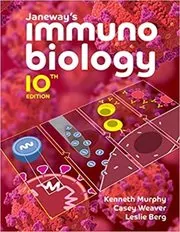
Janeway's Immunobiology
For advanced undergraduates and graduate students who want a substantial foundation for further study. Its detailed mechanisms and experimental perspective provide depth, though the terminology and assumed biology make it a steep starting point for general readers.
What it's about
Kenneth Murphy and his coauthors present immunology for advanced undergraduate, graduate, and medical study. Illustrated explanations develop core ideas and experimental understanding, while the tenth edition includes learning resources designed to support mastery of terminology and concepts.
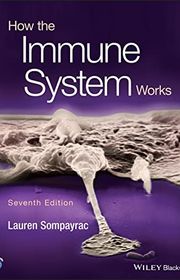
How the Immune System Works
For students who want the system's overall logic before tackling a large textbook. Sompayrac's concise explanations and analogies connect the major parts, though the deliberate reduction in detail makes it a primer rather than a complete reference.
What it's about
Lauren Sompayrac explains how the main components of the immune system work together to protect the body. Short, connected discussions introduce immune responses, memory, and disease-related questions, giving readers a conceptual framework for more detailed study.
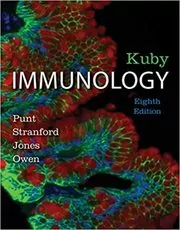
Kuby Immunology
For undergraduates who want to understand how experiments established immunological ideas. The discovery-focused approach supports scientific thinking alongside factual learning, though its substantial coverage requires more time than a concise medical introduction.
What it's about
Jenni Punt and her coauthors introduce immunology through an emphasis on experiments and scientific discovery. The eighth edition develops an overview of immune responses, using learning aids to help undergraduate students connect fundamental concepts with advances in the field.
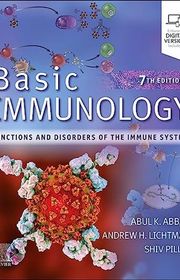
Basic Immunology
For medical students who want core mechanisms connected with disorders in a shorter text. Its focused illustrations and clinical orientation bridge an overview and a full course book, though advanced experimental questions receive less space.
What it's about
Abbas, Lichtman, and Pillai introduce the functions of immune cells and molecules and explain how immune responses can cause or prevent disease. The concise medical textbook links foundational mechanisms with clinical examples, including infection, allergy, autoimmunity, and immunodeficiency.
Cellular and Molecular Immunology
For medical and life-science students who want mechanisms connected with disease. Abbas and his coauthors use illustrations to organize a broad cellular and molecular account, though the detail can overwhelm readers without a basic biological foundation.
What it's about
Abul Abbas and his coauthors explain immune responses at cellular and molecular levels. The tenth edition connects experimental findings with disease, covering innate immunity, lymphocytes, antibodies, tolerance, allergy, transplantation, and immunodeficiency through illustrated explanations and review material.
For general readers who want an engaging account without beginning with a formal textbook. Dettmer uses explanatory analogies to make a complex system approachable, though the broad picture and simplification don't provide the detail required for professional study.
What it's about
Philipp Dettmer introduces the immune system through illustrations and accessible analogies. His tour explains cells, antibodies, inflammation, and the body's responses to threats, including bacteria, viruses, allergies, and cancer, revealing how its interconnected defenses operate.
Also recommended by
2 people Tim Urban recommended this book
Tim Urban
"Super fun read and totally changed my understanding of the human body." - Tim Urban
Tim Urban's recommendation of this book  John Green recommended this book
John Green
"Fascinating." - John Green
John Green's recommendation of this book
Fundamental Immunology
For graduate students, researchers, and clinicians who want detailed explanations of immune mechanisms. Its reference depth supports targeted investigation, though the density and specialist vocabulary require more preparation than the introductory course books.
What it's about
Edited by William Paul, this advanced reference develops the biological foundations of immune function and their connections to disease. The seventh edition emphasizes molecular mechanisms, with detailed discussions and illustrations for researchers, graduate students, and clinicians.
For life and health-science students who want a compact course connecting immune function with disease. Its integrated scope offers a manageable alternative to the large references, though the shorter format limits experimental and specialist detail.
What it's about
Richard Coico introduces immune system physiology and the mechanisms of immune-mediated disease. The eighth edition links cells, organs, antigen recognition, and lymphocyte development with clinical applications, providing an integrated overview for life and health science students.
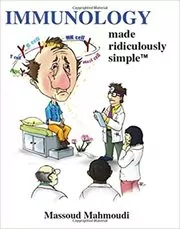
Immunology Made Ridiculously Simple
For health-profession students who need a brief orientation or a review before fuller study. The concise explanations make the main categories easier to revisit, though the simplification leaves gaps that a complete course must fill.
What it's about
Massoud Mahmoudi provides a concise overview of basic and clinical immunology for health profession students. Explanations cover innate and adaptive immunity, antibodies, and immune cells, followed by allergy, autoimmunity, immunodeficiency, vaccination, transplantation, and tumor immunity.
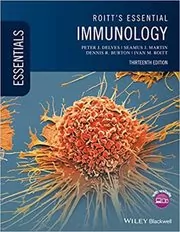
Roitt's Essential Immunology
For students who want foundational immune mechanisms linked with disease in an illustrated course text. The progression from cells and molecules to clinical topics supports structured learning, though it still requires sustained study rather than casual browsing.
What it's about
Peter Delves and his coauthors explain immune cells and molecules before turning to their roles in disease and treatment. The thirteenth edition connects foundational immunology with cancer, immunodeficiency, allergies, transplantation, and vaccination, supported by illustrations and revision summaries.
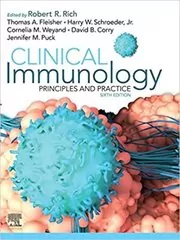
For advanced medical readers who need immune disorders connected with underlying mechanisms. The edited reference links biological foundations with clinical applications, though its scale and assumed knowledge make it unsuitable as a first introduction.
What it's about
Robert Rich and fellow editors bring together the biological foundations and clinical applications of immunology. The sixth edition examines immune disorders, host defenses, inflammation, and therapeutic developments, connecting molecular and cellular mechanisms with clinical scenarios.
Sources
- 1
Immunology Textbooks
bio.umass.edu
- 2
Immunology Books
goodreads.com
- 3
Immunology textbook recommendations
reddit.com
- 4
Immunology book for beginners
reddit.com
- 5
PHYSIO 544: Medical Immunology - Medical Student Course Resources
guides.lib.uci.edu
- 6
Microbiology & Immunology - Health Sciences Textbooks
libraryguides.missouri.edu
- 7
100 Best Immunology Books of All Time
shortform.com
- 8
Microsoft Word - M.Phil. (Immunology) course details.docx
uhs.edu.pk
- 9
Books & Journals - Allergy & Immunology
guides.utmb.edu







Edited by
Software engineer whose passion for tracking book recommendations from podcasts inspired the creation of MRB.
Lead investor at 3one4 Capital whose startup expertise and love for books helped shape MRB and its growth.
Comments
Spotted a missing book, a wrong order or a mistake? Tell us and we'll fix this page.
We're a reading guide, not the author or publisher, so we can't send books or pass on messages.