
23 Best Haruki Murakami Books
The best Haruki Murakami books, ranked by how many expert sources recommend each one, with notes on surreal novels, realistic fiction, stories and memoirs.
Our take
Haruki Murakami writes about loneliness, desire, memory and the possibility that ordinary life conceals another reality. Music, meals and familiar routines sit beside missing people, strange creatures and unanswered questions. His books range from realistic relationship novels to long, surreal narratives, with short stories, memoir and interviews offering different ways into his work. Clear sentences do not always lead to clear explanations, so comfort with ambiguity matters more than familiarity with fantasy.
Norwegian Wood and Colorless Tsukuru Tazaki and His Years of Pilgrimage offer relatively direct emotional stories. For the stranger worlds, A Wild Sheep Chase provides a visible quest, while Kafka on the Shore and The Wind-Up Bird Chronicle create broader networks of mystery. 1Q84 asks for a longer stay. The early Hear the Wind Sing and Pinball, 1973 lead into A Wild Sheep Chase, with Dance, Dance, Dance continuing that narrator's world. For shorter reading, try After the Quake or Men Without Women. Begin with realistic fiction for emotional directness, or a shorter surreal novel if the unexplained is what draws you.
23 books · 8 sources · Last updated
As an Amazon Associate, we earn from qualifying purchases (at no extra cost to you).
Reading Haruki Murakami in order? See all Haruki Murakami books in order
How to choose from this list
Skip to the full rankingIf you want realistic relationship fiction: Norwegian Wood → Colorless Tsukuru Tazaki and His Years of Pilgrimage
If you want an entry to the surreal novels: A Wild Sheep Chase → Kafka on the Shore
If you want a longer immersion: The Wind-Up Bird Chronicle → 1Q84
If you want the connected early books: Hear the Wind Sing → Pinball, 1973 → A Wild Sheep Chase
If you prefer short stories: After the Quake → Men Without Women → The Elephant Vanishes
If you want nonfiction: What I Talk About When I Talk About Running → Novelist as a Vocation → Underground
The 23 books, ranked
Ranked by how many expert sources name each book. Ties go to the book more people recommend.
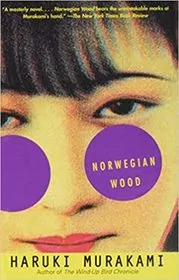
Norwegian Wood
For readers who want Murakami's melancholy and emotional intimacy without an elaborate supernatural world. The realistic student-life setting offers a clear entry point, though the sustained grief, depression and suicide make the experience far from a comforting coming-of-age story.
What it's about
Set in late 1960s Tokyo, this realistic novel follows Toru Watanabe as he navigates a painful love triangle between the fragile, troubled Naoko and the lively, independent Midori. A nostalgic and heartbreaking story of loss and student life.
Also recommended by
4 people PewDiePie recommended this book
PewDiePie
"Another great book I recommend." - PewDiePie
PewDiePie's recommendation of this book  Emma Watson recommended this book
Emma Watson
Emma Watson mentioned this book in a Marie Claire interview.
Emma Watson's recommendation of this book  Harry Styles recommended this book
Harry Styles
Harry Styles sang this author's praises throughout a Rolling Stone interview.
Harry Styles's recommendation of this book  Jack Edwards recommended this book
Jack Edwards
"Will make you want to visit Tokyo." - Jack Edwards
Jack Edwards's recommendation of this book
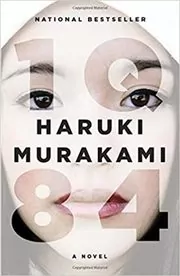
1Q84
For readers who want to spend a long time inside Murakami's intersecting realities. The alternating narratives give obsession and connection room to accumulate, though the length, repetition and slow unfolding make this a substantial commitment rather than an efficient introduction.
What it's about
In 1984 Tokyo, a woman named Aomame begins to notice strange discrepancies in the world, while a math teacher named Tengo agrees to rewrite a disturbing novel. As their twin narratives unfold, they find themselves in a distorted reality with two moons in the sky.
Also recommended by
2 people Adam Savage recommended this book
Adam Savage
"Seriously, one of my favorite books of all time." - Adam Savage
Adam Savage's recommendation of this book  Anna Akana recommended this book
Anna Akana
Anna Akana recommended this book on Twitter.
Anna Akana's recommendation of this book
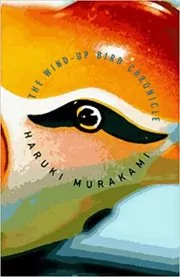
For readers who want a broad novel connecting private loss with history and violence. Its expanding network of encounters gives the mystery unusual depth, though the disturbing wartime material and unresolved connections ask for patience with more than plot.
What it's about
When Toru Okada's cat goes missing, followed by his wife, his search pulls him into a netherworld beneath Tokyo. He encounters a psychic prostitute, a corrupt politician, and a veteran of the Nomonhan Incident in this sprawling metaphysical detective story.
Also recommended by
2 people Brian Koppelman recommended this book
Brian Koppelman
"If you have always wanted to read [this author], I think this [Covid-19] period of time is perfect for it. He could have conceived of this whole thing." - Brian Koppelman
Brian Koppelman's recommendation of this book - Harry Styles recommended this book
Harry Styles
For his 25th birthday, [Harry Styles] spent five hours drinking tea and reading [this book] in a cafe in Tokyo.
Harry Styles's recommendation of this book
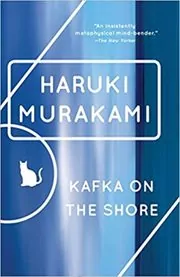
Kafka on the Shore
For readers ready to enter Murakami's dreamlike fiction through parallel journeys and unexplained connections. The mixture of myth, everyday detail and strangeness gives a broad sense of his range, though disturbing sexual material and ambiguity resist a tidy resolution.
What it's about
A fifteen-year-old boy named Kafka runs away from home to escape an Oedipal curse, while an elderly man who can talk to cats sets off on a parallel journey. Their paths converge in a dreamlike plot involving fish falling from the sky and a magical library.
Also recommended by
3 people- Brian Koppelman recommended this book
Brian Koppelman
"If you have always wanted to read [this author], I think this [Covid-19] period of time is perfect for it. He could have conceived of this whole thing." - Brian Koppelman
Brian Koppelman's recommendation of this book  Jenn Im recommended this book
Jenn Im
"Made me feel like I was dreaming." - Jenn Im
Jenn Im's recommendation of this book - PewDiePie recommended this book
PewDiePie
"I still really loved it." - PewDiePie
PewDiePie's recommendation of this book
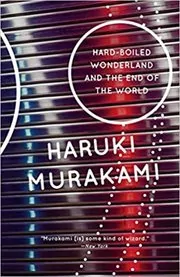
Hard-Boiled Wonderland and the End of the World
For readers who enjoy parallel worlds and speculative ideas about identity. The contrasting narrative settings give the philosophical questions a distinctive structure, though the technical language, fantasy logic and delayed connections require more concentration than the realistic novels.
What it's about
Two parallel narratives unfold: one in a cyberpunk Tokyo where a "Calcutec" scrambles data in his brain, and another in a walled fantasy town where residents have no shadows. The stories slowly converge to reveal the connection between the two worlds.
Also recommended by
1 person Matt Mullenweg recommended this book
Matt Mullenweg
"I really liked [this book]." - Matt Mullenweg
Matt Mullenweg's recommendation of this book
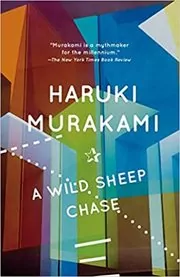
For readers who want an approachable entry to the surreal side of Murakami. The odd detective quest gives the strangeness a visible direction, though the narrator's detachment and elusive meanings can frustrate readers who want every clue explained.
What it's about
An advertising executive is forced by a mysterious right-wing organization to track down a specific sheep with a star on its back. His search leads him from Tokyo to the snowy mountains of Hokkaido, where he confronts the ghosts of his friend, the Rat.
Also recommended by
1 person- Brian Koppelman recommended this book
Brian Koppelman
"If you have always wanted to read [this author], I think this [Covid-19] period of time is perfect for it. He could have conceived of this whole thing." - Brian Koppelman
Brian Koppelman's recommendation of this book
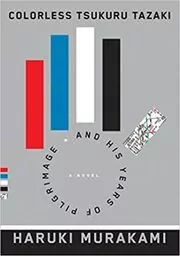
For readers who want a relatively direct story about exclusion, memory and adult identity. The search through old friendships provides a clear emotional thread, though the reflective pace and remaining uncertainties offer less closure than a conventional reunion narrative.
What it's about
Tsukuru Tazaki has spent years haunted by the day his four best friends abruptly cut him out of their lives without explanation. Now an adult, he decides to visit each of them to uncover the truth behind their silence and heal his past.
Also recommended by
1 person- Brian Koppelman recommended this book
Brian Koppelman
"If you have always wanted to read [this author], I think this [Covid-19] period of time is perfect for it. He could have conceived of this whole thing." - Brian Koppelman
Brian Koppelman's recommendation of this book
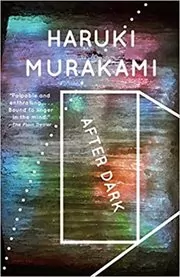
After Dark
For readers who want a short immersion in Tokyo's nocturnal atmosphere. The single-night frame keeps the cast and setting concentrated, though the unresolved encounters and unusual narrative viewpoint prioritize mood over a fully explained sequence of events.
What it's about
Set over the course of a single night in Tokyo, this novel follows Mari, a student reading in a Denny's, and her sister Eri, who is asleep and cannot wake up. Their stories intersect with a jazz trombonist and the dark underbelly of the city.
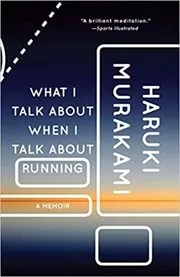
For readers who want a personal account of discipline, endurance and the working life behind the novels. The link between running and writing gives the memoir a concrete focus, though it is reflection rather than a training manual.
What it's about
A memoir reflecting on Murakami's life as a writer and an athlete. He discusses how training for marathons shapes his discipline and creative process, offering a rare, personal glimpse into the mind of the typically private author.
Also recommended by
2 people- Brian Koppelman recommended this book
Brian Koppelman
"The single best distillation of the kind of focus, commitment, and sense of mission it takes to become a great artist." - Brian Koppelman
Brian Koppelman's recommendation of this book - Jack Edwards recommended this book
Jack Edwards
"Will really resonate with anyone who loves running." - Jack Edwards
Jack Edwards's recommendation of this book

For readers who want intimate stories about loneliness, desire and the aftermath of relationships. The concentrated focus gives the collection cohesion, though the male-centered viewpoints and unresolved emotional situations offer a narrower range than the broader story selections.
What it's about
A collection of short stories examining the lives of men who have lost women to other men, death, or indifference. Featuring the story "Drive My Car," these tales explore loneliness, isolation, and the quiet mysteries of human connection.
Also recommended by
1 person Barack Obama recommended this book
Barack Obama
Barack Obama's favorite books of 2019 list.
Barack Obama's recommendation of this book
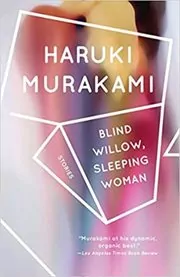
Blind Willow, Sleeping Woman
For readers who want a broad selection of short fiction across different periods of Murakami's work. The range makes recurring interests easy to notice, though the variety in style and length gives the collection less unity than After the Quake.
What it's about
A generous collection of twenty-four short stories covering a wide range of Murakami's career. The tales feature everything from a man traveling to Hawaii to a mirror that shows a reflection that refuses to look back.
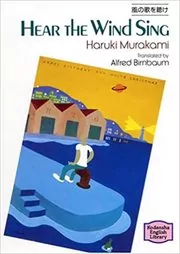
For readers curious about the beginnings of Murakami's voice and his early recurring narrator. The short, fragmented scenes make the novella easy to sample, though its slight plot and sketchlike relationships offer less depth than the later novels.
What it's about
Murakami's debut novella, set during a hot summer in 1970. An unnamed biology student returns to his hometown, drinks beer at J’s Bar with his friend the Rat, and muses on writing and relationships in a series of fragmented, breezy vignettes.
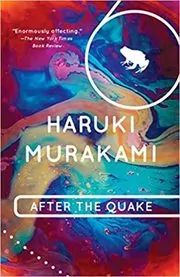
For readers who want a compact, thematically connected entry to the short stories. The Kobe earthquake gives the six pieces a shared emotional background, though their indirect and sometimes surreal responses to disaster differ from documentary accounts.
What it's about
Six short stories set in the months following the 1995 Kobe earthquake. While the characters are not directly caught in the disaster, the tremors reverberate through their lives, triggering personal upheavals and strange, quiet realizations.
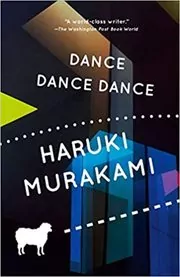
For readers who want to continue the narrator's world after A Wild Sheep Chase. The returning setting connects mystery with loneliness and consumer culture, though reading the earlier novel first gives the losses and recurring figures more weight.
What it's about
The narrator of *A Wild Sheep Chase* returns to the Dolphin Hotel, only to find it transformed into a modern high-rise. He teams up with a clairvoyant teenage girl and an old friend to solve a murder mystery that spans the physical and spiritual worlds.
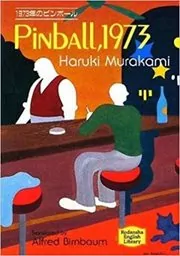
For readers following the early narrator after Hear the Wind Sing. The search for a remembered object gives nostalgia a peculiar shape, though the drifting structure and modest scale make it a quieter continuation rather than a plot-driven adventure.
What it's about
The sequel to *Hear the Wind Sing* finds the narrator living in Tokyo with nameless twins while obsessively searching for a specific pinball machine he once loved. Meanwhile, the Rat struggles with his own drift and isolation back in their hometown.
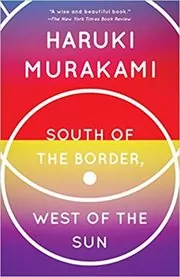
For readers drawn to regret, attraction and the pressure of an imagined alternative life. Its intimate scale is less fantastical than the larger novels, though the narrator's self-absorption and treatment of the women around him invite critical distance.
What it's about
Hajime, a successful jazz bar owner with a wife and children, is shaken when his childhood sweetheart reappears during a rainy night. Her arrival forces him to question his choices and the potentially destructive power of his past obsessions.
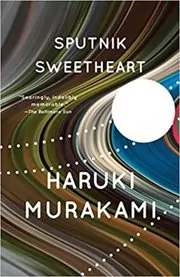
Sputnik Sweetheart
For readers who want a shorter novel that moves from unrequited desire into an unsettling mystery. The intimate scale makes an accessible bridge toward the surreal books, though the ambiguity leaves more emotional questions than definite answers.
What it's about
K is in love with Sumire, an aspiring writer who falls for an older woman named Miu. When Sumire vanishes while on vacation in Greece, K investigates her disappearance, uncovering a story about unrequited desire and the possibility of crossing into another world.
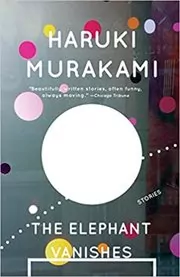
For readers who want to sample Murakami's range without committing to a long novel. The collection shifts between ordinary situations and surreal disruptions, though the changing tones and open endings create an uneven, exploratory experience rather than a continuous story.
What it's about
A collection of seventeen short stories that blend the ordinary with the surreal. From a midnight hunger that leads to a bakery robbery to an elephant that disappears from its enclosure, these tales showcase Murakami's mastery of the bizarre.
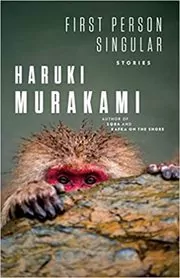
For readers who enjoy voices hovering between recollection and invention. The first-person stories connect music, youth and solitary experience with sudden strangeness, though their deliberately blurred relationship to autobiography makes them unsuitable as a straightforward account of Murakami's life.
What it's about
A collection of eight stories told in the first person, blurring the line between memoir and fiction. The narrator reflects on youth, jazz, baseball, and strange encounters, including a talking monkey in a hot spring.
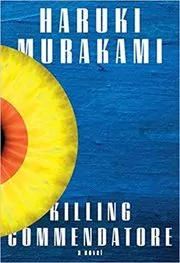
For readers who want a long, art-centered novel of isolation and uncanny discovery. The painter's retreat gives familiar Murakami themes a distinctive setting, though the extended pace and recurring motifs may appeal more to established readers than newcomers.
What it's about
A portrait painter discovers a hidden painting in an attic that unleashes a chain of mysterious events. To set things right, he must embark on a journey involving a ringing bell, a physical manifestation of an idea, and a descent into a metaphorical underworld.
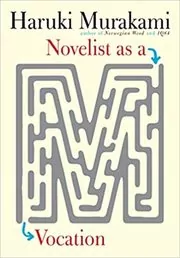
Novelist as a Vocation
For readers interested in Murakami's working habits and thoughts about becoming a writer. The personal reflections connect memory, patience and routine with creativity, though this is an individual account of craft rather than a step-by-step writing course.
What it's about
In this set of essays, Murakami breaks his silence on the profession of writing. He discusses his path to becoming a novelist, his views on literary prizes, and the specific daily habits that allow him to sustain his creativity over decades.
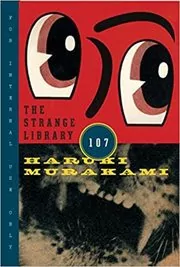
The Strange Library
For readers who want a brief, illustrated encounter with Murakami's unsettling imagination. The book's visual design adds to the experience of the strange library, though the compressed story offers less emotional development than a full-length novel.
What it's about
A dark, illustrated fable about a lonely boy who visits his local library, only to be imprisoned by an old man who wants to eat his brain. He plans his escape with the help of a sheep man and a mysterious girl.
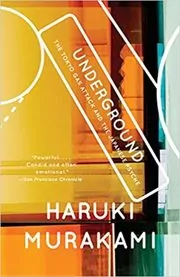
For readers who want Murakami listening to real people rather than inventing a surreal world. The interviews make ordinary lives central to a public catastrophe, though the accounts of the Tokyo gas attack are distressing and resist narrative escape.
What it's about
A non-fiction work investigating the 1995 Tokyo sarin gas attack. Murakami interviews both the victims of the attack and members of the Aum Shinrikyo cult, attempting to understand the psyche behind the violence and its impact on Japanese society.
Sources
- 1
The 20 Best Haruki Murakami Books, Ranked
reedsy.com
- 2
The 10 Best Haruki Murakami Books
publishersweekly.com
- 3
Where to start reading Haruki Murakami’s books
penguin.co.uk
- 4
The Best Murakami Book, According to 4 Librarians
parade.com
- 5
Where to Start with Haruki Murakami: A Tokyo Bookseller's Reading Order
chapters.jp
- 6
Books by Haruki Murakami
goodreads.com
- 7
What book should I start with as a newbie to Murakami's world
reddit.com
- 8
Where to start with: Haruki Murakami
theguardian.com



Edited by
Software engineer whose passion for tracking book recommendations from podcasts inspired the creation of MRB.
Lead investor at 3one4 Capital whose startup expertise and love for books helped shape MRB and its growth.
Comments
Spotted a missing book, a wrong order or a mistake? Tell us and we'll fix this page.
We're a reading guide, not the author or publisher, so we can't send books or pass on messages.