
19 Best Cryptography Books
The best cryptography books, ranked by how many expert sources recommend each one, with notes for choosing histories, practical guides, textbooks, and references.
Our take
Cryptography studies how to protect information and verify messages even when someone is trying to interfere. Its books can approach the subject through history, software engineering, mathematical definitions, or particular families of techniques. A puzzle book about classical ciphers serves a different purpose from a proof-based textbook, so the best starting point depends on your background and goals.
The Code Book introduces the ideas through history, with The Codebreakers offering a much longer historical account. Real-World Cryptography connects the building blocks with applications, while Serious Cryptography and Cryptography Engineering give more attention to technical choices and system failures. For academic study, Understanding Cryptography provides an applied course and Introduction to Modern Cryptography emphasizes definitions and proofs. The handbooks and specialist references suit readers with narrower questions and stronger mathematical preparation. Older works explain important ideas, but their practical recommendations need comparison with current guidance. Start with history for motivation or a general technical introduction for systematic study.
19 books · 8 sources · Last updated
As an Amazon Associate, we earn from qualifying purchases (at no extra cost to you).
How to choose from this list
Skip to the full rankingIf you want the historical story: The Code Book → The Codebreakers
If you want practical technical understanding: Real-World Cryptography → Serious Cryptography → Cryptography Engineering
If you want an applied course: Understanding Cryptography
If you want mathematical foundations: Cryptography Made Simple → Introduction to Modern Cryptography
If you want a detailed technical reference: Handbook of Applied Cryptography
If you're introducing a young puzzle solver: Break the Code
The 19 books, ranked
Ranked by how many expert sources name each book. Ties go to the book more people recommend.

For engineering and computer science students who want a structured introduction with practical context. The explanations connect mathematical foundations with major cryptographic systems, though readers must work through exercises and check the edition’s coverage of newer topics.
What it's about
Christof Paar and Jan Pelzl introduce applied cryptography for engineering and computer science students. The textbook explains symmetric and public-key systems, signatures, hash functions, authentication codes, and key establishment, connecting mathematical foundations with practical techniques.

For programmers who want to understand modern primitives and the ways they fail. The connection between concepts and practical pitfalls makes it a useful bridge beyond a general introduction, though some mathematics and technical vocabulary still require careful study.
What it's about
Jean-Philippe Aumasson explains modern encryption through its mathematical foundations and practical operation. Topics include authenticated encryption, randomness, hash functions, block ciphers, RSA, and elliptic curves, with attention to security concepts and the ways systems can fail.

For readers studying the development of practical cryptographic protocols and algorithms. The breadth and implementation material make it a substantial historical reference, though many algorithms and recommendations are outdated and unsuitable as instructions for securing a new system.
What it's about
Bruce Schneier explains cryptographic protocols and algorithms, including methods for authentication, key exchange, and digital signatures. C source code and technical discussions connect the mathematical tools with implementation, providing developers a broad reference to the capabilities and workings of cryptography.

Introduction to Modern Cryptography
For students who want precise security definitions and reasoning about why constructions work. The proof-based approach gives stronger theoretical foundations than a practical overview, though it assumes mathematical maturity and is demanding without exercises and sustained study.
What it's about
Jonathan Katz and Yehuda Lindell introduce cryptography from a computer science perspective, combining rigorous foundations with standardized systems used in practice. This third edition develops theoretical understanding alongside examples and exercises for students and practitioners.

For developers who need to reason about cryptography as part of a whole system. The attention to interfaces, key management, and engineering choices complements algorithm explanations, though its examples and recommendations need comparing with newer standards and deployment guidance.
What it's about
Niels Ferguson, Bruce Schneier, and Tadayoshi Kohno explain how to design cryptography into practical systems. Examples and exercises cover message security, authentication, key negotiation, and key management, emphasizing the engineering decisions behind secure products.

Handbook of Applied Cryptography
For mathematically prepared readers who want a detailed catalog of techniques and algorithms. The organized reference supports comparing constructions, though its historical coverage needs complementing with current security assessments rather than treating every included method as recommended practice.
What it's about
Alfred J. Menezes, Paul C. van Oorschot, and Scott A. Vanstone survey cryptographic methods and their implementation. Chapters cover ciphers, public-key encryption, signatures, authentication, key management, and mathematical foundations, forming a detailed technical reference.
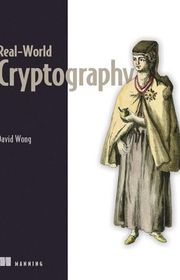
Real-World Cryptography
For developers who want to connect cryptographic building blocks with the protocols and systems that use them. The diagrams and application focus make the material approachable, though the breadth provides less formal proof than an academic foundations text.
What it's about
David Wong explains the cryptographic tools used in everyday software and communication systems. The book connects encryption, authentication, key exchange, and signatures with practical protocols and applications, using diagrams and examples to examine how the pieces fit together.

For readers who want the people and historical problems behind encryption before tackling a textbook. Singh makes technical ideas approachable through narrative, though the historical emphasis offers less depth on modern protocols and formal security definitions.
What it's about
Simon Singh tells the history of encryption and codebreaking through the people who developed and defeated secret messages. Mathematical explanations accompany stories of political intrigue, wartime intelligence, and the development of cryptography for electronic communication.

For students who want cryptographic ideas connected with network security applications. The broader systems context helps explain where techniques are used, though the survey gives individual mathematical arguments less depth and the packet’s edition needs supplementing for newer protocols.
What it's about
William Stallings surveys cryptographic principles and their practical use in network security. This seventh edition combines explanations of security technologies with applications and exercises, including work with the Sage mathematics system to explore cryptographic algorithms.

The Codebreakers
The Comprehensive History of Secret Communication from Ancient Times to the Internet
For readers who want an extensive history of secret communication rather than a brief introduction. The depth of historical detail gives codebreaking a wide political and military setting, though the length and publication history make it a substantial commitment.
What it's about
David Kahn traces the history of secret communication from ancient codes to modern cryptography. The account examines how codes are created and broken, connecting technical developments with their roles in warfare, diplomacy, commerce and computer communication.
Also recommended by
1 person Zooko Wilcox recommended this book
Zooko Wilcox
"Good book." - Zooko Wilcox
Zooko Wilcox's recommendation of this book

For readers who want a concise orientation before choosing a technical textbook. The discussion connects encryption with its social uses and risks, though the short format provides little implementation practice or mathematical depth.
What it's about
Fred Piper and Sean Murphy explain cryptography's role in protecting information and its wider social and political significance. This concise introduction discusses encryption algorithms, digital signatures, electronic commerce, and the risks associated with cryptographic systems.

For readers who want mathematical ideas developed through the history of secret writing. The progression connects classical ciphers with digital encryption, though it asks for more active numerical reasoning than a purely narrative history.
What it's about
Joshua Holden traces the mathematics behind secret messages from substitution and transposition ciphers to computer-based encryption and public-key systems. Historical developments and explanations of underlying techniques connect elementary codes with modern cryptography and its possible future.

For younger readers and puzzle enthusiasts who want to make and solve secret messages. The cartoons and worked exercises give classical codes an approachable form, though this recreational introduction does not explain the security foundations of modern encryption.
What it's about
Bud Johnson introduces young readers to six kinds of secret codes through instructions, cartoons, and fifty-six coded messages. Examples and solutions guide beginners through techniques such as letter grouping, shifts, keywords, and rearranged paths.

Cryptography For Dummies
For readers comparing accessible explanations of cryptographic terms and applications. The broad, conversational treatment reduces the initial vocabulary barrier, though the technologies and recommendations reflect an earlier computing environment and need substantial updating for practical decisions.
What it's about
Chey Cobb introduces encryption terminology and techniques, then explains how cryptography appears in authentication, wireless communication, electronic commerce, and smart cards. Accessible discussions examine how these technologies work and the tradeoffs involved in their implementation.

Post-Quantum Cryptography
For readers interested in the research foundations of several quantum-resistant approaches. The contributed chapters compare mathematical families in depth, though this early collection predates later standards and should be read as background rather than a current migration guide.
What it's about
Edited by Daniel J. Bernstein, Johannes Buchmann, and Erik Dahmen, this collection explores cryptographic approaches intended to resist quantum computers. Chapters examine quantum computing, hash-based signatures, and code-based, lattice-based, and multivariate systems, including mathematical and implementation issues.

For readers already studying Boolean functions who want a focused research reference. The treatment connects bent functions with cryptography and combinatorics in detail, though its narrow scope and proofs make it unsuitable as an introduction to the wider field.
What it's about
Natalia Tokareva surveys Boolean bent functions, their properties, constructions, generalizations, and applications to cryptography. The mathematical treatment also considers connections with combinatorics and coding theory, alongside classification problems and proofs of important results.

Cryptography Made Simple
For students who want mathematical explanations without every proof expanded in full. The balance of concepts and proof sketches supports a structured first course, though the title should not be taken to mean the material needs no mathematical preparation.
What it's about
Nigel Smart introduces cryptographic concepts with a balance of mathematical foundations, practical techniques, and explanations of security. The textbook covers encryption and advanced protocols while using sketches of proofs to develop understanding without exhaustive formal detail.

Encyclopedia of Cryptography and Security
For researchers and practitioners who need to look up terminology across cryptography and security. The alphabetical entries offer breadth beyond a single course text, though the reference structure and publication cutoff make it less useful as a current tutorial.
What it's about
Edited by Henk C. A. van Tilborg and Sushil Jajodia, this second edition collects alphabetical reference entries on cryptography and information security. Topics include encryption, authentication, protocols, key management, cryptanalysis, and implementation challenges across computer systems.

For advanced readers working specifically with the mathematics of curve-based cryptography. The combined algebraic and algorithmic treatment supports deep reference work, though the substantial prerequisites make it a poor choice before a general public-key cryptography course.
What it's about
Henri Cohen, Gerhard Frey, and their collaborators examine the mathematics and algorithms underlying curve-based cryptography. The handbook develops algebraic foundations, curve arithmetic, point counting, discrete logarithms, and implementation techniques, including applications and defenses against practical attacks.
Sources
- 1
20 Best Cryptography Books (2022 Review) - Best Books Hub
bestbookshub.com
- 2
Materials | Cryptography Academy
cryptographyacademy.com
- 3
Links and Books – CrypTool
cryptool.org
- 4
8 Best Data Encryption and Cryptography Books for 2026 | ComputingForGeeks
computingforgeeks.com
- 5
100 Best Cryptography Books of All Time (Updated for 2026)
shortform.com
- 6
Cryptography Books
goodreads.com
- 7
Best cryptography textbooks? : r/cryptography
reddit.com
- 8
Books or articles on cryptography : r/cryptography
reddit.com






Edited by
Software engineer whose passion for tracking book recommendations from podcasts inspired the creation of MRB.
Lead investor at 3one4 Capital whose startup expertise and love for books helped shape MRB and its growth.
Comments
Spotted a missing book, a wrong order or a mistake? Tell us and we'll fix this page.
We're a reading guide, not the author or publisher, so we can't send books or pass on messages.