
15 Best Graham Hancock Books
The best Graham Hancock books, ranked by how many expert sources recommend each one, with notes on his lost-civilization arguments, consciousness writing, and fiction.
Our take
Graham Hancock writes about lost civilizations, sacred sites, and the possibility that human history contains a forgotten chapter. His books often combine journeys to archaeological locations with interpretations of myths, astronomy, and ancient monuments. They suit readers interested in exploring his arguments, provided the distinction between a compelling travel narrative and a demonstrated historical conclusion stays clear. His larger lost-civilization claims are speculative, rather than a settled account of the past.
The books differ in focus. Fingerprints of the Gods presents the broad case, Magicians of the Gods develops the catastrophe argument, and America Before concentrates on the Americas. The Sign and the Seal follows a search for the Ark, while Underworld moves the investigation beneath the sea. Supernatural and the edited collection The Divine Spark turn toward consciousness. His fiction uses related interests in openly imagined worlds, including Entangled and the War God series. Start with Fingerprints of the Gods to understand his main argument, or choose the narrower subject that interests you most.
15 books · 8 sources · Last updated
As an Amazon Associate, we earn from qualifying purchases (at no extra cost to you).
Reading Graham Hancock in order? See all Graham Hancock books in order
How to choose from this list
Skip to the full rankingIf you want the main lost-civilization argument: Fingerprints of the Gods → Magicians of the Gods → America Before
If you want a focused travel investigation: The Sign and the Seal
If you're interested in submerged landscapes: Underworld
If you want consciousness writing: Supernatural → The Divine Spark
If you want standalone fantasy: Entangled
If you want to begin War God: Nights of the Witch → Return of the Plumed Serpent → Night of Sorrows
The 15 books, ranked
Ranked by how many expert sources name each book. Ties go to the book more people recommend.
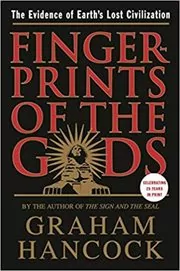
For readers who want the broad introduction to Hancock's lost-civilization argument. Its global itinerary makes the central idea easy to follow, but its interpretation of monuments and myths is speculative rather than established archaeological history.
What it's about
Hancock's breakout bestseller proposes that a sophisticated civilization flourished during the Ice Age before being destroyed by a natural disaster. He takes readers on a global tour of ancient sites, from the Andes to Egypt, pointing to anomalies that suggest our history is older than we think.
Also recommended by
2 people Joe Rogan recommended this book
Joe Rogan
"Best book on the subject [of ancient civilizations]." - Joe Rogan
Joe Rogan's recommendation of this book  Randall Carlson recommended this book
Randall Carlson
"Devotes several chapters to the story of 20th century heretic J Harlen Bretz." - Randall Carlson
Randall Carlson's recommendation of this book
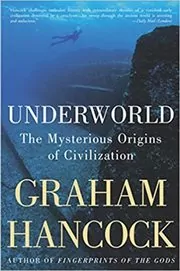
For readers drawn to diving journeys and the possibility of submerged settlements. The focus on drowned coastlines gives the investigation a distinct physical setting, but uncertain underwater formations don't prove the advanced civilization Hancock seeks.
What it's about
Using marine archaeology, Hancock searches for the ruins of lost civilizations submerged by rising sea levels at the end of the last Ice Age. He dives off the coasts of India, Japan, and the Mediterranean to find evidence of these flooded kingdoms.
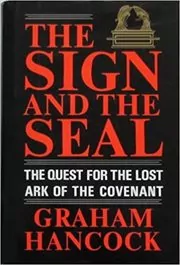
For readers who prefer a travel investigation with one concrete mystery to a global theory. The Ethiopian journey gives the search narrative momentum, though the proposed location of the Ark remains a claim rather than a demonstrated discovery.
What it's about
Part history, part travel adventure, this book chronicles Hancock's real-life quest to track down the Ark of the Covenant. His journey leads him through ancient texts and dangerous territories, ultimately suggesting the holy relic rests in a remote chapel in Ethiopia.
Also recommended by
1 person Dan Carlin recommended this book
Dan Carlin
"97% of it is bunk. But what's interesting is the part that might not be." - Dan Carlin
Dan Carlin's recommendation of this book
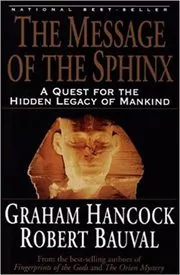
The Message of the Sphinx
A Quest for the Hidden Legacy of Mankind
For readers especially interested in Giza and astronomical interpretations of its monuments. The narrower focus offers more detail than the global surveys, though the proposed ancient dating and stellar connections remain contested interpretations.
What it's about
Co-authored with Robert Bauval, this book argues that the Great Sphinx and the Pyramids of Giza are far older than Egyptologists claim. The authors propose that the monuments form an astronomical map of the stars as they appeared in 10,500 BC.
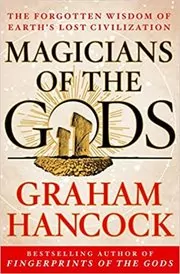
Magicians of the Gods
Sequel to the International Bestseller Fingerprints of the Gods
For readers who already know Fingerprints of the Gods and want Hancock's later catastrophic explanation. It updates his argument with different sites and research, but the proposed link to a lost advanced civilization remains disputed.
What it's about
In this sequel to *Fingerprints of the Gods*, Hancock presents new evidence of a global cataclysm at the end of the last Ice Age. He argues that survivors of this disaster settled in key locations like Göbekli Tepe, passing on the seeds of civilization to hunter-gatherers.
Also recommended by
1 person Aubrey Marcus recommended this book
Aubrey Marcus
"An important book not only for you and I, but humanity as a whole." - Aubrey Marcus
Aubrey Marcus's recommendation of this book
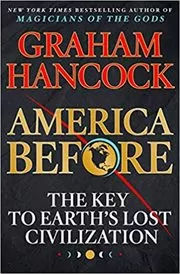
For readers interested in how Hancock applies his broader theory to the Americas. Its regional focus is easier to compare with specific archaeological debates, though genuine discoveries about early settlement don't establish all of his larger conclusions.
What it's about
Hancock turns his attention to the Americas, arguing that the New World was home to an advanced lost civilization. He combines genetic evidence and archaeology to suggest ancient connections between the Americas and the rest of the world.
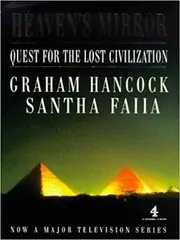
For readers who want photographs and sacred architecture at the center of the journey. The visual emphasis distinguishes it from the denser arguments, but perceived astronomical patterns do not by themselves demonstrate a shared lost civilization.
What it's about
A beautifully illustrated exploration of sacred sites around the world, including Angkor Wat and Easter Island. Hancock argues that these ancient monuments were positioned to mirror specific constellations, pointing to a shared spiritual legacy.
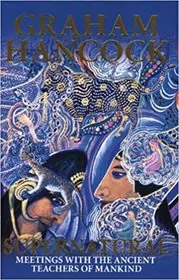
For readers curious about Hancock's turn toward altered consciousness and the origins of art. Personal experiences give it a different texture from the monument books, though subjective encounters cannot establish the external realities he proposes.
What it's about
Hancock explores the origins of religion and art by examining the role of altered states of consciousness. He suggests that cave art and fairy lore may document genuine encounters with other realities, accessed through shamanic practices and hallucinogens.
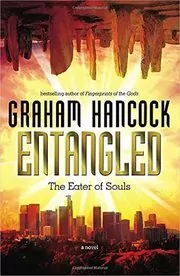
For readers who want Hancock's interests in consciousness turned into an explicit fantasy adventure. The parallel lives give the ideas a narrative form, though the violence and supernatural framework make it very different from his travel investigations.
What it's about
A time-slip thriller that weaves together the lives of a modern Los Angeles teenager and a young woman in Stone Age Spain. They must unite across time to fight a demon determined to destroy humanity in this novel of supernatural suspense.
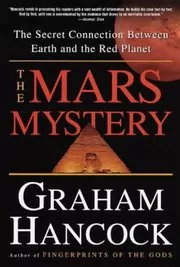
For readers curious about the most speculative edge of Hancock's work. It extends his pattern-seeking from Earth to Mars, but the claims about artificial structures and ancient connections are not a reliable guide to planetary science.
What it's about
Hancock investigates the anomalies found in NASA photographs of the Cydonia region on Mars. He questions whether the 'Face on Mars' and nearby pyramid-like structures could be evidence of a past extraterrestrial civilization that met a catastrophic end.
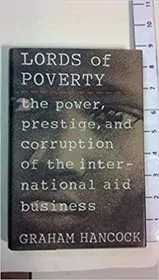
Lords of Poverty
The Power, Prestige, and Corruption of the International Aid Business
For readers who want Hancock's earlier journalism about institutions rather than ancient civilizations. The critique focuses on aid bureaucracy and accountability, though its late twentieth-century examples cannot describe the current state of the entire aid sector.
What it's about
A controversial and acclaimed critique of the foreign aid industry. Hancock argues that despite billions of dollars in spending, international aid organizations are often corrupt, inefficient, and damaging to the very people they claim to help.
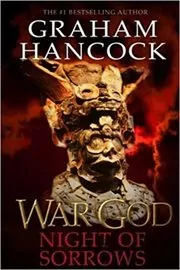
For readers ready to follow the War God story into its later confrontation. Rival Spanish ambitions add another layer to the conquest, though this is a continuation that depends on the earlier volumes rather than a standalone historical novel.
What it's about
The final chapter of the War God trilogy depicts the desperate Spanish retreat from Tenochtitlan. Tozi and her allies face the ultimate test as the Aztec capital descends into blood and chaos during the Noche Triste.
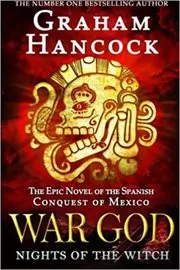
For readers who want to begin Hancock's War God historical fantasy. The conquest setting gives his supernatural interests a conflict involving several viewpoints, though its depictions of sacrifice and cruelty are graphic and the story isn't documentary history.
What it's about
The first book in the War God series, set during the Spanish conquest of Mexico. As Cortés arrives, a young native healer named Tozi and a Spanish page boy are caught in a brutal conflict between empires and gods.
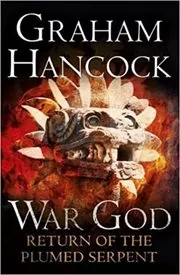
For readers continuing War God who want alliances and psychological maneuvering to complicate the fighting. It develops the conquest through competing beliefs, but the established characters and supernatural rules make the first volume useful preparation.
What it's about
The second volume of the War God saga follows Cortés as he marches on Tenochtitlan. Amidst the slaughter, Tozi must master her powers to survive the wrath of Moctezuma and the darker spiritual forces fueling the war.
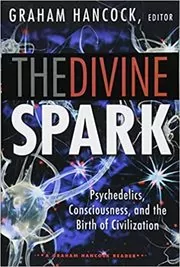
For readers who want several perspectives on consciousness rather than one sustained Hancock argument. The anthology broadens the range of voices, but the essays vary in approach and should not be treated as a single scientific consensus.
What it's about
An anthology edited by Hancock that gathers essays on psychedelics and consciousness. Contributors explore how altered states might help us understand the mind, creativity, and the potential for contact with other dimensions.
Sources
- 1
Books by Graham Hancock - Graham Hancock Official Website
grahamhancock.com
- 2
Books by Graham Hancock (Author of Fingerprints of the Gods)
goodreads.com
- 3
Graham Hancock
fantasticfiction.com
- 4
Books by Graham Hancock and Complete Book Reviews
publishersweekly.com
- 5
Graham Hancock — books & reading list - People & Media
peopleandmedia.com
- 6
Graham Hancock | Penguin Random House
penguinrandomhouse.com
- 7
Can anyone rank graham's books in order of entertainment value/scholastic merit?
reddit.com
- 8
I want to buy a Hancock book but confused which one
reddit.com




Edited by
Software engineer whose passion for tracking book recommendations from podcasts inspired the creation of MRB.
Lead investor at 3one4 Capital whose startup expertise and love for books helped shape MRB and its growth.
Comments
Spotted a missing book, a wrong order or a mistake? Tell us and we'll fix this page.
We're a reading guide, not the author or publisher, so we can't send books or pass on messages.