
21 Best Go Books
The best Go programming books, ranked by how many expert sources recommend each one, with notes on beginner lessons, concurrency, service design, and editions.
Our take
Go is used for network services, command-line tools, and concurrent programs, but learning its syntax is only part of learning to use it well. These books help newcomers write their first programs, experienced developers understand Go’s conventions, and working programmers move toward safer concurrency and more reliable services.
Head First Go and Get Programming with Go favor guided practice. The Go Programming Language provides a more demanding foundation, while Learning Go focuses on writing idiomatically. Many of the original editions here predate modules or generics, so use current documentation alongside their enduring explanations. Once you can build small programs, 100 Go Mistakes and How to Avoid Them helps expose subtle errors, and Concurrency in Go gives sustained attention to coordination. Start with a guided beginner book if programming is new, or choose Bodner if you already write code in another language.
21 books · 12 sources · Last updated
As an Amazon Associate, we earn from qualifying purchases (at no extra cost to you).
How to choose from this list
Skip to the full rankingIf you're new to programming: Head First Go → Get Programming with Go
If you already know another language: Learning Go → The Go Programming Language
If you want a brief introduction: Introducing Go
If you want fewer subtle bugs: 100 Go Mistakes and How to Avoid Them
If you need to understand concurrency: Concurrency in Go
If you're building networked services: Cloud Native Go
The 21 books, ranked
Ranked by how many expert sources name each book. Ties go to the book more people recommend.

For programmers who want to understand Go’s idioms rather than translate another language’s habits. Its design explanations support that shift, though this linked first edition predates generics and the expanded coverage in later editions.
What it's about
Jon Bodner explains how to write idiomatic Go rather than importing patterns from other programming languages. The guide connects language design decisions with project structure, development tools, and the coding practices used by experienced Go developers.

The Go Programming Language
For experienced programmers who value careful explanations and substantial examples. Its precision makes it a lasting guide to Go’s foundations, though readers need current documentation for modules, generics, and other developments since publication.
What it's about
Alan Donovan and Brian Kernighan introduce Go through practical programs for text processing, graphics, and web communication. The guide develops syntax, control flow, data types, packages, and standard-library use while explaining how to write idiomatic programs.
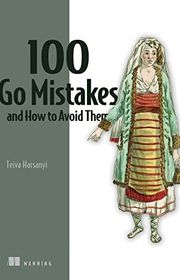
100 Go Mistakes and How to Avoid Them
For developers who can write Go but want to recognize subtle mistakes before they spread. Its problem-and-correction format makes weaknesses concrete, though it works best after an introductory course rather than as your first book.
What it's about
Teiva Harsanyi examines common mistakes in Go programs across language fundamentals, project organization, concurrency, testing, and performance. Examples explain why seemingly reasonable code fails and how alternative patterns can produce clearer, more reliable software.

For Go developers who understand the basics but struggle to design concurrent programs safely. Its focused treatment of coordination and reusable patterns goes beyond introductory texts, though it assumes programming fluency and predates newer language features.
What it's about
Katherine Cox-Buday explains Go's concurrency model and the problems that arise when building concurrent software. The guide connects synchronization primitives and goroutines with reusable patterns, debugging techniques, and practices for composing maintainable systems.

Go in Action
For developers coming from another language who want Go’s design connected to practical code. Its emphasis on types and concurrency supports that transition, though older tooling and examples need checking against current Go practices.
What it's about
William Kennedy, Brian Ketelsen, and Erik St. Martin introduce Go for developers experienced in another language. Practical applications accompany explanations of syntax, types, data structures, concurrency, channels, the standard library, testing, and benchmarking.

Head First Go
For beginners who learn better through visual explanations and active exercises. Its playful format makes unfamiliar concepts approachable, though experienced developers may prefer a more compact reference and will need newer material for recent language changes.
What it's about
Jay McGavren introduces Go through hands-on examples, exercises, and a visually rich teaching format. The guide explains how to write practical programs while developing familiarity with the language's conventions and techniques for programmers beginning to use Go.

Mastering Go
Harness the Power of Go to Build Professional Utilities and Concurrent Servers and Services
For programmers who already know Go and want broad exposure to applied topics. Tsoukalos's range makes it useful for following particular interests, though the many subjects offer less sustained depth than a book dedicated to concurrency or networking.
What it's about
Mihalis Tsoukalos explores Go programming for production services and command-line utilities, assuming basic language knowledge. Practical examples address data structures, interfaces, reflection, concurrency, JSON, RESTful servers, and clients, with exercises connecting concepts to working software.

For security practitioners who want Go learned through specialized tool-building projects. The applied focus gives networking concepts a clear purpose, though the security domain and assumed technical background make it a narrow choice for general application developers.
What it's about
Tom Steele, Chris Patten, and Dan Kottmann use Go to develop tools for security testing and penetration testing. An introduction to the language leads into network protocols, packet analysis, exploit development, and automating practical security tasks.
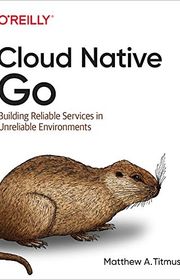
Cloud Native Go: Building Reliable Services in Unreliable Environments
For Go developers moving from small programs to networked services. Its emphasis on resilience and operation fills a gap in the beginner books, though readers need existing Go knowledge and should check older infrastructure examples.
What it's about
Matthew A. Titmus explores building cloud-native services with Go, connecting distributed-systems patterns with practical implementations. Topics include resilience, communication, observability, and deployment, with attention to how services behave when networks and other dependencies fail.
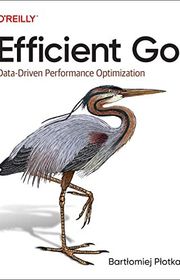
Efficient Go: Data-Driven Performance Optimization
For experienced Go developers who want performance decisions guided by measurement. Płotka connects investigation with practical optimization tradeoffs, though the detailed focus on efficiency requires more background and experimentation than a general language introduction.
What it's about
Bartłomiej Płotka explains how to investigate and improve the efficiency of Go software using measurements and evidence. Discussions of profiling, benchmarking, resource use, and optimization connect technical changes with the need to balance performance, complexity, and maintainability.

Get Programming with Go
For newcomers who prefer short lessons and small projects to a dense reference. Its gradual progression makes practice approachable, though the older material needs supplementing for modules, generics, and changes in the wider ecosystem.
What it's about
Nathan Youngman and Roger Peppe introduce Go through thirty-two lessons, exercises, and capstone projects. The book develops syntax, types, functions, collections, interfaces, pointers, and concurrency, using examples that can run in the Go Playground.

For programmers who want a brief first pass through Go without a large textbook. Its compact lessons make initial exploration manageable, though the older coverage lacks the depth and newer features of a current comprehensive guide.
What it's about
Caleb Doxsey introduces Go through short chapters, step-by-step instructions, and exercises for readers familiar with programming basics. The guide covers types, control structures, functions, interfaces, packages, testing, and concurrent programs using goroutines and channels.

For developers who know the basics and want help with recognizable programming problems. The problem-and-solution format makes individual techniques easy to consult, though it offers less continuity than a single project and includes older ecosystem examples.
What it's about
Matt Butcher and Matt Farina present seventy practical Go techniques in a problem, solution, and discussion format. The handbook builds on language fundamentals to address web services, cloud applications, concurrency, error handling, testing, templates, and communication between services.

Go Web Programming
For Go programmers who want web fundamentals developed without heavy reliance on a framework. Chang connects requests, storage, and testing into application work, though the older examples need comparison with current library behavior and deployment practices.
What it's about
Sau Sheong Chang explains how to build web applications in Go, assuming familiarity with the language's basics. Topics include handling requests, displaying content, storing data, creating web services, testing, concurrency, and deploying applications with limited dependence on frameworks.

For developers who want networking concepts connected with working Go applications. Woodbeck moves from underlying protocols toward secure services, though the specialist subject matter and technical detail make it more demanding than a general web-development guide.
What it's about
Adam Woodbeck explains network programming in Go, beginning with networking fundamentals and traffic routing. Practical projects use TCP, UDP, and Unix sockets before progressing to HTTP, HTTP/2, and applications that communicate with servers, clients, and APIs using TLS.
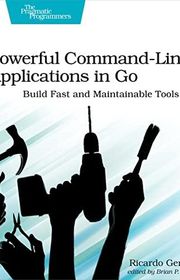
Powerful Command-Line Applications in Go: Build Fast and Maintainable Tools
For Go developers who want useful command-line tools as their learning projects. Gerardi connects practical input, files, processes, and services with testing and benchmarks, though the focused application style leaves broader web-development concerns outside its scope.
What it's about
Ricardo Gerardi develops command-line tools that handle files, interact with users, manage processes, and communicate with services. Practical examples connect Go's standard library and concurrency with automated tests, benchmarks, subcommands, and the work of distributing reliable tools.

For experienced programmers who want substantial complete examples alongside a language reference. Summerfield gives the code careful explanation, though the early Go-era material requires extra care when applying its tooling and library examples to newer projects.
What it's about
Mark Summerfield teaches idiomatic Go through complete programs, explained examples, and exercises for experienced programmers. The book combines a tutorial with a reference, covering language features, common packages, collections, file formats, and channel-based concurrency.

For readers interested in a broad account of Go's early foundations. Balbaert supplies extensive examples and exercises, though its focus on the first stable release makes it a historical companion rather than the most direct current introduction.
What it's about
Ivo Balbaert introduces the first stable Go release through working examples and exercises. The guide covers slices, maps, structures, interfaces, functional techniques, error handling, the standard library, and concurrent programming with goroutines and channels.

For readers who learn best by watching one web application grow. Curtis connects language concepts with practical project decisions, though the older project dependencies and tooling make this a less direct route to reproducing every example today.
What it's about
Mal Curtis teaches Go web development through a project that grows from basic language concepts into a working application. Chapters cover HTTP, users, images, concurrency, automated tests, package organization, and preparing software for production.

Hands-on Go Programming
Learn Google’s Golang Programming, Data Structures, Error Handling and Concurrency
For readers who want a broad sequence of worked examples covering core syntax and concurrency. Its practical coverage offers another introductory route, though it is less distinctive in teaching style and predates several modern Go developments.
What it's about
Sachchidanand Singh and Prithvipal Singh introduce Go through examples covering syntax, functions, control flow, and data structures. Later chapters explain methods, interfaces, pointers, error handling, and concurrent programming with goroutines and channels.

For learners who like short lessons with quizzes and exercises. Ornbo's structured progression gives study a clear rhythm, though the hour-based organization is a course format and the older tooling examples may need adjustment.
What it's about
George Ornbo introduces Go in twenty-four lessons that progress from setting up a development environment to testing and deployment. Examples, quizzes, and exercises cover language fundamentals, concurrency, packages, error handling, command-line programs, and network applications.
Sources
- 1
What are the best Go books in 2026?
bitfieldconsulting.com
- 2
Top Golang Books recommended by experts
mentorcruise.com
- 3
Best Go Books in 2026 : r/golang
reddit.com
- 4
Golang Books
goodreads.com
- 5
Go Wiki: Books
go.dev
- 6
Awesome Go Books
github.com
- 7
Best Go Books
jobroadmaps.com
- 8
The Best Books to Learn Go in 2026 (an honest developer's take)
web-developpeur.com
- 9
7 Best Go Programming Books for 2026 (Golang) | ComputingForGeeks
computingforgeeks.com
- 10
GitHub - dariubs/GoBooks: List of Golang books · GitHub
github.com
- 11
FAQ: What are the best books for Go? : r/golang
reddit.com
- 12
13 Best Go Programming Books
whatpixel.com





Edited by
Software engineer whose passion for tracking book recommendations from podcasts inspired the creation of MRB.
Lead investor at 3one4 Capital whose startup expertise and love for books helped shape MRB and its growth.
Comments
Spotted a missing book, a wrong order or a mistake? Tell us and we'll fix this page.
We're a reading guide, not the author or publisher, so we can't send books or pass on messages.