
8 Best Georges Simenon Books
The best Georges Simenon books, ranked by expert source recommendation counts, with notes to help readers choose Maigret mysteries and psychological novels.
Our take
Georges Simenon’s fiction offers two distinct approaches to crime and human behavior. The Maigret novels follow a detective who learns about people by studying their routines, relationships, and surroundings. The standalone psychological novels often remove that steady presence, bringing readers closer to characters whose familiar lives are breaking apart. Both approaches favor concentrated settings and close attention to ordinary social pressures.
Maigret and the Enigmatic Lett introduces the inspector, though later books develop his quieter observational style more fully. My Friend Maigret takes him to an island community, Maigret Goes to School explores a guarded village, and Maigret and the Headless Corpse gives a Paris investigation particular emotional weight. The Yellow Dog is another compact early mystery with a strongly defined setting.
Start with My Friend Maigret for the detective’s patient method. For standalone fiction, The Blue Room offers a compressed psychological story, The Man Who Watched Trains Go By explores escape and identity, and Dirty Snow takes a much harsher view of moral collapse.
8 books · 7 sources · Last updated
As an Amazon Associate, we earn from qualifying purchases (at no extra cost to you).
Reading Georges Simenon in order? See all Georges Simenon books in order
How to choose from this list
Skip to the full rankingIf you want an introduction to Maigret's method: My Friend Maigret → Maigret and the Headless Corpse
If you want to begin the series at its origin: Maigret and the Enigmatic Lett
If you want a provincial mystery: The Yellow Dog → Maigret Goes to School
If you want a short psychological standalone: The Blue Room
If you want to explore identity and escape: The Man Who Watched Trains Go By
If you're ready for a bleak standalone: Dirty Snow
The 8 books, ranked
Ranked by how many expert sources name each book. Ties go to the book more people recommend.
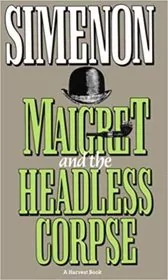
For readers who enjoy detective fiction built around quiet observation and emotional understanding. Maigret’s attention to a guarded woman gives the investigation psychological depth, though the unhurried pace offers less immediate action than the gruesome opening might suggest.
What it's about
A dismembered body without a head is discovered in Paris's Saint-Martin Canal. Maigret's inquiries lead to a nearby cafe and its taciturn owner, whose husband's supposed absence raises questions about the private misery behind the killing.

The Man Who Watched Trains Go By
For readers interested in the fragility of an ordinary identity and the fantasy of escape. Simenon keeps the pressure close to one man’s changing self perception, though the unstable viewpoint and bleak atmosphere provide little emotional distance.
What it's about
Respectable Dutch clerk Kees Popinga abandons his family after discovering that his employer's business is collapsing. His flight takes him to Amsterdam and Paris, where violence and a growing fascination with police attention overturn his former identity.

Dirty Snow
For readers ready for Simenon without Maigret’s stabilizing presence. Its close view of moral collapse and self justification gives the standalone novel a severe intensity, though the cruelty and bleakness make it a difficult introduction for some readers.
What it's about
In an occupied city, Frank enjoys the shelter of his mother's brothel while pursuing theft and violence. His growing involvement in crime turns a young man's search for excitement into an exploration of cruelty and moral isolation.
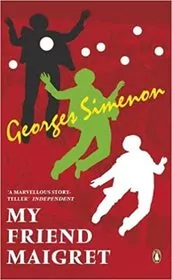
For readers who enjoy a detective learning a community through its routines and relationships. The island setting gives Maigret’s patient method room to emerge, though the slower investigation rewards attention to social atmosphere more than expectations of rapid twists.
What it's about
A fisherman on Porquerolles is murdered after boasting that Maigret is his friend. The inspector visits the island and studies its close circle of residents, where old associations and conflicting loyalties make the victim's life difficult to untangle.

The Blue Room
For readers who prefer a short psychological novel about desire, interpretation, and consequences. Its compressed structure gives recollection and questioning unusual pressure, though the sexual betrayal and uneasy ambiguity offer less reassurance than a Maigret investigation.
What it's about
Tony and Andree meet secretly in a hotel's blue room, treating their adulterous affair as a refuge from ordinary life. Their reckless intimacy becomes entangled with deception and crime, forcing Tony to confront consequences he never anticipated.

For readers who want an early Maigret mystery with concentrated atmosphere and a small circle of frightened suspects. Its provincial setting makes rumor and unease central, though the sparse explanations and period assumptions can feel abrupt to modern readers.
What it's about
A shooting disturbs the regular customers of a hotel bar in Concarneau. Poisoned drinks, disappearances, and an unfamiliar yellow dog deepen the alarm, while Maigret studies the frightened men whose comfortable routines have suddenly broken down.
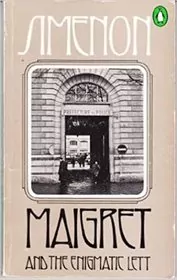
For readers who want to meet Maigret at the beginning of the series. Its pursuit of shifting identities gives the early novel a restless energy, though the more conspicuous thriller machinery differs from the quieter investigations Simenon later developed.
What it's about
Maigret tracks an international swindler whose changing identities make him difficult to recognize. A corpse discovered on a train complicates the pursuit, sending the inspector through Paris as he tries to separate the man from his disguises.
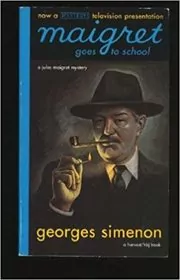
For readers who like village mysteries shaped by grudges, reputation, and collective silence. The seaside setting gives Maigret’s observations a close social frame, though the restrained scale offers atmosphere and character rather than elaborate procedural detail.
What it's about
A village schoolteacher asks Maigret to clear him of a postmistress's murder near La Rochelle. The inspector enters a seaside community full of grudges, where the victim's knowledge of other people's secrets gives many residents reasons for silence.
Sources
- 1
Georges Simenon and the Top 6 Maigret Mystery Novels - Criminal Element
criminalelement.com
- 2
Books by Georges Simenon - Five Books Expert Recommendations
fivebooks.com
- 3
Georges Simenon's Books | Crime Books
crimebooks.uk
- 4
Georges Simenon Books
goodreads.com
- 5
Georges Simenon Books in Order: Maigret and the Romans Durs
lisanneswart.com
- 6
Finally found some more Simenons : r/nyrbclassics
reddit.com
- 7
Where to Start with Georges Simenon? My Top Book Recommendations : r/Indianbooks
reddit.com






Edited by
Software engineer whose passion for tracking book recommendations from podcasts inspired the creation of MRB.
Lead investor at 3one4 Capital whose startup expertise and love for books helped shape MRB and its growth.
Comments
Spotted a missing book, a wrong order or a mistake? Tell us and we'll fix this page.
We're a reading guide, not the author or publisher, so we can't send books or pass on messages.