
25 Best Etymology Books
The best etymology books, ranked by expert recommendation counts, with notes for curious beginners, word lovers, and readers ready to study historical evidence.
Our take
Etymology asks where words come from and how their forms and meanings change. It involves borrowing, inherited roots, new coinages, and evidence from earlier writing. A satisfying story is only a starting point: similarities can mislead, and the earliest surviving example isn't necessarily the first time someone used a word. The books here range from entertaining collections of connections to references and explanations of how research works.
For a light introduction, try The Etymologicon or the daily entries in Word Perfect. Dictionary of Word Origins and Barnhart Concise Dictionary of Etymology support individual lookups. The Secret Life of Words connects vocabulary with cultural history, while The Oxford Guide to Etymology and Word Origins And How We Know Them explain the reasoning behind an origin. Start with stories if you want to build curiosity, then add a reference or methods book when you want to check the evidence.
25 books · 8 sources · Last updated
As an Amazon Associate, we earn from qualifying purchases (at no extra cost to you).
How to choose from this list
Skip to the full rankingIf you're curious and want a lively start: The Etymologicon → Word Perfect
If you want to look up word histories: Barnhart Concise Dictionary of Etymology → Chambers Dictionary of Etymology
If you want to understand the research: Word Origins And How We Know Them → The Oxford Guide to Etymology
If you want to check familiar origin stories: Word Myths
If you want historical context: The Story of English in 100 Words → The Secret Life of Words
If you want to study classical word elements: English Words from Latin and Greek Elements
The 25 books, ranked
Ranked by how many expert sources name each book. Ties go to the book more people recommend.

The Etymologicon
A Circular Stroll Through the Hidden Connections of the English Language
For curious beginners who enjoy following unexpected connections between words. The linked anecdotes make an inviting continuous read, though the jokes and confident storytelling sometimes need balancing with more cautious, evidence-focused etymological references.
What it's about
Mark Forsyth follows the surprising origins and connections of everyday English words. Moving through linked stories and historical detours, this humorous exploration reveals how familiar expressions acquired their meanings and how unexpected relationships run through the language.
Also recommended by
1 person Patrick O'Shaughnessy recommended this book
Patrick O'Shaughnessy
"If you like factoids, this is a book for you." - Patrick O'Shaughnessy
Patrick O'Shaughnessy's recommendation of this book
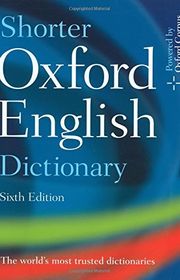
Shorter Oxford English Dictionary
For readers who want word origins alongside historical meanings and quotations. Its breadth supports more kinds of lookup than a dedicated etymology dictionary, though two substantial volumes and abbreviated entries make it a reference rather than an introductory read.
What it's about
This historical dictionary records English words and phrases through definitions, origins, pronunciation, and illustrative quotations. Entries show changing senses and related forms, providing a broad reference for readers who want to understand both a word's history and its use.

Chambers Dictionary of Etymology
For readers who want a substantial single-volume word-history reference. Its fuller entries give more context than the concise Barnhart edition, though the dictionary format and linguistic detail reward patient consultation more than reading from beginning to end.
What it's about
This single-volume reference traces the origins and historical development of English vocabulary. Edited by Robert Barnhart and Sol Steinmetz, its entries connect words with earlier forms, related languages, and documented usage, supporting both focused research and browsing through language history.

The American Heritage Dictionary of the English Language
For readers wanting definitions, usage, and word history in one general dictionary. The root material adds useful depth beyond basic lookup, though etymology shares space with many other functions and isn't explained as a research method.
What it's about
This fiftieth-anniversary printing of the fifth edition combines English definitions with pronunciation, etymology, and usage guidance. Revised entries and added words accompany illustrations and advice from the American Heritage Usage Panel about choosing words and understanding their histories.
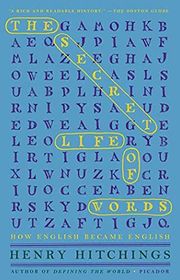
The Secret Life of Words
For readers who like word history connected to trade, migration, and power. Hitchings gives borrowed vocabulary a broad cultural narrative, though that sweep provides less detailed treatment of individual etymological problems than a specialist reference.
What it's about
Henry Hitchings traces English vocabulary through its encounters with other languages. Stories of borrowed and transformed words connect trade, conquest, diplomacy, and cultural exchange, showing how the language preserves evidence of relationships among peoples across many centuries.
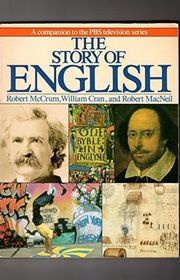
The Story of English
For readers who want word history placed inside a broad account of English-speaking communities. The geographic sweep gives vocabulary social context, though the older survey spends much of its time beyond etymology and needs updating for recent developments.
What it's about
Robert McCrum, William Cran, and Robert MacNeil trace English from its early forms to its spread around the world. Historical episodes and regional varieties show how migration, politics, culture, and speakers' everyday lives have shaped the language.
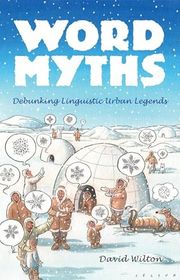
Word Myths
For readers who want to check a compelling origin story before repeating it. Wilton makes linguistic skepticism concrete through familiar examples, though the myth-by-myth structure offers selected corrections rather than a comprehensive history of English.
What it's about
David Wilton examines widely repeated stories about words and expressions, comparing them with historical evidence. The book explains why attractive explanations spread and follows examples involving acronyms, sayings, and familiar names to distinguish documented history from linguistic folklore.
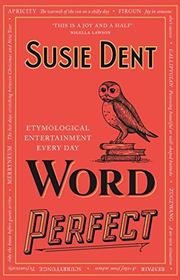
Word Perfect
For readers who want a small dose of word history each day. The calendar format makes it easy to build a browsing habit, though its playful selection and short entries favor discovery over systematic training in etymological research.
What it's about
Susie Dent arranges word stories and unusual vocabulary around the days of the year. The almanac links dates with expressions, historical incidents, and forgotten terms, offering brief explorations of how English words acquire meanings and associations over time.
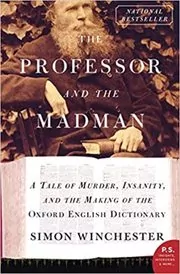
The Professor and the Madman
For readers who want the human story behind a major historical dictionary. The narrative makes collecting linguistic evidence tangible, though the focus on two remarkable lives offers less instruction in etymology than a methods book.
What it's about
Winchester recounts how Oxford editor James Murray and imprisoned American surgeon William Chester Minor worked together to build the Oxford English Dictionary, weaving a true story of language, obsession and unlikely friendship in Victorian Britain.
Also recommended by
1 person Fareed Zakaria recommended this book
Fareed Zakaria
"An unbelievable tale, one that reminds us of the extraordinary range, depth and beauty of the English language." - Fareed Zakaria
Fareed Zakaria's recommendation of this book

Barnhart Concise Dictionary of Etymology
For readers who want an accessible desk reference for checking individual word histories. Its concise entries make lookup easier than in the larger Chambers volume, though that economy leaves less room for extended evidence and explanation.
What it's about
Robert Barnhart traces the origins and development of more than 21,000 English words in accessible entries. Historical connections reveal how words acquired their meanings and what their changing uses can disclose about earlier ideas, cultures, and assumptions.

English Words from Latin and Greek Elements
For students who want exercises rather than loosely connected word stories. Learning recurring Greek and Latin elements helps decode unfamiliar vocabulary, though a roots course covers only part of English and doesn't replace evidence for individual histories.
What it's about
Donald Ayers teaches readers to recognize Latin and Greek elements within English words. Lessons introduce roots and vocabulary in context, then reinforce them with exercises, giving learners tools for understanding unfamiliar words without requiring previous study of either classical language.

For readers who want an energetic, humorous invitation into English language history. Bryson's broad curiosity makes the subject approachable, though individual claims need checking against specialist references and the older survey isn't a guide to current scholarship.
What it's about
An entertaining history of the English language and how it became the world's most global tongue. Bryson explores its eccentricities, its chaotic spelling rules, and the colorful origins of everyday words.
The Origins of English Words
For readers interested in connections reaching behind English to reconstructed Indo-European roots. Its discursive entries encourage exploration across families of words, though the older scholarship and root-based organization are less convenient for straightforward modern-word lookup.
What it's about
Joseph Shipley organizes a dictionary around proposed Indo-European roots and follows their descendants into English. The entries connect linguistic comparison with literature, history, and cultural anecdotes, inviting readers to explore relationships among words that now appear unrelated.

The Oxford Guide to Etymology
For readers ready to learn how etymologists assess evidence rather than simply collect origins. Durkin explains the processes and uncertainties behind reconstruction, though the analytical detail makes it more demanding than a casual book of word stories.
What it's about
Philip Durkin explains how etymologists investigate words using historical evidence, linguistic relationships, and changes in form and meaning. Examples show how borrowing, word formation, and semantic development can be reconstructed, while illustrating the uncertainties involved in tracing origins.
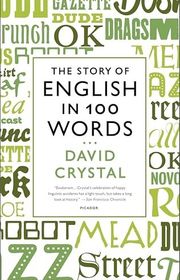
The Story of English in 100 Words
For newcomers who want an overview through manageable examples. Crystal's selected words connect small linguistic details with larger historical changes, though one hundred choices necessarily leave out much of the language and can't serve as a lookup reference.
What it's about
David Crystal uses one hundred words to explore the history and variety of English. Familiar terms, obscure expressions, grammatical words, and modern coinages reveal different influences on the language, connecting vocabulary with social change and communication across periods.

For readers who want to understand the mechanisms behind language change. Deutscher connects erosion, invention, and complexity across languages, though the scope extends well beyond English words and requires more sustained attention than a collection of origins.
What it's about
Guy Deutscher investigates how language develops complex grammar, vocabulary, and meaning through gradual change. Examples from ancient and modern languages connect pronunciation, metaphor, and linguistic patterns with the processes that transform ordinary speech into increasingly elaborate systems of expression.
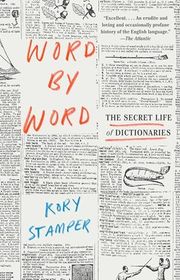
Word by Word
For readers curious about how dictionaries are actually made. Stamper's working perspective reveals the judgment behind definitions and evidence, though usage and modern lexicography receive more attention than reconstructing the ancient ancestry of words.
What it's about
Lexicographer Kory Stamper describes the work of writing dictionaries, from gathering examples to deciding how meanings should be defined. Personal experiences and difficult usage questions reveal the research, uncertainty, and argument behind apparently straightforward entries about familiar words.
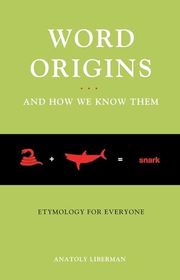
Word Origins And How We Know Them
For readers who want to see an etymologist's reasoning, including false leads and uncertainty. Liberman connects examples with method more explicitly than anecdotal collections, though the detailed discussion asks for slower reading than a stream of surprising facts.
What it's about
Anatoly Liberman explains how scholars investigate the origins of words and how misleading explanations arise. Examples illustrate word formation, historical comparison, and the limits of available evidence, showing both established connections and the questions that remain difficult to answer.
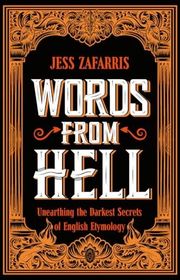
Words From Hell
For adult readers who enjoy word history with an irreverent, deliberately dark focus. The theme makes euphemism and shifting social taboos memorable, though explicit language and the selective subject matter make it unsuitable as a general classroom introduction.
What it's about
Jess Zafarris explores the histories of profanity, insults, euphemisms, and words with unexpectedly dark associations. The collection connects changing meanings with attitudes toward sex, violence, bodily functions, and social boundaries, examining why some expressions become inappropriate or offensive.

For readers wanting readable alphabetical entries with connections between apparently unrelated words. Ayto offers a manageable alternative to larger scholarly dictionaries, though the selected vocabulary and compact histories leave some specialist questions for more extensive references.
What it's about
John Ayto traces the histories of more than 8,000 English words, revealing connections between apparently unrelated terms. Entries follow roots and changing meanings while showing how migration, trade, exploration, technology, and scholarship have influenced the development of English vocabulary.

For readers who want to think about how contact between peoples changes a language. McWhorter's argument provides broader context than a word dictionary, though grammar and debated historical influences take precedence over tracing individual words.
What it's about
John McWhorter explores how contact with other peoples shaped English grammar and vocabulary. Celtic influences, Viking incursions, and the Norman Conquest feature in his account of the language's distinctive patterns and sometimes puzzling simplicity.

Oxford Dictionary of Word Origins
For readers who want short, approachable accounts of familiar English words. The selected entries make it easier to browse than the larger Oxford etymology references, though the limited coverage means many less common words won't appear.
What it's about
Julia Cresswell explores the origins and development of more than 3,000 English words, including newer additions to the language. Accessible entries trace changing meanings and linguistic connections, showing how familiar vocabulary carries traces of earlier cultures and usage.

The Concise Oxford Dictionary of English Etymology
For readers who need a compact but substantial alphabetical reference. Its many entries make it useful beside a narrative introduction, though abbreviated forms and compressed explanations are less welcoming than books that walk through the reasoning.
What it's about
T. F. Hoad condenses the history of English vocabulary into more than 17,000 etymological entries. Based on the Oxford Dictionary of English Etymology, this reference explains word origins, earlier spellings, and changes in meaning across the language's development.

The Oxford Dictionary of English Etymology
For readers who want a substantial scholarly reference to historical forms and connections. Its depth supports more demanding lookup than a popular word-story collection, though older scholarship and dense abbreviations make additional current checking worthwhile.
What it's about
Edited by C. T. Onions, this reference traces English words through their earliest recorded forms and subsequent changes in meaning. Entries combine pronunciation, definitions, historical dates, and linguistic relationships to document the development of the vocabulary.

Word Origins
For readers who want an alphabetical collection of word histories they can browse and revisit. Cross-references help reveal connections, though readers considering Ayto's other dictionary should compare coverage before choosing to own both references.
What it's about
John Ayto explores English word origins in an alphabetical reference with cross-references linking related entries. Accounts of inherited roots, borrowed vocabulary, and newly formed words show how the language has developed through contact with other languages and changing cultural needs.
Sources
- 1
The Best Books on Etymology - Five Books Expert Recommendations
fivebooks.com
- 2
Etymology Books
goodreads.com
- 3
book recommendations? : r/etymology
reddit.com
- 4
The r/etymology Book List: Post your favourite books on etymology, historical linguistics and lexicography : r/etymology
reddit.com
- 5
Resources — Wordorigins.org
wordorigins.org
- 6
Etymology / Dictionary Resources - Word Etymology / Dictionaries - Research Guides at US Naval Academy
libguides.usna.edu
- 7
Recommended Reference Resources
waywordradio.org
- 8
Further Resources - ENGL 7160X: History of the English Language - LibGuides at Brooklyn College Library
libguides.brooklyn.cuny.edu





Edited by
Software engineer whose passion for tracking book recommendations from podcasts inspired the creation of MRB.
Lead investor at 3one4 Capital whose startup expertise and love for books helped shape MRB and its growth.
Comments
Spotted a missing book, a wrong order or a mistake? Tell us and we'll fix this page.
We're a reading guide, not the author or publisher, so we can't send books or pass on messages.