
9 Best English Vocabulary Books
The best English vocabulary books, ranked by how many expert sources recommend each one, with notes for elementary learners, advanced readers and test takers.
Our take
Learning vocabulary means more than recognizing a definition. You also need to know when a word fits, which words it commonly appears beside and how to recall it when speaking or writing. The books here serve different starting points, from elementary learners building everyday English to confident readers tackling more demanding texts.
English Vocabulary in Use: Elementary offers explanations and exercises at an accessible level. The upper-intermediate and advanced books continue that approach with harder language. Word Power Made Easy and Merriam-Webster's Vocabulary Builder emphasize roots and connections between words, while 504 Absolutely Essential Words and The Vocabulary Builder Workbook provide structured practice. English Collocations in Use: Intermediate focuses on combinations that make familiar words sound more natural together.
Choose by your present level and goal, then use the words outside the exercises. Start with the elementary course for basic English, or a root-based builder if you already read comfortably.
9 books · 8 sources · Last updated
As an Amazon Associate, we earn from qualifying purchases (at no extra cost to you).
How to choose from this list
Skip to the full rankingIf you're learning basic English: English Vocabulary in Use: Elementary
If you want a small regular lesson: 504 Absolutely Essential Words
If you like learning through word roots: Word Power Made Easy → Merriam-Webster's Vocabulary Builder
If you're ready for harder language: English Vocabulary in Use: Upper-Intermediate → English Vocabulary in Use: Advanced
If you want more natural combinations: English Collocations in Use: Intermediate
If you want an advanced practice routine: 1100 Words You Need to Know
The 9 books, ranked
Ranked by how many expert sources name each book. Ties go to the book more people recommend.

Word Power Made Easy
For readers who already understand English and want connections between unfamiliar words. Roots, thematic lessons and quizzes make study more memorable than an alphabetical list, though some examples feel dated and it isn't a beginner conversation course.
What it's about
Norman Lewis teaches vocabulary through thematic lessons, word origins, and pronunciation guidance. Reviews, quizzes, and progress checks reinforce new terms while sections on spelling and usage connect vocabulary study with everyday reading and writing.

For elementary learners who want useful vocabulary explained at a manageable level. Facing explanations and exercises support independent practice more directly than the advanced word builders, though you'll need listening and conversation to make the words usable.
What it's about
Michael McCarthy and Felicity O'Dell provide vocabulary explanations and practice for elementary English learners. Sixty units pair accessible lessons with exercises, study advice, follow-up activities, and answers for classroom use or independent study.

The Vocabulary Builder Workbook
Simple Lessons and Activities to Teach Yourself Over 1,400 Must-Know Words
For readers who want workbook practice that becomes harder as they progress. Themed activities and word associations provide more structure than browsing a dictionary, though its advanced vocabulary focus is less suitable for someone learning basic everyday English.
What it's about
Chris Lele's workbook teaches more than 1,400 words through themed lessons and exercises. Its progressively harder activities emphasize roots, associations, and retention, supporting vocabulary practice for general reading and writing as well as standardized tests.
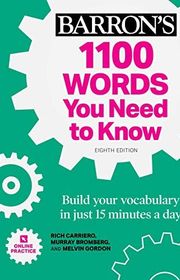
1100 Words You Need to Know
For confident learners who want a sustained routine for harder reading or test vocabulary. Short recurring exercises keep a large word set manageable, though memorizing the selections alone won't teach natural conversation or flexible use.
What it's about
Murray Bromberg and Melvin Gordon present a structured program for studying challenging English vocabulary. Reading passages, contextual examples and recurring exercises introduce new words and reinforce them over time, with later editions offering additional online practice.

504 Absolutely Essential Words
For learners who like a limited set of words with repeated practice. Short lessons, sample sentences and exercises make progress easy to organize, though the selected vocabulary won't replace broader exposure to everyday spoken English.
What it's about
Murray Bromberg and his coauthors introduce essential English vocabulary in brief lessons of twelve words each. Definitions, sample sentences, short articles, and fill-in-the-blank exercises provide practice for students, English learners, and test takers.
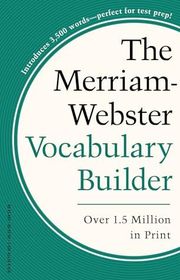
Merriam-Webster's Vocabulary Builder
For readers who remember words through their shared roots. Greek and Latin building blocks help connect unfamiliar terms across subjects, though the emphasis on educated vocabulary makes it less useful for beginners who need everyday conversation first.
What it's about
Mary Wood Cornog organizes vocabulary study around Greek and Latin roots, connecting groups of related English words. Definitions, examples and quizzes help readers develop recognition and retention while building a foundation for understanding unfamiliar terms in reading and study.
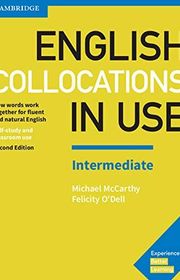
English Collocations in Use: Intermediate
For intermediate learners who know many words but combine them awkwardly. Practice with words that commonly occur together targets natural phrasing more directly than a general vocabulary list, though it won't replace learning individual meanings or pronunciation.
What it's about
Michael McCarthy and Felicity O'Dell explain common English word combinations for intermediate learners. Topic-based examples and exercises develop collocations in context, while answers and study advice support independent practice and help learners use familiar words together more naturally.

30 Days to a More Powerful Vocabulary
For readers who want a fixed daily routine rather than an open-ended reference. The thirty-part structure makes it easy to schedule practice, though lasting command of the words will take more review than the title's timetable suggests.
What it's about
Norman Lewis and Wilfred Funk organize vocabulary study into thirty days of short exercises and self-tests. Lessons use word roots, pronunciation guidance, and new words in context to develop clearer understanding and expression.

Oxford Learner's Pocket Word Skills
For learners who want a portable reference for words, phrases and common combinations. Its topic-based organization helps with quick checks, though the compact format provides less explanation and active practice than a full-sized course book.
What it's about
Ruth Gairns and Stuart Redman present English vocabulary in a compact reference organized by topic. Words and phrases appear in context, with coverage of synonyms, derivatives, collocations, spoken English, and essay writing.
Sources
- 1
7 Best English Vocabulary Books for Learners
fluentu.com
- 2
15 Best English Books to Improve Vocabulary for Beginners & Advanced Learners
leverageedu.com
- 3
100 Best English Vocabulary Books of All Time
shortform.com
- 4
Vocabulary Books
goodreads.com
- 5
15 Best Books for Improving and Building Vocabulary
yourdictionary.com
- 6
10 Best Books for Learning English Vocabulary
learnenglishfunway.com
- 7
The best and most effective IELTS vocabulary learning books
ielts.idp.com
- 8
14 English Learning Books Worth Buying (and How to Pick the Right Ones)
wele-learn.com





Edited by
Software engineer whose passion for tracking book recommendations from podcasts inspired the creation of MRB.
Lead investor at 3one4 Capital whose startup expertise and love for books helped shape MRB and its growth.
Comments
Spotted a missing book, a wrong order or a mistake? Tell us and we'll fix this page.
We're a reading guide, not the author or publisher, so we can't send books or pass on messages.