
15 Best Neuro Linguistic Programming Books
The best neuro-linguistic programming books, ranked by how many expert sources recommend each, with notes on introductions, exercises, and who each suits.
Our take
Neuro-linguistic programming, usually shortened to NLP, is a collection of ideas and exercises about communication, subjective experience, and personal change. Its books range from early workshop transcripts to structured introductions, workplace guides, and collections of techniques. They can help readers understand what practitioners propose, but the evidence supporting NLP's health benefits is limited.
NLP: The Essential Guide to Neuro-Linguistic Programming offers a broad introduction, while NLP Workbook: A Practical Guide to Achieving the Results You Want emphasizes exercises. Frogs into Princes: Neuro Linguistic Programming preserves the atmosphere of the early seminars, and NLP at Work: The Essence of Excellence applies the approach to professional communication. Metaphors We Live By provides a related but distinct account of language and thought rather than NLP instruction. Choose an introductory text if the vocabulary is new, then move to a specific application while examining its claims critically.
15 books · 9 sources · Last updated
As an Amazon Associate, we earn from qualifying purchases (at no extra cost to you).
How to choose from this list
Skip to the full rankingIf you're new to the terminology: Introducing Neuro-Linguistic Programming → NLP
If you want a workbook format: NLP Workbook
If you want workplace applications: NLP at Work → Words That Change Minds
If you want the early seminar material: Frogs into Princes → Trance-Formations
If you want to study metaphor and thought: Metaphors We Live By
The 15 books, ranked
Ranked by how many expert sources name each book. Ties go to the book more people recommend.
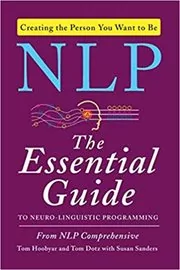
For beginners who want an organized overview with stories and exercises. Its broad introduction is easier to navigate than the early seminar transcripts, though the practical tone should not be mistaken for proof of its claims.
What it's about
This introduction to neuro-linguistic programming presents the authors' techniques for self-awareness, personal change, and communication. Stories, exercises, and models explore thinking patterns, managing the mind, and understanding and influencing interactions with other people.

For readers who want to encounter early NLP through its founders' seminar style. Its demonstrations provide historical context for later manuals, though the informal presentation and unsupported generalizations call for a critical rather than literal reading.
What it's about
Richard Bandler and John Grinder introduce neuro-linguistic programming through material drawn from training seminars. Demonstrations and discussion present their approach to communication and personal change, including ways of observing responses and reconsidering patterns of behavior.
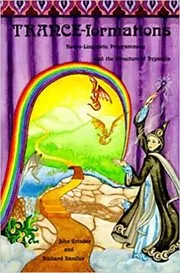
For readers studying how early NLP practitioners described hypnosis and suggestion. Its demonstrations preserve the feel of their workshops, though the transcript format is less systematic than a textbook and does not establish clinical effectiveness.
What it's about
John Grinder and Richard Bandler examine hypnosis through the framework of neuro-linguistic programming. They present induction techniques and explore how language, nonverbal responses, rapport, and suggestion can be used within their approach to therapeutic communication.
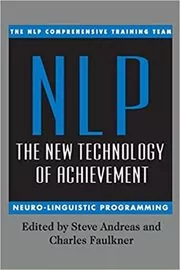
For readers who prefer a scheduled practice plan to browsing separate techniques. Its twenty-one-day structure provides a clear way to explore the authors' approach, though the achievement language is more confident than the underlying evidence warrants.
What it's about
This guide presents neuro-linguistic programming techniques for personal and professional achievement. Chapter exercises and a structured twenty-one-day program invite readers to practice changing habitual responses and applying the authors’ approach to goals and performance.
Also recommended by
1 person Neil Strauss recommended this book
Neil Strauss
Neil Strauss recommended this book in a blog post.
Neil Strauss's recommendation of this book
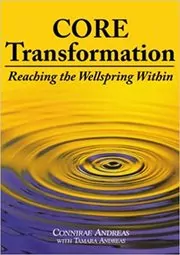
For readers who prefer a single reflective process over a collection of techniques. Its ten-step structure gives sustained attention to one approach, though the spiritual vocabulary and personal-change claims will not appeal to everyone.
What it's about
Connirae and Tamara Andreas present a ten-step method for personal change rooted in NLP. The book guides readers through examining unwanted responses and their underlying purposes, aiming toward experiences the authors describe as peace and inner connection.
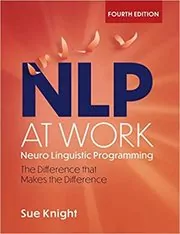
For readers interested in workplace communication and coaching through an NLP lens. The professional examples give the concepts a more specific setting than broad self-help books, though they remain illustrations of the approach rather than evidence that it works.
What it's about
Sue Knight applies NLP ideas to communication and personal development at work. Examples and exercises explore influence, negotiation, teamwork, and coaching, with attention to modeling effective behavior, asking questions, humor, and perceptions of time.
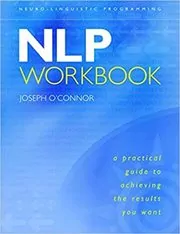
For readers who learn by writing and trying structured exercises. The workbook format makes it easier to examine one proposed technique at a time, though it offers less historical context or critical evaluation than a fuller study would require.
What it's about
Joseph O’Connor presents exercises for applying neuro-linguistic programming to personal goals and everyday communication. Readers work through techniques involving language, emotional states, and behavior, using a practical workbook format to explore the approach.
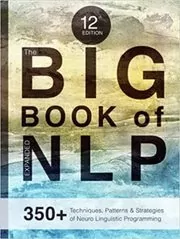
The BIG Book of NLP
350+ Techniques, Patterns & Strategies of Neuro Linguistic Programming
For readers already familiar with NLP terminology who want a reference of proposed techniques. Its breadth makes individual patterns easy to browse, though the step lists offer less explanation, context, and evaluation than a coherent introductory text.
What it's about
This reference collects more than 350 NLP techniques, patterns, and strategies in a step-by-step format. It ranges from foundational exercises to more elaborate methods, including nested loops and learning strategies, for practitioners exploring NLP approaches.
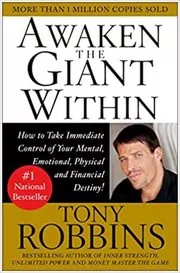
Awaken the Giant Within
How to Take Immediate Control of Your Mental, Emotional, Physical and Financial
For readers who want motivational self-help with a broad range of personal goals. Robbins offers more expansive encouragement than the technique manuals, though the length, forceful style, and sweeping promises may not suit a more analytical reader.
What it's about
Tony Robbins presents a program for self-mastery across emotions, relationships, finances, and physical wellbeing. He explores the choices and habits that shape daily life, encouraging readers to clarify their purpose and take responsibility for change.
Also recommended by
5 people Derek Sivers recommended this book
Derek Sivers
"When I was 18, [this book] changed my life." - Derek Sivers
Derek Sivers's recommendation of this book  Brian Koppelman recommended this book
Brian Koppelman
"This book was the first of [Tony Robbins books] I read, and it asked me crucial questions about the stories I was telling myself that were limiting my growth." - Brian Koppelman
Brian Koppelman's recommendation of this book  Jodie Cook recommended this book
Jodie Cook
"Plenty of actionables to develop a better mindset." - Jodie Cook
Jodie Cook's recommendation of this book  Danny Miranda recommended this book
Danny Miranda
"For anyone who wants to become the greatest version of themselves." - Danny Miranda
Danny Miranda's recommendation of this book  Roberto Blake recommended this book
Roberto Blake
"Helped me ground myself and believe I could make change in my own life." - Roberto Blake
Roberto Blake's recommendation of this book
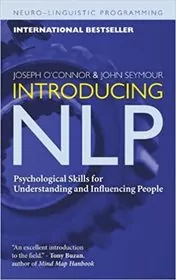
For beginners who want the concepts laid out in a conventional teaching sequence. Its organized overview is easier to revisit than seminar transcripts, though it presents the NLP framework from within rather than offering a critical assessment of its evidence.
What it's about
Joseph O’Connor introduces neuro-linguistic programming as an approach to communication and personal change. The guide explores rapport, language, body language, and goal setting, with techniques intended to help readers understand and influence interactions.
Also recommended by
1 person- Neil Strauss recommended this book
Neil Strauss
"The place to go for not just a primer on the concepts, but also enough in-depth knowledge to put the key ones into practice." - Neil Strauss
Neil Strauss's recommendation of this book

For readers examining NLP's approach to belief change and its historical health claims. Workshop examples make the proposed methods concrete, though those claims should not be treated as established explanations of illness or evidence of effective treatment.
What it's about
Robert Dilts, Tim Hallbom, and Suzi Smith present NLP approaches to identifying and changing limiting beliefs. Workshop scripts illustrate methods including visualization, reimprinting, and conflict integration, framed by the authors’ ideas about personal change and well-being.
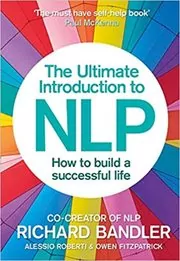
For beginners who prefer learning through a story about attending a workshop. The narrative makes terminology less intimidating than a dense reference book, though it simplifies the ideas and provides limited space to question the authors' assumptions.
What it's about
Richard Bandler, Alessio Roberti, and Owen Fitzpatrick introduce neuro-linguistic programming through a fictional participant's experience at a workshop. The story demonstrates the authors' techniques for reconsidering limiting beliefs, changing responses, and pursuing personal goals.
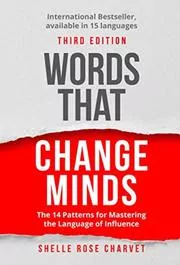
Words That Change Minds
The 14 Patterns for Mastering the Language of Influence
For readers who want a focused communication model rather than a general personal-change program. Its language and behavior profiles organize examples of motivation and influence, though the categories should be examined critically rather than treated as fixed facts about people.
What it's about
Shelle Rose Charvet introduces fourteen patterns from the Language and Behaviour Profile to help readers examine motivation and communication preferences. Examples show how she adapts wording to different audiences, aiming to improve influence, reduce conflict, and make conversations more effective.
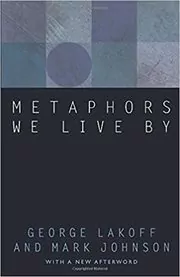
Metaphors We Live By
For readers interested in how metaphor organizes everyday thought and language. Its conceptual argument offers a different perspective from the exercise books, though it is a work of cognitive linguistics and philosophy rather than an NLP training manual.
What it's about
George Lakoff and Mark Johnson argue that metaphor shapes ordinary thought as well as language. They examine how physical and social experience informs conceptual understanding, influencing perception and action even when people do not notice the metaphors involved.
Also recommended by
3 people Tristan Harris recommended this book
Tristan Harris
"Talked about the power of grounding metaphor." - Tristan Harris
Tristan Harris's recommendation of this book  Nick Szabo recommended this book
Nick Szabo
"[One] of the most important books I’ve read." - Nick Szabo
Nick Szabo's recommendation of this book  Patrick O'Shaughnessy recommended this book
Patrick O'Shaughnessy
"Intense, but it is the best book I’ve read about how we learn and communicate." - Patrick O'Shaughnessy
Patrick O'Shaughnessy's recommendation of this book
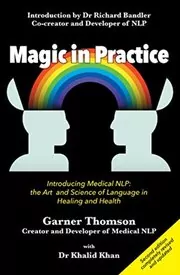
For readers investigating how NLP ideas have been applied to practitioner-patient communication. Its medical setting distinguishes it from general self-help guides, though discussion of health and healing does not make the proposed methods clinically established.
What it's about
Garner Thomson and Khalid Khan introduce their Medical NLP approach to communication between practitioners and patients. The book examines conscious and unconscious messages and discusses topics such as priming, breathing, sleep, and relationships within the authors’ framework.
Sources
- 1
3 best NLP books for beginners
nlpsure.com
- 2
The 10 Best NLP Books (2024 Update)
dailynlp.com
- 3
The 18 Best NLP Books to Read
upjourney.com
- 4
Best NLP Books
nlpprinciples.com
- 5
Best books to read for NLP
nlphypnosisinstitute.com
- 6
Nlp Books
goodreads.com
- 7
Books on Audible for learning NLP.
reddit.com
- 8
NLP Books I Recommend and Why. My Top 10 List of Great NLP Books
inlpcenter.org
- 9
$50 to B&N, what books to buy?
reddit.com





Edited by
Software engineer whose passion for tracking book recommendations from podcasts inspired the creation of MRB.
Lead investor at 3one4 Capital whose startup expertise and love for books helped shape MRB and its growth.
Comments
Spotted a missing book, a wrong order or a mistake? Tell us and we'll fix this page.
We're a reading guide, not the author or publisher, so we can't send books or pass on messages.